Access Fixtures High-Performance Lighting Solutions

Access Fixtures production and built-to-order lighting designed are manufactured to meet your specific requirements
Access Fixtures lighting specialists and engineers work with you to develop your high-performance lighting solution
Access Fixtures is your LED lighting resource for all commercial, industrial, sports, hospitality, and technical lighting applications
Access Fixtures
Access Fixtures features production and built-to-order lighting designed and manufactured to meet your specific requirements. With custom manufacturing capabilities, Access Fixtures builds durable, long-life LED luminaires for general lighting applications and specialty markets including transportation, freight terminals, sports fields and arenas, clean rooms, power plants, warehouses, and manufacturing facilities. Luminaire types include wall packs, area lights, bollard lights, sports lights, post top and high bays.
Access Fixtures lighting specialists and engineers will work with you to develop your high performance lighting solution. Why risk making a costly error, when you can determine exactly what you need by working with an Access Fixtures lighting specialist. Get your lighting correct the first time, so you can focus on what the lighting is supposed to illuminate. Contact a lighting specialist at 800.468.9925 or via email, [email protected].
Testimonials
I live in a Florida sea side condo where the environment is brutal on of all things including light fixtures. The bollard lights along our driveways and sidewalks ...
and the original fixtures were falling apart from corrosion. In search of new bollards that were commercial quality marine grade type, I stumbled across Access Fixtures (AF). It was a great find.Their selection is fantastic and customize-able. I had a lot of questions about several models of their bollards so I reached out to an AF lighting specialist. She is an absolute gem to work with. Smart, personable, articulate, enthusiastic and customer centered, she guided me into selecting the perfect LED bollard for our needs. They have been awesome. After 2 years in service and a couple hurricanes later, they still look brand new.
Fast forward another 18 months and our 22 building mounted area lights were in dire need of replacement. Without hesitation I reached out to AF for new area lights. They worked up a great replacement for us. However, after installing a couple of them a problem developed with the mounting bracket. I contacted AF about this and they got right on this issue. We ended up swapping the APTO-20 model for the APTU-20 and wow, these are even better! The replacements are beautiful, a very high quality, super marine grade commercial LED fixture. They should last a very long time.
Look, it’s the people that make good companies good and great people make great companies great. Their understanding and compassion for AF’s customers is a 10 out of 10. Thank you Access Fixtures for forging a great relationship.
Randy B. Home Owner Association Member in Cocoa Beach, FL
Your lighting specialist at Access Fixtures is a gem. He's bent over backwards to answer my MANY questions and help me find exactly the right lighting fixture ...
for a very complex project. I’ve contacted about eight different online lighting vendors for this project, and he was far and away the most helpful person I’ve encountered on this journey.He’s answered at least 10 emails with detailed question, and disassembled floor models to determine how they are constructed. I asked him if he could arrange a zoom session on his phone so he could show me real-time video of the bollard light fixture I’m considering buying. Within 5 minutes I received the zoom invite and we zoomed for 20 minutes so I could see detailed product construction before placing an order. Access Fixtures has good products comparable to plenty of websites charging more for the same quality. Combine that with the lighting specilaist’s excellent service and you’ve got a winner. They won my business.
Dina F. Designer in Chatsworth, CA
I’ve had the high bay fixtures installed for a while, but finally got FDA approval to turn them on. They’ve been on now for about an hour as of the sending of this email ...
I must say, I’m very pleased with how they’ve turned out so far! I’ll be scheduling the 2×4 fixture installation in the morning, and that process should go quickly and smoothly now that I’ve got full approval.I’ve attached a picture for you. It really looks much better in person. You may see wall mounted 2×1 fluorescent fixtures still installed and on. My plan there is to measure intensity after the 2x4s are installed, and see if I can either remove the wall mounted fixtures, or replace with more of your LED fixtures. As far as other facilities, all eyes are on how this project goes. Our sister plant in Ireland is especially interested in the results of this conversion. I’ll keep you posted on any opportunities as they come.
Jamie N. Facility Engineer in FL
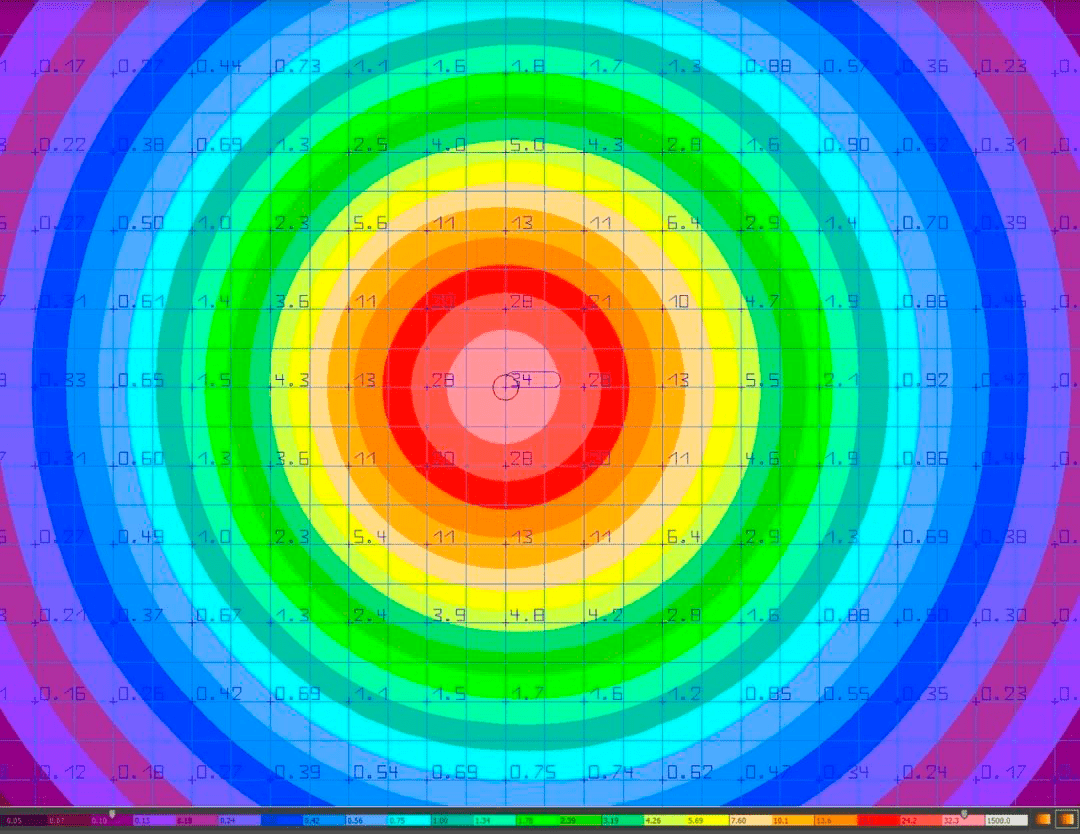
What can an Access Fixtures photometric study do for you?
Don’t make a costly mistake. Access Fixtures photometric studies simulate a lighting design to determine it meets your specifications.