
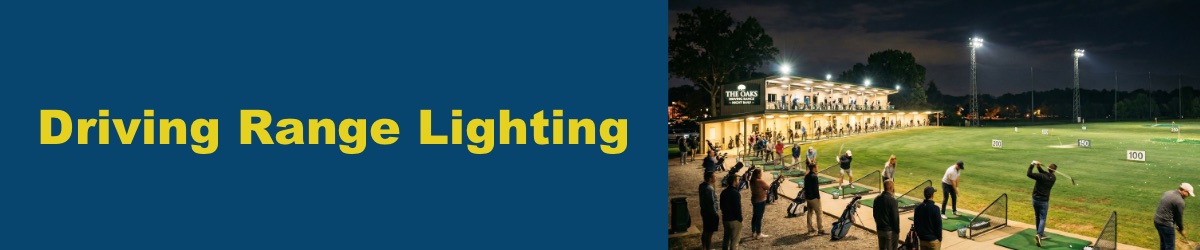
Driving Range Lighting: LED Design Guide | Access Fixtures
Introduction to Driving Range Lighting
Golf course lighting is a vital component of any modern golf facility, enabling play to continue well after sunset and maximizing the course's use. Proper golf course lighting not only enhances visibility and safety for players but also elevates the overall quality of play, ensuring that every shot can be tracked and every green is clearly visible. With the shift from traditional metal halide systems to advanced LED golf course lighting, facilities now benefit from significant improvements in energy efficiency, reduced operating costs, and longer lighting system lifespans. LED golf course lighting delivers consistent, high-quality illumination while minimizing maintenance and environmental impact. By investing in the right lighting solutions, golf courses can create a superior playing environment that supports both the needs of golfers and the sustainability goals of the facility.
Key Takeaways
-
-
Customized Lighting Solutions: Each driving range has unique requirements, and Access Fixtures offers tailored solutions to meet specific needs.
-
High-Performance Fixtures: Utilizing powerful LED fixtures ensures efficient, precise, and durable lighting for driving ranges.
-
Photometric Analysis: Essential for optimal lighting design, photometric analysis helps achieve the best results for night-time golf practice.
-
Custom Driving Range Lighting Solutions
Golf course lighting and driving range lighting are essential for golf courses and country clubs looking to extend their hours into the evening. With the increasing demands on members’ schedules, providing a well-lit driving range with driving range lights for night practice can greatly enhance the golfing experience. This blog will explore the key aspects of golf course driving range lighting design, ensuring your facility meets the needs of night-time golfers. Customized lighting solutions are tailored to the unique needs of each golf facility, ensuring optimal performance and satisfaction.
Lighting for a golf driving range is crucial as it enhances visibility, safety, and the overall golfing experience. Utilizing LED fixtures can address common lighting issues and provide energy-efficient, durable, and customizable solutions. These LED systems are carefully engineered for durability, performance, and optimal illumination in demanding outdoor golf environments. Modern LED systems offer advantages such as instant full power, long lifespan, superior color rendering, and energy efficiency, all contributing to better visibility and safety for golfers.
Addressing the Need for Night-Time Driving Range Lighting
Golf architects, country club owners, and managers frequently seek Access Fixtures’ expertise to illuminate their driving ranges. Due to the demanding schedules of club members, many golf courses are extending their hours into the evening, requiring effective lighting in previously unlit areas. Advanced lighting systems can increase operating hours and enable night golf, providing more flexibility and revenue opportunities.
Access Fixtures provides customized, energy-efficient lighting solutions tailored to each range’s specific needs, whether standalone or part of a country club. LED golf course lighting delivers 50-75% energy reduction while maintaining or improving light output and uniformity. Using advanced LED technology and precision optics, we deliver uniform illumination that exceeds industry standards. Proper lighting and maximizing visibility are key goals in the design process. Horizontal illumination is crucial in ensuring uniform lighting across the driving range, allowing golfers to accurately judge the ball’s position and the terrain.
Access Fixtures ensures your driving range is well-lit, energy-efficient, and ready for golfers at any hour.
What Are Golf Course Lighting Standards and Regulations?
When it comes to golf course lighting, adhering to established standards and regulations is crucial to ensure both safety and optimal performance. The International Association of Lighting Designers (IALD) and the Illuminating Engineering Society (IES) provide comprehensive guidelines that lighting designers and course owners must follow.
These guidelines cover various aspects of lighting, including illumination levels, uniformity, and color temperature. Achieving proper lighting levels is essential for safety, playability, and minimizing light pollution, and often requires professional analysis, photometric calculations, and custom design tailored to each facility. For instance, the IES recommends a minimum of 20 footcandles for driving ranges. Lighting levels vary across different areas of the golf course, with recommended minimum foot-candle measurements based on industry standards and player safety. These standards ensure that the lighting is sufficient for players to see clearly without causing glare or discomfort.
Uniformity is another critical factor. The lighting must be evenly distributed across the course to avoid dark spots that can hinder visibility and affect gameplay. This is particularly important in areas like the tee box and fairways, where consistent lighting is essential for accurate shots.
Color temperature also plays a significant role in golf course lighting. The IES guidelines suggest using lights with a color temperature that closely mimics natural daylight. This helps in maintaining the natural appearance of the course and ensures that golfers can easily distinguish between different elements of the landscape.
By adhering to these standards and regulations, golf course owners can create a well-lit, safe, and enjoyable environment for players, while also ensuring compliance with industry best practices.
What Are The Benefits of LED Driving Range Lighting?
LED golf course lighting offers a multitude of advantages that make it the preferred choice for modern golf courses. One of the most significant benefits is energy efficiency. LED lights consume far less electricity compared to traditional lighting options, which translates to substantial cost savings on energy bills. This efficiency doesn’t come at the expense of performance; in fact, LED lights provide superior brightness and color accuracy, enhancing the overall golfing experience by making the course more visually appealing and easier to navigate.
Another key advantage is the longevity of LED lights. They have a much longer lifespan than traditional bulbs, which means fewer replacements and lower maintenance costs. This durability is particularly beneficial for golf courses, where maintaining consistent lighting is crucial for safety and playability. With LED lights, course owners can reduce the frequency of maintenance activities, allowing for uninterrupted play and a better experience for golfers.
Moreover, LED lights contribute to improved safety on the course. Their bright, clear illumination helps golfers see the course layout and obstacles more clearly, reducing the risk of accidents. This enhanced visibility is especially important during night-time play, ensuring that golfers can enjoy their game safely and confidently.
In summary, LED golf course lighting not only enhances the aesthetic and functional aspects of the course but also offers significant cost savings and improved safety, making it a smart investment for any golf course owner.
What Are Driving Range Lighting Design Requirements?
Playing golf at night didn’t become possible until fairly recently with the advent of metal halide sports lighters. People’s modern schedules and lifestyles have created a need for golf courses to allow for nighttime play and practice. Property managers know this and are making the necessary adjustments to keep courses open for longer hours. Appropriate lighting can enhance the visibility of the golf ball during play and capture its movement effectively, especially on golf courses.
Because golf courses and driving ranges come in many unique configurations, there are no standard driving range dimensions. However, there are several general questions we ask of property managers and country club owners who are seeking to light their driving ranges.
- What are the dimensions of the driving range? The average length is around 330 yards.
- Is your driving range standalone or attached to a country club? Urban areas often have standalone ranges.
- What is the overall size of your driving range play area? The minimum is 2 acres; modern ranges span 15-17 acres.
- What are the lighting requirements? The Illuminating Engineering Society (IES) recommends 20 footcandles at the tee box and 10 footcandles of vertical illuminance at 600’.
- What is the required coverage area? Understanding the coverage area is essential to ensure LED lighting provides sufficient illumination across the entire range while minimizing glare for golfers.
Strategic lighting designs are crucial in achieving optimal lighting conditions. They help minimize glare, reduce light pollution, and enhance the overall visual appeal while ensuring compliance with safety standards.
For effective driving range lighting, recommended pole heights typically range from 30 to 60 feet, with most installations using pole mounting at 30-50 feet to achieve proper light distribution and minimize glare. Typical installations use 300-500W fixtures at 40-60 foot heights for proper coverage without shadows. For putting greens, plan for a minimum mounting height of 25 feet to prevent glare and achieve adequate coverage. Proper mounting heights are critical for maximizing coverage area and reducing glare for players.
As you can see, each driving range or golf course lighting project is going to be specially tailored. Access Fixtures has several driving range lighting packages able to be customized to 115′ and 230′ driving ranges. Click on the photometric layouts to the right to shop premade driving range packages. Skipping photometric layouts can lead to expensive fixture additions later.
Speak to an Access Fixtures Lighting Specialist About Lighting Your Driving Range. Call us at (800) 468 - 9926.


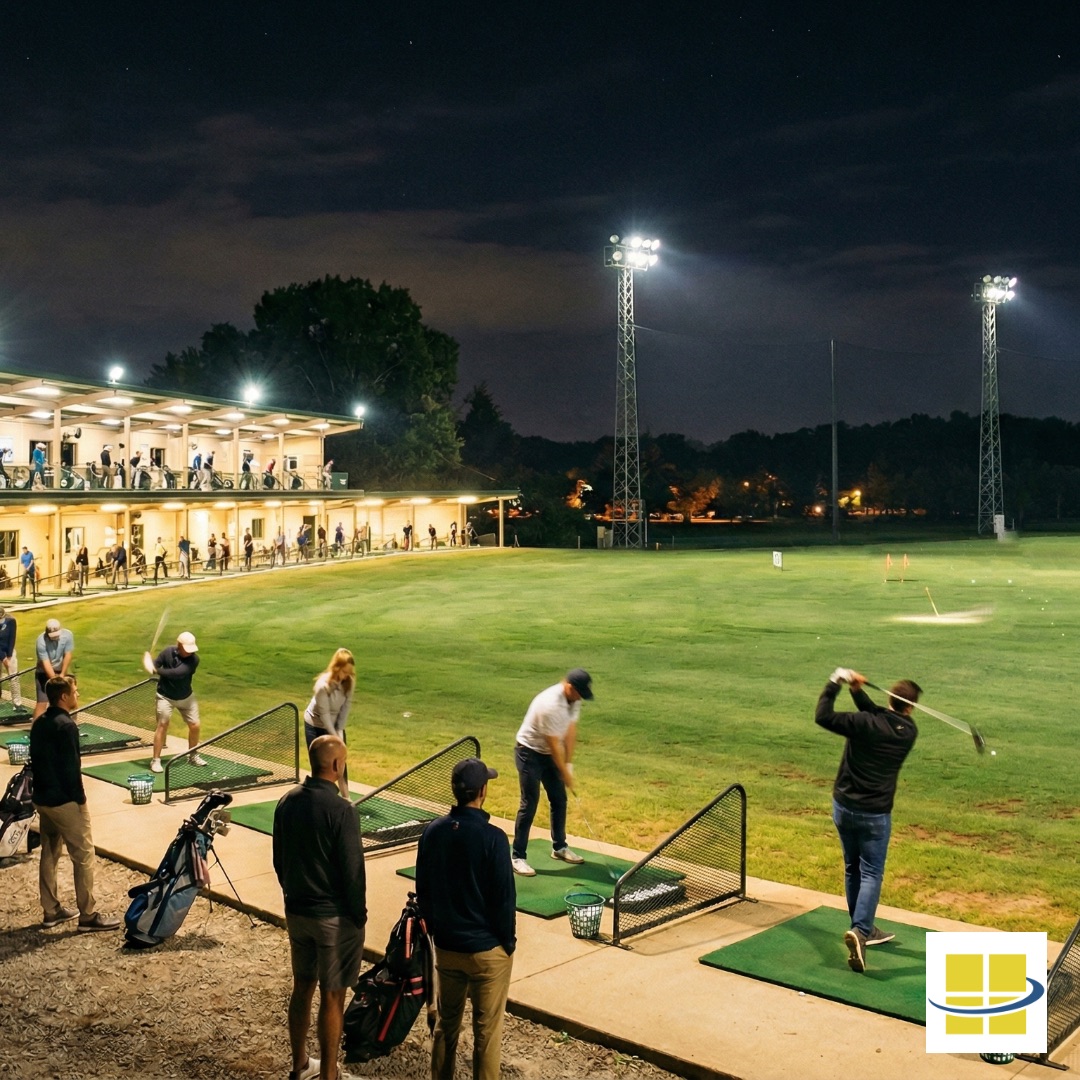
How Should a Driving Range Be Designed for Optimal LED Lighting?
The driving range or golf course lighting plans designed by Access Fixtures have been created in collaboration with lighting engineers to ensure robust and long-lasting driving range lighting. These lighting systems are carefully engineered for durability, performance, and resilience in demanding outdoor golf environments. These layouts utilize driving range guidelines and standards specified in the British Standards for Sports, as well as lighting plans by the Scottish Golf Development Centre. LED driving range lighting packages are designed with precision optics that get light delivered to where it’s needed. Advanced technology, including LED lighting systems, enhances visibility and safety, offering exceptional brightness and energy efficiency. It is important to evaluate the electrical infrastructure to ensure compatibility with LED lighting installations, including voltage requirements and impact protection standards. LED lighting systems are designed to endure various weather conditions while maintaining performance. Confirm IK08 impact resistance minimum for fixtures within 200 feet of swing areas and verify IP65 rating for wet location compliance.
Careful placement and height adjustments of light poles are crucial in achieving appropriate illumination for various areas of the course, ensuring uniform lighting and controlling glare.
Why Are Beam Angles Important in Driving Range Lighting?
Beam angles are a critical factor in golf course lighting design, as they determine how light is distributed across the playing surface. The right beam angle ensures that each area of the golf course receives the appropriate amount of illumination, reducing glare and preventing unwanted light spill. For example, driving ranges and long fairways often require narrow beam angles, typically between 15 and 30 degrees, to project light over greater distances and maintain uniform illumination. In contrast, putting greens, tee boxes, and practice areas benefit from wider beam angles, ranging from 90 to 120 degrees, to evenly light larger, closer spaces without creating harsh shadows. Utilizing LED fixtures with adjustable beam angles allows golf courses to customize their lighting for each specific area, ensuring optimal visibility and a comfortable playing experience. This targeted approach not only enhances play but also helps minimize light pollution and energy waste, making it an essential consideration for any golf course lighting project.
What Role Does Color Temperature Play in Driving Range Lighting?
Color temperature plays a pivotal role in the effectiveness of golf course lighting, directly impacting both visibility and player comfort. LED lighting solutions offer a range of color temperatures, but for golf courses, a neutral white light typically between 4000K and 5000K is ideal. This range closely mimics natural daylight, providing clear, crisp illumination that enhances visibility across the range and course without causing excessive glare. High color rendering indices (CRI) in LED lighting further improve the ability to see the ball in flight and distinguish course features, supporting better performance and enjoyment for golfers. By selecting the right color temperature and high-quality LED lighting solutions, golf facilities can create an environment that supports optimal play, reduces eye strain, and maintains a natural look and feel throughout the course.
Controlling glare is one of the most critical aspects of any sports lighting project. Getting it wrong can impact player safety, performance, and the experience of everyone at the facility. Solving this is as simple as having the right expertise and lighting equipment.

<div style="position: relative; overflow: hidden; aspect-ratio: 1920/1080"><iframe src="https://share.synthesia.io/embeds/videos/0c58f4eb-f65f-4af5-85b9-2e5a0c99f925" loading="lazy" title="Synthesia video player - Sports Lighting & Glare Control: The Access Fixtures Solution" allowfullscreen allow="encrypted-media; fullscreen; microphone; screen-wake-lock;" style="position: absolute; width: 100%; height: 100%; top: 0; left: 0; border: none; padding: 0; margin: 0; overflow:hidden;"></iframe></div>
How To Avoid Dark Spots and Light Bleed on a Driving Range?
Dark spots and light bleed are common challenges in golf course lighting that can significantly impact the quality of illumination. Dark spots occur when certain areas of the course are inadequately lit, making it difficult for golfers to see clearly. Light bleed, on the other hand, happens when light spills over into unintended areas, causing glare and light pollution.
To avoid dark spots, it’s essential to use a combination of light poles and fixtures strategically placed to ensure even illumination across the course. This involves conducting a thorough photometric analysis to identify potential problem areas and adjust the lighting design accordingly. Using high-quality LED lights with precision optics can also help in directing light exactly where it’s needed, minimizing the chances of dark spots.
Light bleed can be minimized by using shields or louvers on the lighting fixtures. These accessories help to direct the light downwards, reducing glare and preventing light from spilling into surrounding areas. Additionally, opting for LED lights with a narrower beam angle can further reduce light pollution, ensuring that the light is focused on the course and not on adjacent properties or natural habitats.
By addressing these issues through careful planning and the use of advanced lighting technology, golf course owners can create a well-lit environment that enhances visibility and minimizes the impact on the surrounding area.
What Are Security and Safety Considerations When Lighting a Driving Range?
Security and safety are paramount when designing a golf course lighting system. Adequate lighting not only enhances the playing experience but also helps to prevent accidents and deter criminal activities. Here are some key considerations to keep in mind:
- Sufficient Illumination: Ensure that all areas of the course, including pathways, parking lots, and practice areas, are well-lit. This helps golfers see clearly and navigate the course safely, reducing the risk of trips and falls.
- Reducing Glare and Light Pollution: Use lighting fixtures with shields or louvers to minimize glare and direct the light downwards. This not only improves visibility for golfers but also reduces light pollution, making the course more environmentally friendly.
- Motion Sensors and Timers: Incorporate motion sensors and timers into the lighting system to optimize energy efficiency. Motion sensors can activate lights only when needed, while timers can ensure that lights are turned off during non-operational hours, reducing energy consumption and maintenance costs.
- Emergency Lighting Systems: Install emergency lighting systems to ensure that the course remains safely illuminated in case of power outages or other emergencies. These systems can provide critical lighting to guide golfers and staff to safety.
By considering these security and safety factors, golf course owners can create a safer and more secure environment for both players and staff, enhancing the overall experience and protecting their investment.
What Are the Costs and Budgeting for Driving Range Lights?
Budgeting for golf course lighting involves several factors that can influence the overall cost. Understanding these factors can help course owners make informed decisions and create a comprehensive budget that meets their needs.
- Initial Installation Costs: This includes the cost of lighting fixtures, poles, wiring, and labor. High-quality LED lights may have a higher upfront cost but offer long-term savings through reduced energy consumption and maintenance. Upgrading existing lights by retrofitting to LED technology is a cost-effective way to improve efficiency and sustainability without a full replacement of the current system.
- Ongoing Maintenance and Replacement Costs: LED lights have a longer lifespan compared to traditional lighting options, which means fewer replacements and lower maintenance costs. However, it’s essential to budget for occasional repairs and replacements to ensure the lighting system remains in optimal condition.
- Energy Costs: The cost of electricity to power the lighting system is a significant factor. LED lights are more energy-efficient, which can result in substantial savings on energy bills. Implementing energy-saving measures like motion sensors and timers can further reduce these costs. Shinetoo's energy-efficient LED lights can slash power consumption by up to 70%, significantly lowering energy bills and environmental impact.
- Potential Cost Savings: Investing in energy-efficient LED lights and optimizing the lighting design can lead to significant cost savings over time. These savings can offset the initial installation costs and provide a higher return on investment.
By considering these factors and working with a qualified lighting designer, golf course owners can develop a budget that balances quality, performance, and cost-effectiveness. This approach ensures that the lighting system meets the course’s needs while staying within budget constraints.
Which LED Light Fixtures Are Best for Driving Range Lighting?
We generally recommend using powerful LED fixtures from our line of sports lighting. Our team has completed many sports lighting projects, including golf courses, giving us the expertise to tailor lighting solutions to specific needs and challenges. High-powered lighting works best in an environment like a driving range because of its focused optics and high wattage.
Outdoor sports lighting is crucial for enhancing visibility and color contrast, especially in sports settings. Selecting the right color temperature, typically between 4000K and 5700K, mimics daylight and ensures a comfortable visual experience for both players and spectators.
Access Fixtures offers two excellent LED sports light options ideal for driving range lighting: the ASTA and the STAD series.
ASTA LED Sports Light:
Designed for high-mast sports lighting applications, the ASTA fixture features:
- Superior optics with excellent spill light control
- Lumen-per-watt (LPW) of up to 160
- Lightweight, high-quality aluminum housing with an anti-corrosive marine-grade finish
- IP66 and IK10 ratings for water and impact resistance
- Impressive lifespan rated at L70 @ 200,000 hours
- System wattages up to 1440W
- Lumens exceeding 150,000 per fixture
- Powerful, energy-efficient, and durable illumination
- Mounting options include L, T, and U mounts
- Finishes available in black or gray
- 5-year limited warranty
STAD LED Sports Light:
STAD is a premium LED replacement for 1000W and 1500W metal halide sports lights on a 1:1 basis, offering:
- Available in 563W and 837W models
- Multiple optical distributions: 20°, 30°, 40°, 50° for 563W; 20°, 50°, 100° for 837W
- Precise and uniform light coverage tailored for large sports fields
- The 563W model produces over 90,000 lumens at up to 160 LPW
- The 837W model delivers over 140,000 lumens at up to 171 LPW
- Significant energy use and operating cost reductions
- Heavy-duty die-cast aluminum housing with cooling fins
- Reliable operation in extreme temperatures (-40°F to 122°F)
- 20kV surge protector included
- IP65 rated
- UL, DLC, and ETL listed
- 5-year warranty
- Mounting options include the U-bracket and the bolt-bracket
Both the ASTA and STAD series provide high-performance, flicker-free LED lighting solutions designed to deliver the optimal brightness and beam control necessary for driving range lighting, achieving recommended illumination levels of 20-30 footcandles with excellent uniformity and minimal glare.
For a project like a driving range, Access Fixtures lighting specialists recommend applying for a photometric analysis. This will allow for the simulation of the lighting conditions of your driving range and create a computerized generation using our LED fixtures. A photometric analysis is highly recommended for driving range projects and other golf lighting projects to achieve the highest-quality results. The optimal color temperature for driving range lighting is around 5,000K for professional settings, while a range of 4000K to 5700K is best for enhancing contrast without causing eye strain. The best lighting for driving ranges involves high-performance, flicker-free LED floodlights and spotlights designed to deliver 20–30 footcandles.
Expert Support and Golf Facilities
Expert support is essential for golf facilities aiming to achieve the best results from their lighting systems. Working with experienced lighting professionals ensures that every aspect of the lighting plan, from fixture selection and beam angles to color temperature and installation, is tailored to the unique needs of the course. Expert guidance helps golf courses navigate the complexities of lighting design, ensuring that illumination is uniform, glare is minimized, and all safety and performance standards are met. Additionally, professional support extends beyond installation, providing ongoing maintenance and troubleshooting to keep the lighting system operating at peak efficiency. By investing in expert support, golf facilities can be confident that their lighting solutions will deliver superior performance, enhance the playing experience, and support the long-term success of their business.
Conclusion
Investing in high-quality golf course driving range lighting is crucial for enhancing the golfing experience and extending practice hours into the night. Customized lighting solutions from Access Fixtures ensure that your driving range meets industry standards and specific needs. With high-performance LED fixtures and detailed photometric analysis, your driving range will deliver precise, energy-efficient, and long-lasting illumination, making night-time practice a seamless and enjoyable experience for golfers.
Driving Range Lighting Design Frequently Asked Questions (FAQs)
You have questions on Golf Course/ Driving Range Lighting Design or lighting fixtures. We have answers. If you have a question that isn’t answered below, contact an Access Fixtures lighting specialist at (800) 468-9925 or click here.
What makes LED fixtures ideal for driving range lighting?
LED fixtures are ideal for driving range lighting because they are energy efficient, require less maintenance, and provide consistent illumination. Modern LED systems offer instant full power, long lifespan, and superior color rendering, which improves visibility and safety for players. Additionally, LED golf course lighting uses high-power LED technology specifically designed for large outdoor recreational areas, ensuring optimal performance and coverage.
How can we minimize light pollution in golf course lighting design?
To minimize light pollution in golf course lighting design, it is essential to use lighting systems that adhere to specific industry standards. This includes using fixtures that direct light precisely where it is needed, reducing excessive or misdirected light. Implementing measures such as shielding and choosing appropriate light levels can enhance both human experiences and wildlife habitats by preventing light from affecting the surrounding environment.
What are the benefits of night-time golf course driving range lighting?
Night-time lighting allows golfers to practice after work, extending operational hours and increasing member satisfaction. Night golf is made possible by advanced lighting systems, which extend operating hours, increase facility flexibility, and boost revenue.
How do you determine the lighting requirements for a driving range?
By assessing range dimensions, standalone or attached status, and overall acreage, we can tailor the lighting design to meet specific needs. Evaluating the coverage area is essential to determine proper lighting levels for the facility, ensuring sufficient illumination and minimizing glare.
What is a photometric analysis, and why is it important?
A photometric analysis simulates lighting conditions, ensuring optimal light placement and intensity for the best results.
What makes LED fixtures ideal for driving range lighting?
LED fixtures are energy-efficient, durable, and provide precise lighting with minimal maintenance. LED systems provide instant full power with no 20-minute warm-up periods.
What are the recommended lighting levels for a driving range?
The IES recommends 20 footcandles at the tee box and 10 footcandles of vertical illuminance at 600’.
Can driving range lighting be customized for different range sizes?
Yes, Access Fixtures offers customizable lighting packages for a wide range of sizes.
What is the lifespan of the ASTA and STAD sports lighters?
ASTA and STAD sports lighters are rated for long-lasting performance, with ASTA fixtures rated at L70 @ 200,000 hours and STAD fixtures offering similarly extended lifespans.
Are ASTA and STAD sports lighter suitable for all weather conditions?
Yes, both ASTA and STAD series are IP65-rated, protecting against water and dust, ensuring reliable performance in various weather conditions.
How do I install ASTA and STAD sports lighters on my driving range?
They can be bracket-mounted on tee shelters or installed on poles behind players.
Does Access Fixtures provide a warranty for its lighting solutions?
Yes, ASTA and STAD sports lighters come with a 5-year warranty, ensuring peace of mind for your investment.