
A customer recently contacted our team seeking expert advice from one of our lighting specialists for an environmentally-conscious lighting solution. They needed fixtures that comply with the City of Flagstaff's outdoor dark sky lighting regulations, which are established and enforced to protect the quality of its starry nights. The Flagstaff Dark Sky Ordinance are part of the city's lighting code, designed to balance community needs with astronomical research and enjoyment. The primary concern for the customer was to find appropriate egress lighting that would ensure safety without contributing to skyglow or glare. They were exploring various fixtures that could be implemented in such a scenario, weighing options that would blend efficacy with aesthetic appeal while adhering to the local dark sky ordinances. The consultation aimed to guide them through the selection process, ensuring that the lighting solution would meet their functional needs and environmental responsibilities.
Key Takeaways
-
- Precision in Lighting Specifications: Flagstaff’s dark sky compliance is enforced through strict regulations requiring 590nm amber LEDs and full cutoff fixtures. This precision minimizes light pollution and glare, crucial for protecting the clarity of the night sky in a city known for astronomical research.
- Focus on Education and Compliance: Flagstaff emphasizes educating its community about the benefits and technical aspects of dark sky friendly lighting. By clarifying the differences between lighting technologies and showcasing compliant products, the city fosters a deeper understanding and engagement in its environmental goals.
- Balancing Aesthetics and Environment: Flagstaff aligns aesthetic preferences with environmental and regulatory needs by recommending specific lighting fixtures that satisfy safety, beauty, and compliance. This approach supports the city’s aesthetic appeal and commitment to environmental stewardship.
Flagstaff Arizona
Flagstaff, Arizona, is a city renowned for its stunning natural beauty and commitment to preserving the night sky. As the world’s first International Dark Sky City, Flagstaff has implemented stringent outdoor lighting codes to minimize light pollution and protect its dark skies. The city’s unique blend of astronomical research facilities, including the Lowell Observatory and the Naval Observatory Flagstaff Station, has driven the development of responsible lighting practices. Flagstaff’s dark skies are a cherished resource, attracting tourists and supporting the local economy. The city’s efforts to reduce light pollution have made it an exemplary model for communities seeking to preserve their natural environment.
Understanding Light Pollution
Light pollution is a growing concern worldwide, affecting not only the visibility of the night sky but also the environment, safety, and energy consumption. The International Dark Sky Association defines light pollution as the excessive or obtrusive light at night, which can be caused by various factors, including street lighting, outdoor lighting installations, and irresponsible lighting practices. In Flagstaff, the primary concern is sky glow, which is the brightening of the night sky due to artificial light. To address this issue, the city has established outdoor lighting codes that regulate the type, amount, and direction of light emitted. Fully shielded fixtures, directed downward, and limited to only as much light as necessary, are essential components of Flagstaff’s lighting ordinance designed to protect its dark skies.
Preserving the Night Sky: Flagstaff's Commitment to Dark Sky Compliance
Flagstaff, Arizona, holds a distinguished place in the field of astronomy as the location of two premier observatories: the historic Lowell Observatory and the US Naval Observatory Flagstaff Station. These institutions are equipped with some of the most advanced telescopes and observational equipment in the United States, designed to delve into the intricacies of celestial bodies, stars, and planetary systems. Given the precision required for such observations, the presence of these observatories necessitates stringent measures to combat light pollution. Consequently, Flagstaff, like many other cities hosting similar astronomical research facilities, has implemented rigorous dark sky exterior lighting regulations. The collaborative efforts between the city and county have been crucial in implementing effective outdoor lighting standards. These regulations are designed to minimize artificial light spillage that could impair telescopic observations. By controlling light pollution, these policies not only facilitate the scientific work of astronomers but also preserve the natural beauty of the night sky, making it possible for both locals and visitors to enjoy vivid stargazing experiences. This approach underscores the community’s commitment to supporting both scientific endeavors and environmental stewardship, further solidifying Flagstaff's status as the world's first International Dark Sky City.
Flagstaff's Lighting Standards: Wavelength and Direction for Dark Sky Compliance
Flagstaff, Arizona, is renowned for its stringent outdoor lighting regulations, essential for protecting the clarity of the night sky due to the city’s significant astronomical observatories. Any outdoor lighting installed within the city limits must adhere to specific criteria to minimize light pollution. One key requirement is that the light emitted must fall within a narrow wavelength band, specifically between 585 and 595 nanometers, often resulting in a 590nm amber hue. This particular wavelength is less likely to scatter and contributes minimally to sky glow.
Additionally, all outdoor fixtures must be full cutoff. This design specification ensures that the light is directed downward, towards the ground, rather than escaping upwards or outwards where it could contribute to glare and sky pollution. Full cutoff fixtures are crucial in maintaining a dark environment conducive to both astronomical activities and the natural nocturnal habitat. Engineering design standards play a vital role in ensuring compliance with Flagstaff's lighting regulations, guaranteeing that installations meet established guidelines for safety, efficiency, and proper illumination levels.
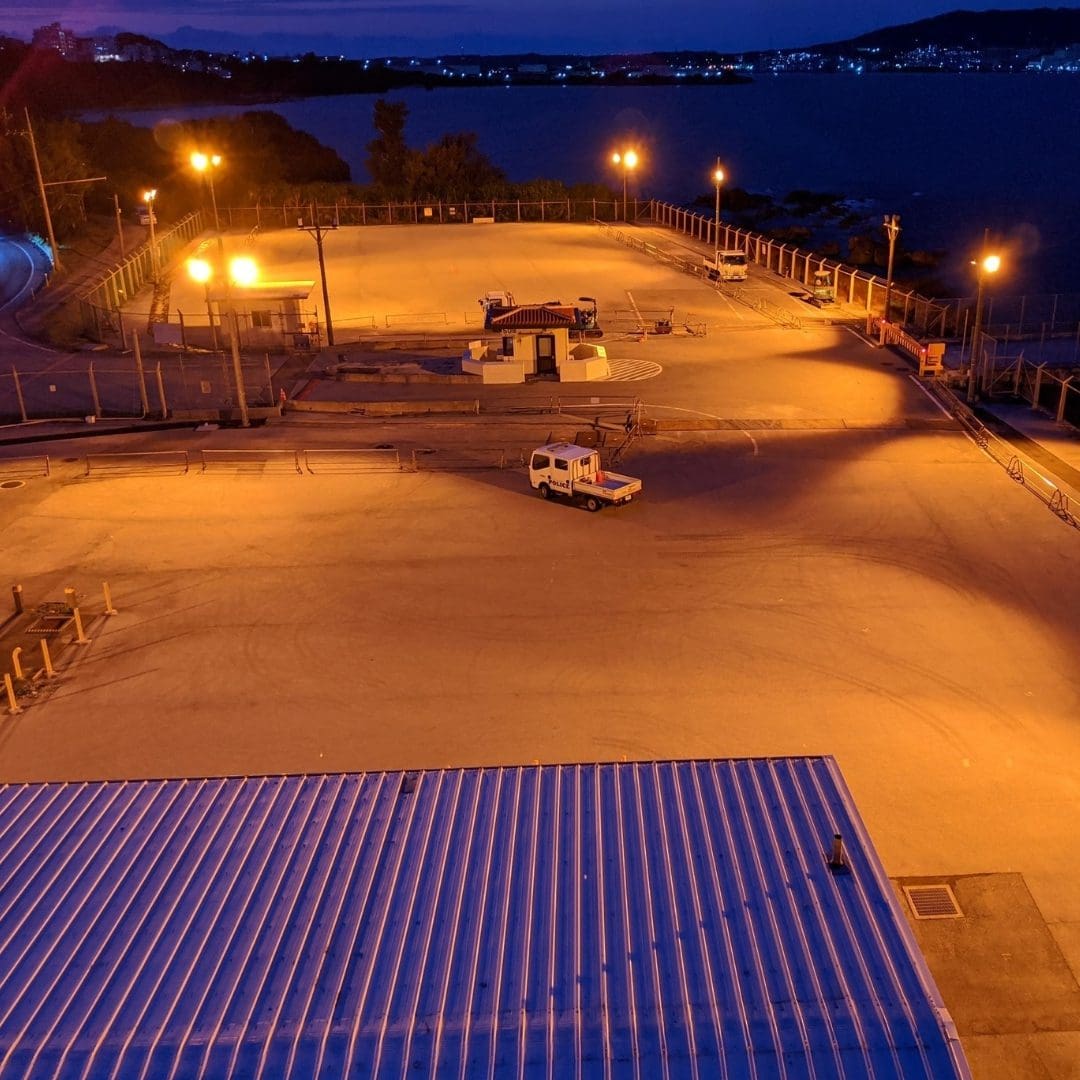
The accompanying photo illustrates a lighting fixture that meets only one of these stringent requirements. It emits light at the correct 590nm amber wavelength, thus adhering to the spectral regulation but falls short in its design; it is not full cutoff. This means that while the wavelength is appropriate, its construction allows some light to escape upwards or sideways, which is not ideal for Flagstaff’s dark sky goals. The Illuminating Engineering Society sets important standards for outdoor lighting, emphasizing effective shielding and lumens-per-acre limitations to reduce light pollution and protect night skies.

On the other hand, the image of the gray APTA sports light fixture, equipped with bird spikes and situated to the right of this text, serves as a model compliant with both regulations. It emits light at the 590nm amber wavelength and features a full cutoff design, ensuring the light is angled parallel to the ground. Such fixtures are particularly beneficial in scenarios where both light pollution and environmental impact are a concern, such as projects near oceans or other sensitive habitats, where controlling artificial light spill is crucial to preserve the natural environment and the clarity of the night sky.
Flagstaff AZ Requires Full Cutoff Light Fixtures with 590nm Amber LEDs
When selecting outdoor dark sky light fixtures for projects in regions with strict light pollution regulations like Flagstaff, it’s crucial to understand the differences between various lighting technologies such as PC amber and 590nm amber. Selecting the appropriate lamp type is essential for compliance with Flagstaff's dark sky regulations. Our customer, keen to comply with Flagstaff’s dark sky requirements, inquired about the suitability of PC amber for their lighting project.
PC amber, known for its low blue light emission, is often recommended for areas with stringent dark sky ordinances. Additionally, ensuring proper color rendition is vital for the effectiveness of various activities, particularly in outdoor sales areas and recreational fields where accurate color representation is critical.
PC Amber in LED Lighting
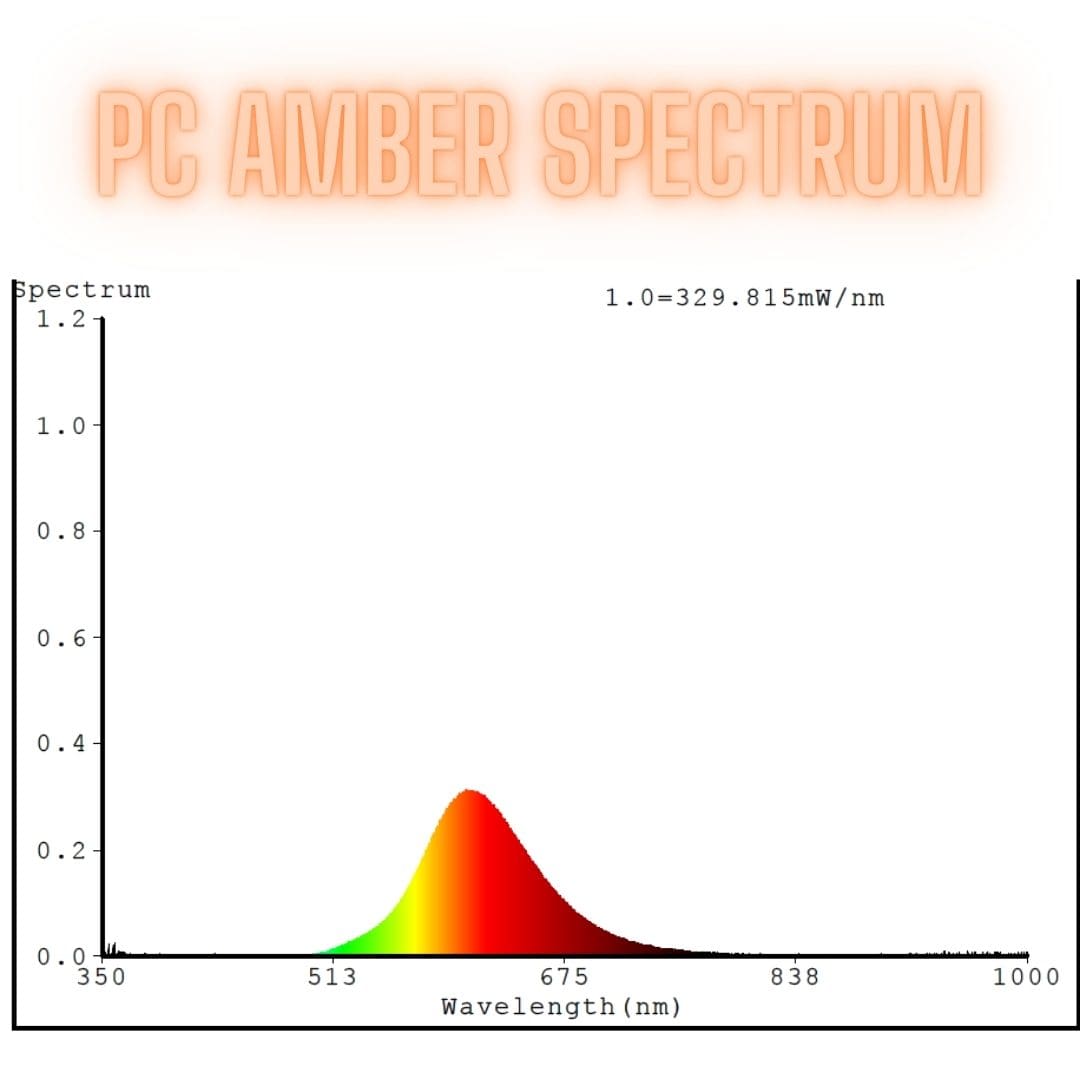
PC amber, or phosphor-converted amber, is a term associated with LED lighting. It emerged as an alternative to low-pressure sodium lights, which are no longer in production. The PC amber LED emits light across a spectrum that includes certain green and deep red wavelengths, as shown on the PC amber spectrum chart. Although PC amber produces a warm amber glow that visually resembles 590nm amber, there are critical differences important for dark sky compliance. Using PC amber lighting is a common practice in areas with strict light pollution regulations.
590nm Amber for Dark Sky Lighting
On a spectral chart, 590nm amber displays an extremely narrow band of light exactly at 590 nanometers. This precision is necessary for meeting the stringent requirements of dark sky exterior lighting policies in Flagstaff, where light pollution must be minimized to protect the night sky’s clarity. Minimizing light trespass is also crucial in compliance with Flagstaff's dark sky regulations. In contrast, PC amber’s broader spectrum, ranging from approximately 513 to 700 nanometers, fails to comply with these specific regulations. Specific light sources, such as yellow light sources, play a significant role in reducing sky glow and light pollution.
Implementing Effective Dark Sky Lighting Solutions
To ensure adherence to Flagstaff’s dark sky ordinances, the customer was advised to use outdoor lighting fixtures that emit light at 590nm and feature a full cutoff design. Full cutoff fixtures are essential in dark sky exterior lighting as they prevent light from spilling upwards or outwards, thereby reducing skyglow and glare. For this project, we recommended the APTA LED wall lantern fixtures with a bracket mount, which meet these criteria. These fixtures are available in various optics, colors, and wattages, providing the customer with versatile options that adhere to dark sky lighting standards while fulfilling their project needs. With various mounting options, this fixture is suitable for a high outdoor ceiling application. Shielding outdoor lighting fixtures near residential areas is crucial to prevent light trespass onto adjacent properties.
This guidance helped our customer understand the importance of choosing the right fixtures for dark sky exterior lighting to ensure both regulatory compliance and effective illumination. Sign standards also play a significant role in ensuring compliance with Flagstaff's lighting codes, particularly in the external and internal illumination of signs.
Learn how an AZ backyard basketball court was illuminated with dark sky lighting.

Community Involvement in Dark Sky Initiatives
The Flagstaff Dark Skies Coalition plays a vital role in promoting community involvement in dark sky initiatives. The coalition works closely with city officials, residents, and businesses to raise awareness about the importance of preserving the night sky. Through education and outreach programs, the community is encouraged to adopt responsible lighting practices, such as using amber light, fully shielded fixtures, and limiting illumination levels. The city’s ordinance, which regulates outdoor lighting installations, is designed to balance the need for safety and security with the need to protect the environment. By working together, the community can ensure that Flagstaff’s dark skies remain a cherished resource for generations to come. The city’s commitment to dark sky protection has made it an attractive destination for tourists and astronomers alike, supporting the local economy and promoting a sense of community pride.
Conclusion
The pursuit of dark sky compliant LED outdoor lighting solutions in Flagstaff is not just about meeting regulatory requirements—it is about preserving the natural nocturnal environment and enhancing the quality of astronomical research. Flagstaff's dark sky initiatives have global significance, as it is recognized as the world's First International Dark Sky City, setting a unique standard for balancing natural light preservation with public and economic concerns. By opting for 590nm amber outdoor lighting fixtures that also feature full cutoff designs, our customers can ensure that their lighting projects contribute positively to these goals. This careful selection process, guided by expert advice from our lighting specialists, ensures that each installation maximizes safety and aesthetic appeal while minimizing light pollution. The cultural importance of the Milky Way cannot be overstated; urban children often grow up without the chance to see this natural wonder, losing a vital connection to the night sky that has inspired humanity throughout history. Through such dedicated efforts, Flagstaff continues to lead by example, showing how communities can balance human needs with environmental stewardship and scientific discovery. This project not only meets the stringent demands of Flagstaff’s dark sky ordinances but also sets a standard for responsible lighting practices nationwide.
Check out this case study about dark sky lighting in Flagstaff.
Frequently Asked Questions About Dark Sky Outdoor Lighting
1. What is dark sky outdoor lighting? Dark sky outdoor lighting refers to lighting solutions designed to minimize light pollution and skyglow. These fixtures help preserve the natural darkness of the night sky, making them crucial in areas near astronomical observatories like those in Flagstaff, Arizona.
2. Why does Flagstaff, Arizona, have strict lighting regulations? Flagstaff is home to major observatories, including the Lowell Observatory and the US Naval Observatory Flagstaff Station. The city’s stringent lighting regulations are intended to reduce light pollution that could interfere with astronomical observations and to preserve the clarity of the night sky for both scientific research and public enjoyment.
3. What are the specific lighting requirements in Flagstaff? In Flagstaff, outdoor lighting must not only be dark sky compliant but also meet specific criteria: light must be within the 585 to 595 nanometers wavelength, typically resulting in a 590nm amber hue, and fixtures must be full cutoff to direct light downwards, and prevent glare and light spill.
4. How do acre limits regulate outdoor lighting in Flagstaff? Acre limits play a crucial role in regulating outdoor lighting in Flagstaff by setting specific lumens-per-acre restrictions. These limits help minimize light pollution and protect dark skies in both residential and commercial areas. By adhering to these restrictions, Flagstaff effectively maintains low levels of light pollution while promoting responsible lighting practices in the community.
5. What is the difference between PC amber and 590nm amber lighting? PC amber (phosphor-converted amber) and 590nm amber lighting differ mainly in their light spectrum. PC amber emits a broader spectrum (approximately 513 to 700 nanometers), which can include parts of the green and deep red spectrums. In contrast, 590nm amber emits a much narrower band exactly at 590 nanometers, which is essential for complying with Flagstaff’s dark sky regulations.
6. Can PC amber lighting be used for darksky approved projects in Flagstaff? No, PC amber lighting generally does not meet Flagstaff’s dark sky requirements due to its broader spectral output. Projects in Flagstaff typically require 590nm amber lighting that also features full cutoff designs to ensure compliance.
7. How are searchlights regulated in Flagstaff? Searchlights are regulated in Flagstaff to limit their use and reduce light pollution. Historical policies and ordinances have been established to protect astronomical observatories and contribute to Flagstaff's recognition as the world's first International Dark Sky City. These regulations ensure that searchlights do not interfere with the clarity of the night sky.
8. What type of lighting fixture is recommended for dark sky compliant projects in Flagstaff? For projects that need to comply with dark sky regulations in Flagstaff, fixtures like the APTO outdoor wall sconce are recommended. These fixtures emit 590nm amber light and are designed with full cutoff capabilities to minimize upward and outward light dispersion.
9. Are there options available for fixtures in different styles and capacities while still being dark sky compliant? Yes, fixtures are available in various optics, colors, and wattages, providing flexibility in design while ensuring adherence to dark sky lighting standards and local ordinances.