
Futsal Court Lighting: LED Design, Layout, and Illumination Standards
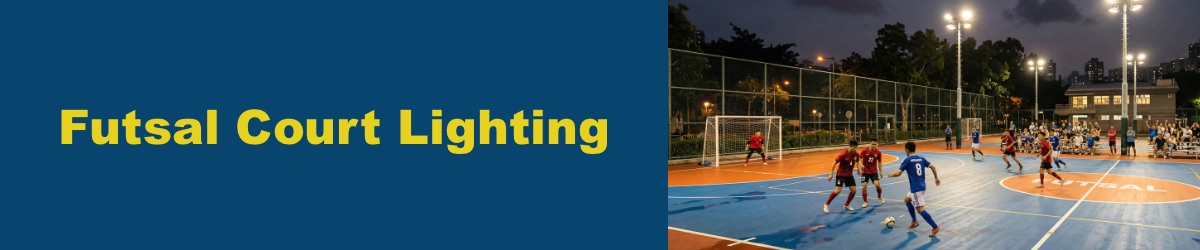
Futsal is a game of lightning-fast transitions and surgical precision. Because the ball is smaller and the court is tighter than traditional soccer, the quality of your Futsal Court Lighting isn't just a luxury, it is a safety requirement.
If your lighting is uneven, players lose the ball in "dead zones." If it’s too dim, reaction times lag. To transform a standard court into a high-performance arena, you need to understand the science behind professional Futsal Court Lighting.
Key Takeaways
-
-
Uniformity is King: High wattage means nothing without balance. Aim for a Max/Min ratio of 2.0 or less to ensure players can track the ball’s speed and trajectory without "strobe" effects or dark zones.
-
Standardize Your Footcandles: For competitive play, 32fc (footcandles) is the professional benchmark. While solar options offer incredible savings at 16fc, they are best suited for recreational or community park environments.
-
Future-Proof with L70 Ratings: Look for fixtures with an L70 rating of 150,000 to 200,000 hours. This ensures that even after decades of use, your lights will still retain 70% of their original brightness, minimizing maintenance costs.
-
The Gold Standard: Futsal Lighting Requirements
To get your court to a professional or safe recreational level, you need to look at three critical metrics:
Average Footcandles (fc)
This measures the intensity of light on the court surface.
- Recreational Play: 20-30 fc
- Club / Competitive Play: 30-50 fc
- Professional / Televised: 50-110+ fc
Uniformity Ratio (The "Dead Zone" Killer)
Uniformity is the ratio of maximum to minimum light levels. For Futsal, you want a Max/Min ratio of 2.0 or less. Anything higher creates dark spots on the court, making the ball appear to "flicker" as it moves across the field, which is a nightmare for players’ depth perception.
Glare Control & Color Temperature
A 5000K (Bright White) color temperature is the industry standard for outdoor sports. It mimics daylight, keeping players alert and ensuring the ball stands out sharply against the court markings.
Shop Futsal Court Lighting Packages
Choosing Your Power Source: Grid vs. Solar
Every facility has a different infrastructure. Here is how the top-tier ASTA and SUNA systems compare for a standard outdoor court.
The Powerhouse: ASTA LED Grid Lighting
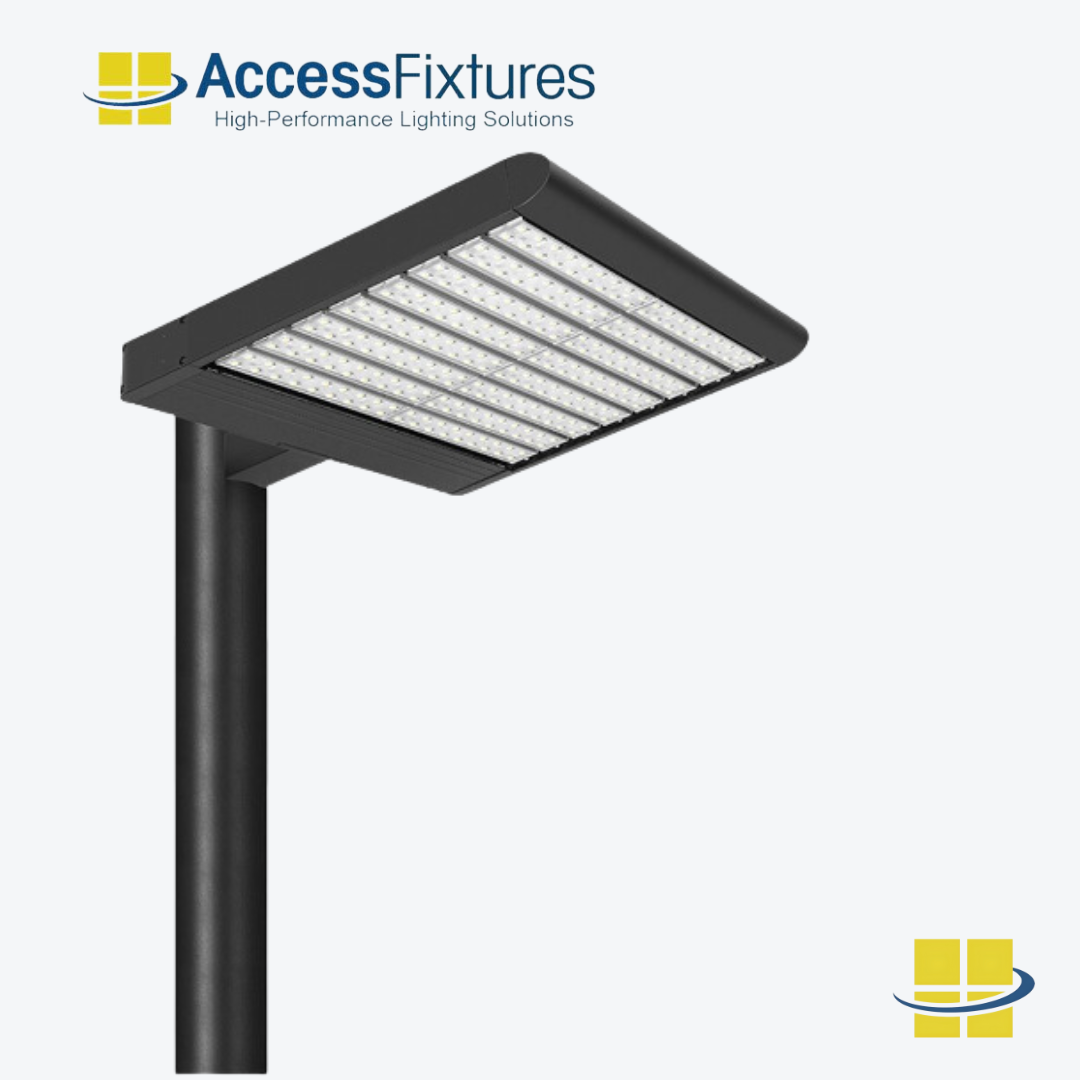
For facilities with existing electrical infrastructure, the ASTA 720W package is the gold standard for performance.
- Performance: Delivers a powerful 32 fc average.
- Uniformity: An elite 1.98 ratio, ensuring seamless coverage from corner to corner.
- Longevity: Rated for 200,000 hours (L70). If you run these lights 4 hours every night, they are built to last over 130 years.
- Best For: Competitive clubs, tournament venues, and high-use urban courts.
Shop Outdoor Futsal Court Lighting Package - Average 32 Footcandles
Shop Outdoor Futsal Court Lighting Package - Average 30 Footcandles
The Eco-Innovator: SUNA Solar LED Lighting
If trenching wires across a park is too expensive or you want a zero-utility-cost solution, the SUNA Solar package is the answer.
- Sustainability: Zero energy bills and no wiring required.
- Performance: Provides 16 fc with a 1.94 uniformity ratio.
- Durability: Featuring lithium batteries and IP66 waterproofing, it’s built for rugged outdoor environments.
- Best For: Remote community parks, eco-conscious facilities, and recreational spaces where "off-grid" is the only option.
Shop Solar Futsal Court Lighting Package - Average 16 Footcandles
Pro-Tips for a Successful Installation
Since most high-performance packages ship as "fixture-only" (poles not included), keep these expert tips in mind:
- Target the 25-30ft Height: To achieve a 2.0 uniformity ratio, fixtures should ideally be mounted at 30 feet. Mounting too low creates "hot spots," while mounting too high can lead to light dissipation (spillage).
- Check Your EPA: When mounting high-performance fixtures like the 15.7 lb ASTA or the 20 lb SUNA, ensure your existing poles can handle the Effective Projected Area (EPA) and weight, especially in high-wind zones.
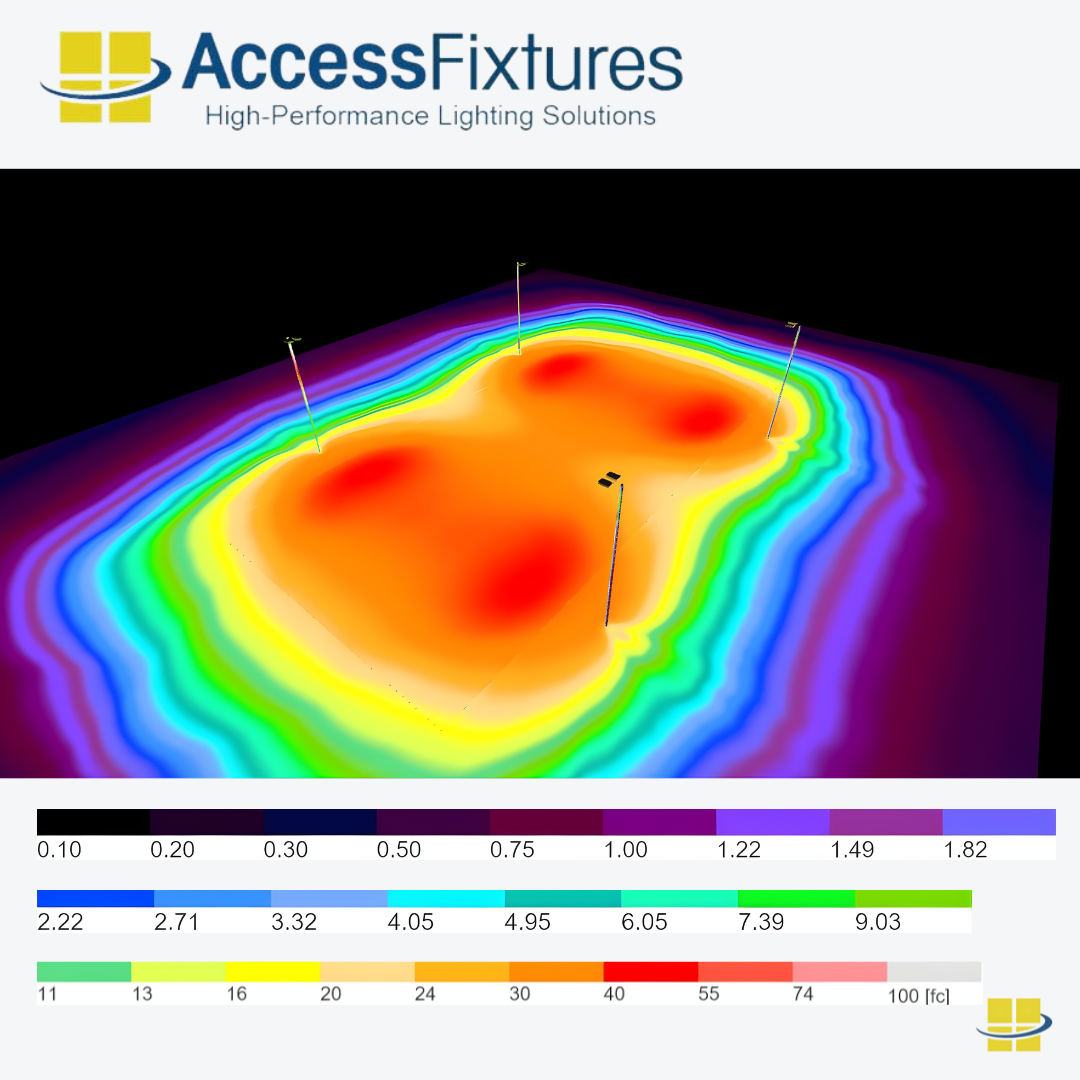
- Demand a Photometric Study: Never guess where to aim your lights. A professional photometric study uses your court’s exact dimensions to provide a "heat map" of light levels, guaranteeing that your 32fc target is met before you even turn a wrench.
Speak to an Access Fixtures Lighting Specialist About Lighting Your Futsal Court at 800-468-9925 or visit our customer service page.

Conclusion
Investing in high-quality futsal court lighting is an investment in the longevity of your facility and the safety of your athletes. Whether you opt for the raw, consistent power of the ASTA Grid-Tie system or the sustainable, trench-free convenience of the SUNA Solar package, the goal remains the same: high visibility and zero distractions. By prioritizing precision optics and proper mounting heights, you transform a simple pitch into a professional-grade arena that is ready for play the moment the sun goes down.
Futsal Court Lighting Frequently Asked Questions (FAQs)
How many lights do I need for a standard futsal court?
For a standard outdoor court, a high-output system like the ASTA package typically uses 8 fixtures (for 32fc) or 16 fixtures (for multi-court setups) mounted at 25–30 feet to achieve professional uniformity.
Can I install these lights on my existing poles?
Yes. Most professional fixtures come with versatile mounting options like L-Mounts, T-Mounts, or Slip Fitters designed to fit standard round or square poles. Always check the weight and EPA (Effective Projected Area) of the new fixtures against your pole’s load capacity.
Is 5000K too bright for a residential neighborhood?
5000K provides the best visibility for sports (Bright White). However, if your court is in a sensitive residential area, you can use full-cutoff optics to prevent light "spill" into neighbors' windows, or consider a 4000K option if local ordinances are strict.
What is the benefit of Solar Futsal lighting if the footcandles are lower?
The primary benefits are zero utility costs and reduced installation expenses. Since no trenching or wiring is required, solar is often 50% cheaper to install in remote areas, making it ideal for community parks where 16fc is sufficient for recreational play.
How long does it take to get a lighting package?
Typically, these high-performance systems require a 2 to 4-week production lead time, followed by shipping. It is recommended to start your project planning at least 2 months before your intended "lights on" date.