
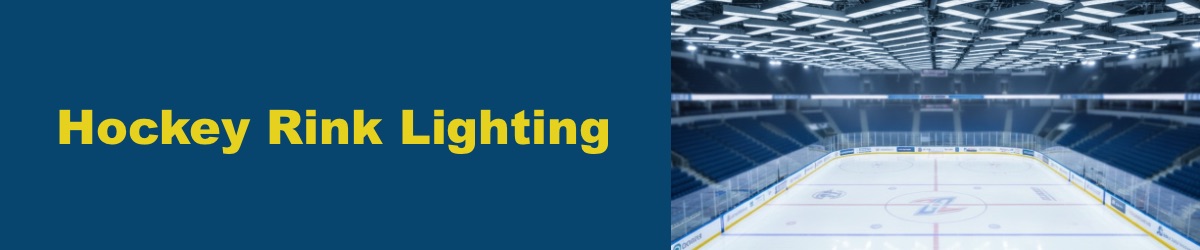
Lighting a hockey rink is far more complex than simply installing fixtures. The choice of wattages, optics, and distribution patterns directly impacts player safety, spectator experience, and environmental responsibility.
Whether you are managing an indoor arena or an outdoor community rink, an optimized system is the difference between a dangerous, blind game and a high-performance environment. Below is the precision-engineered blueprint for lighting the fastest game on ice. Explore Ice Hockey Lighting Packages Here
Hockey Rink Lighting Cheat Sheet
| Feature | Standard Requirement |
| Ideal Color Temperature | 5000K (Cool White) |
| Pro-Level Color Rendering | 90+ CRI (Required for 4K Broadcast) |
| Target Uniformity Ratio | <2.0 Max/Min (1.5:1 for Pro) |
| Typical Mounting Height | 20' - 40' (Indoor) | 30' - 60' (Outdoor) |
| Fixture Lifespan | 50,000 - 270,000 Hours (L70) |
Key Takeaways
-
- Strategic Level-Based Design: Lighting requirements scale with intensity ranging from 20 footcandles (fc) for youth recreation to 150+ fc for professional, high-definition broadcast environments.
- High-Contrast Visuals: A 5000K color temperature and 90+ CRI (for pro-level) are non-negotiable for tracking a black puck against white ice.
- Operational Efficiency: Modern LED systems allow for mixed-wattage layouts that achieve perfect uniformity while reducing energy costs by up to 70%.
How many footcandles are required for a hockey rink?
The speed of the game dictates the lighting. As the level of play increases, reaction time decreases, requiring higher light levels to ensure the puck is never lost in a shadow.
Required Footcandle (fc) Levels
| Level of Play | Target Footcandles | Typical Application |
| Class IV | 20-30 fc | Recreational, Youth, & Community Rinks |
| Class III | 50 fc | High School & Advanced Youth Leagues |
| Class II | 75-100 fc | Collegiate and Semi-Pro (Minimal Broadcast) |
| Class I | 125-150+ fc | Professional Leagues and Televised Events |
How do we stop the "Blind Spot" on high-puck passes?
Achieving high-performance lighting is about more than just brightness; it’s about control. We use Precision Optics with beam angles ranging from 5 degrees to 60 degrees to ensure every lumen is directed onto the ice rather than being wasted on the ceiling or spilling into the neighbors' yard.
This level of focus creates true Uniformity, eliminating the dangerous "dark spots" where a puck could get lost. By using specialized House Side Shielding (HSS) and advanced reflectors, we manage glare so players can track high passes or look up for a shot without being blinded by harsh, high-angle light.
Featured Solution: High-Performance NCAA-Level Package
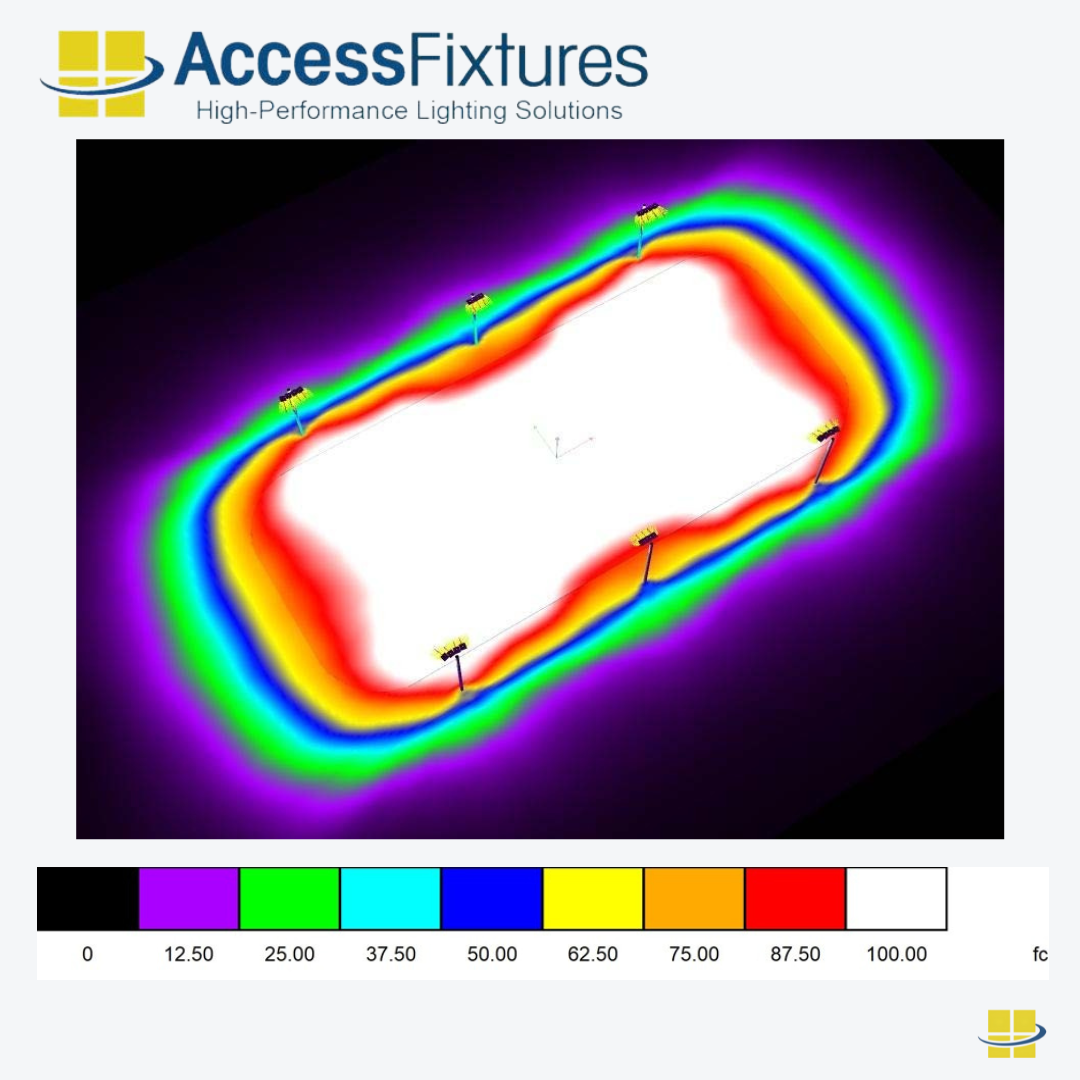
When the level of play moves from recreational to competitive or televised, the margin for error disappears. Our ASTA LED Ice Hockey Rink Lighting Package is engineered specifically to meet these demanding Class I and NCAA standards.
Why this package wins on the ice:
- Pro-Level Intensity: Delivers a powerful average of 108 footcandles, exceeding the requirements for professional and televised play.
- Elite Uniformity: With a 1.49 Max/Min ratio, this system eliminates shadows, ensuring the puck is visible from the center circle to the goal crease.
- Extreme Durability: Rated IP66 and IK10, these fixtures are built to thrive in the vibration and freezing moisture typical of rink environments.
ASTA Package Quick-Specs:
| Component | Specification |
| System Output | 108 Average Footcandles |
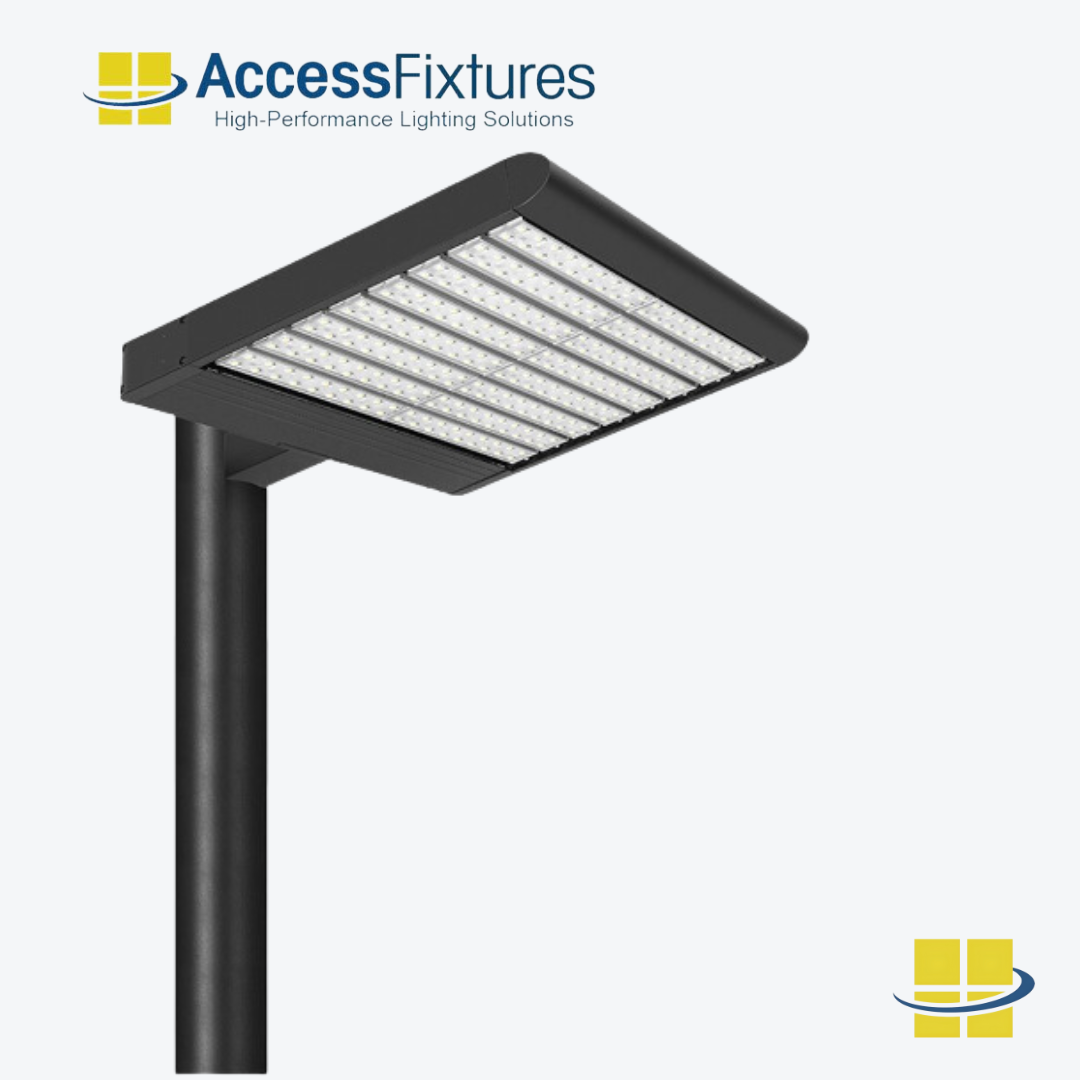
| Fixture Count | (22) 1440w ASTA LED Fixtures |
| Structure | (6) 30-Foot Steel Poles |
| Lifespan | 200,000 Hours (L70) - Two decades of performance |
| Visual Quality | 80+ CRI (4000K or 5000K Options) |
Expert Design Note: This package is pre-engineered for a standard rink layout, ensuring you hit broadcast-ready levels without the trial-and-error of a custom build.
What are the differences between indoor and outdoor hockey lighting?
The environment dictates the hardware. While the visibility goals remain the same, the installation strategy and mounting heights differ:
- Indoor Rinks: Fixtures must account for ceiling reflections and high-ambient heat. Typically mounted between 20' and 40', these fixtures are often attached directly to steel beams.
- Outdoor Rinks: These require weather-proof (IP65/IP66) fixtures built for wind loads and extreme cold. Mounting heights usually range from 30' to 60' on specialized poles to cover the large surface area effectively.
- Off-Grid Solutions: For remote locations or eco-conscious facilities, our upcoming Solar Hockey Rink kits utilize high-density lithium storage to provide Class IV lighting levels without the $50k cost of trenching copper wire.
Indoor Featured Solution: High-Clearance Arena Performance
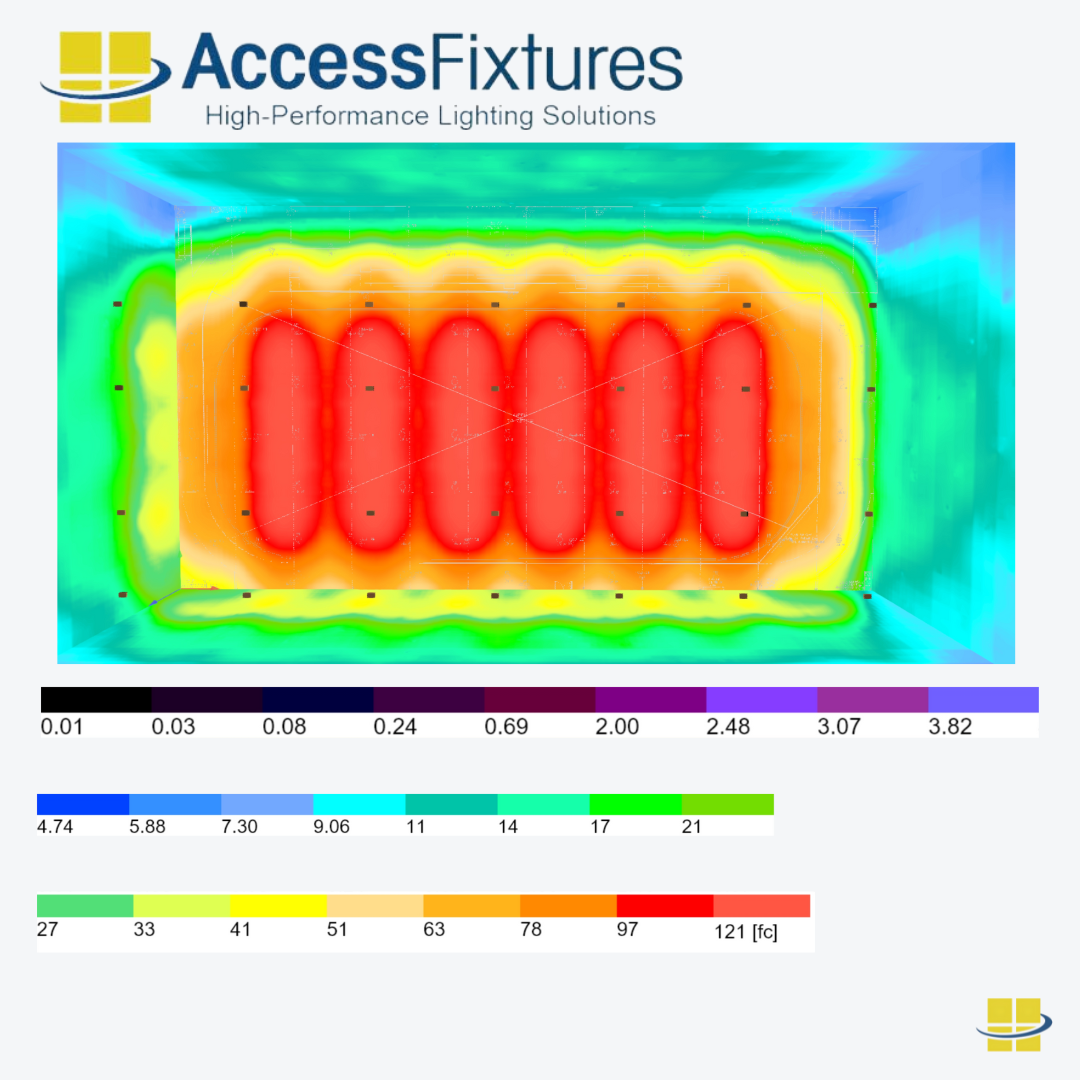
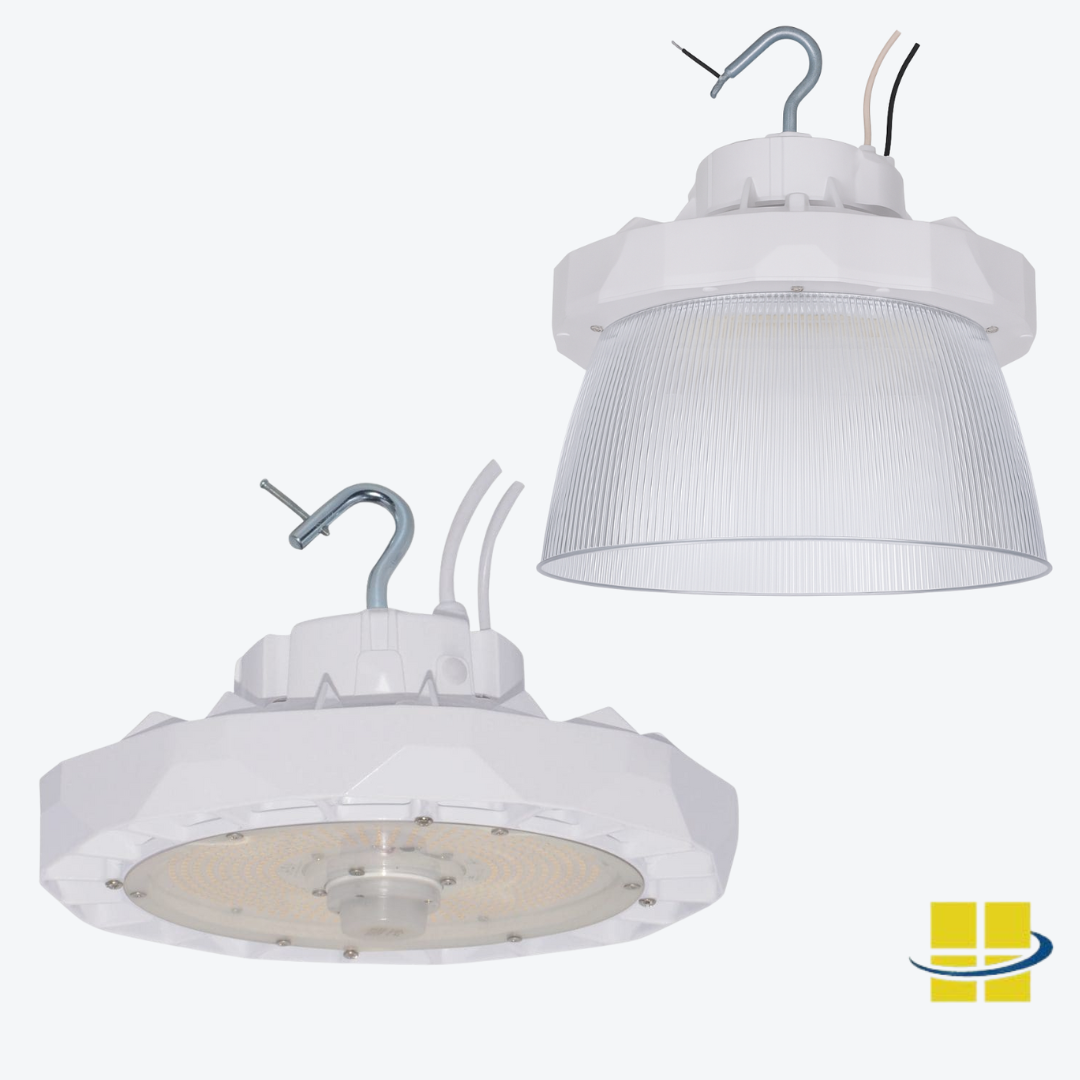
For professional indoor arenas with high ceilings, the HIIO LED Ice Hockey Rink Lighting Package provides the punch and precision required to push light from the rafters to the ice surface without losing intensity.
Why the HIIO System is the Indoor Choice:
- Massive Throw for High Ceilings: Engineered for a 45ft mounting height, this system uses 55 high-efficiency fixtures to deliver a powerful 80 average footcandles.
- Superior Maintenance Design: Featuring a quick-disconnect cable, the HIIO allows for fast maintenance, critical for busy arenas where ice time is at a premium.
- Broadcast-Ready Consistency: Achieving an 80fc average, this package meets the rigorous standards for Class II collegiate and televised play.
HIIO Indoor Package Quick-Specs:
| Component | Specification |
| System Output | 80 Average Footcandles |
| Fixture Count | (55) 244w HIIO LED High Bays |
| Mounting Style | Hook Mount (Ideal for Steel Beams/Rafters) |
| Durability | IP65 & IK08 (Resistant to moisture and impacts) |
| Visual Quality | 5000K Bright White for maximum ice contrast |
Design Tip: High-clearance indoor rinks often struggle with "light loss" before the beam hits the ice. The HIIO's precision optics ensure that all 244 watts of power per fixture are focused exactly where the players need it.
Why is a mixed-wattage layout better than a single-wattage design?
A "one-size-fits-all" wattage strategy is inefficient. We use Purpose-Driven Design to optimize your budget and visibility:
- High-Wattage Clusters (400w - 1000w LED): Positioned over center ice, blue lines, and goal zones where intense vertical illumination is critical.
- Lower-Wattage Fill (200w - 400w): Used for peripheral zones and stands to maintain safety without wasting power.
How do outdoor rinks remain Dark Sky compliant?
Modern sports lighting is not just about performance inside the arena; it is about responsibility outside of it. For outdoor rinks, our fixtures utilize directional cutoffs to eliminate uplight and backlight. This keeps the rink bright and professional while protecting surrounding residential areas from nuisance light and safeguarding nocturnal wildlife habitats.
Conclusion: The Synergy of Science and Sport
The effective illumination of a hockey rink is far more than a simple installation; it is a sophisticated synergy of electrical engineering, optical physics, and sports performance criteria. Every decision, from selecting the specific wattage of an LED fixture to the precise orientation of its optics, directly contributes to the safety of the athletes, the fairness of the competition, and the enjoyment of the spectators.
Facility managers and lighting designers must view the rink as a high-speed, demanding visual environment. By carefully balancing the factors of wattage, uniformity, glare control, and environmental impact, they move beyond basic functional lighting to create a premium, responsible, and high-performance space. Ultimately, when the lighting is optimized, it disappears, allowing the dramatic action on the ice to take center stage, maximizing puck visibility, and ensuring the only thing hindering a player's view is the opponent's defenseman.
Hockey Rink Lighting Frequently Asked Questions (FAQs)
What is the ideal Correlated Color Temperature (CCT) for ice rink lighting?
The ideal CCT is generally between 5000K and 6000K (Cool White to Daylight). This color temperature provides the bright, crisp light necessary to maximize the contrast between the black puck and the white ice, which is essential for tracking speed.
Are metal halide lights still used in new rink installations?
Rarely. While metal halide lights were the standard for decades, they are being rapidly replaced by LED sports lighting systems. LEDs offer superior energy efficiency, instant on/off capability, better light quality, and significantly lower maintenance costs.
What is the most important factor in achieving uniformity?
Optical control and fixture placement. Uniformity is achieved by using precision optics to shape the beam and then staggering the fixtures in a layout that ensures the beams overlap effectively, eliminating shadows and hot spots.
How does lighting affect broadcast quality?
For HD and 4K broadcasts, lighting must be high intensity (100 - 150 fc), have a high Color Rendering Index (CRI of 80+), and maintain an extremely tight uniformity ratio to prevent flicker or visual distortion on camera.
What is light trespass, and how is it controlled?
Light trespass, or light pollution, is light that spills beyond the boundaries of the rink. It is controlled using directional optics, precise aiming, and house-side shielding (physical barriers) to ensure the light stays contained to the playing surface.
What are the power savings of switching to LED?
Switching from traditional metal halide or high-pressure sodium to LED can typically result in power savings of 50% to 70% due to the significantly lower wattage required for the same light output.
How often should footcandle levels be checked?
Facility managers should verify footcandle levels annually or after any significant maintenance or fixture replacement. This ensures the system still meets the initial design and performance criteria.
What is the role of the mounting height in rink lighting design?
Mounting height influences the required beam angle. Taller mounts generally allow for wider beam spreads to cover a larger area, while shorter mounts may require narrower, more intense beams to push light across the surface without excessive glare.
Do dimming capabilities matter for a hockey rink?
Yes, dimming is highly beneficial. It allows the facility to run the system at lower wattage/footcandle levels for practices or maintenance, achieving greater energy savings without sacrificing the ability to instantly boost light for games.
What is a typical lighting lifespan for LED hockey fixtures?
High-quality LED sports fixtures typically have a rated lifespan of 50,000 to 100,000 operating hours before light output degrades below 70% of the initial lumen output L70.