

For decades, industrial lighting was designed with a single goal: visibility. If a worker could see the labels on a pallet, the lighting was considered "adequate." But as we move into 2026, the industry is waking up to a critical scientific reality: standard lighting ignores the biological needs of the human body. To solve this, industrial human-centric lighting has become the new standard for high-performance facilities.
In 24/7 operations, "standard lux" isn't enough. To dominate the next era of facility management, we must look at Melanopic Lux. This isn't just about how well we see; it’s about how light dictates our energy, alertness, and safety.
Key Takeaways
-
-
Biological Impact: Melanopic Lux measures how light suppresses melatonin, directly controlling worker alertness and circadian rhythms.
-
Safety & Productivity: High melanopic-to-photopic (M/P) ratios in night-shift lighting can reduce "micro-sleeps" and fatigue-related accidents.
-
The 5000K Tool: Utilizing 5000K cool-white light isn't an aesthetic choice; it is a biological tool to maintain high performance during late-night hours.
-
Standard Lux vs. Melanopic Lux: What’s the Difference?
Most light meters measure Photopic Footcandles (or Lux), the light that hits our cones and allows us to perceive detail and color. However, the human eye also contains intrinsically photosensitive Retinal Ganglion Cells (ipRGCs). These cells don't help us "see" in the traditional sense; instead, they act as the body's light-sensing biological clock.
Melanopic Lux (and Melanopic Footcandles) measures the stimulation of these ipRGCs:
- Low Melanopic Levels: Signals the brain to produce melatonin (rest/sleep).
- High Melanopic Levels: Signals the brain to suppress melatonin and increase cortisol (alertness/focus).
The Conflict: High Visibility ≠ High Alertness
Most industrial facilities are over-lit for vision but under-lit for biology. A workspace might measure 50 Photopic Footcandles, but if that light is a "warm" 3000K, its Equivalent Melanopic Footcandles (EMFC) might only be 21. To combat the "3 a.m. slump," facilities now aim for a vertical melanopic illuminance of at least 23 Melanopic Footcandles (250 Melanopic Lux) at the eye level of the worker.
5000K vs. 3000K: A Productivity Tool, Not an Aesthetic
In a warehouse environment, the choice of Color Temperature (Kelvin) is often treated as a matter of preference. From a Human-Centric Lighting perspective, however, it is a precision instrument.
The Science of the "Blue Spike"
Natural daylight has a high concentration of blue light, which has a high melanopic impact. Our 5000K and 5700K industrial high bays mimic this blue-rich spectrum.
- Day Shift/Night Shift Peak: Using 5000K lighting during peak work hours maintains the "biological day," keeping workers focused.
- The Danger of 3000K at Midnight: While 3000K (warm white) is cozy for a lounge, using it in a 24/7 manufacturing plant can inadvertently trigger a sleep response in workers.
By choosing fixtures like the OTOK or HIIO at 5000K, you achieve nearly double the biological alertness stimulus of a warm fixture (0.90 M/P Ratio vs 0.45 M/P Ratio) without increasing your power consumption.
Industrial Human-Centric Lighting in Practice
Implementing circadian warehouse lighting requires an understanding of the M/P Ratio (Melanopic to Photopic ratio). At Access Fixtures, we provide precision-engineered luminaires that bridge the gap between simple visibility and biological performance.
1. The OTOK LED High Bay: Precision for Clean-Tech & Quality Control
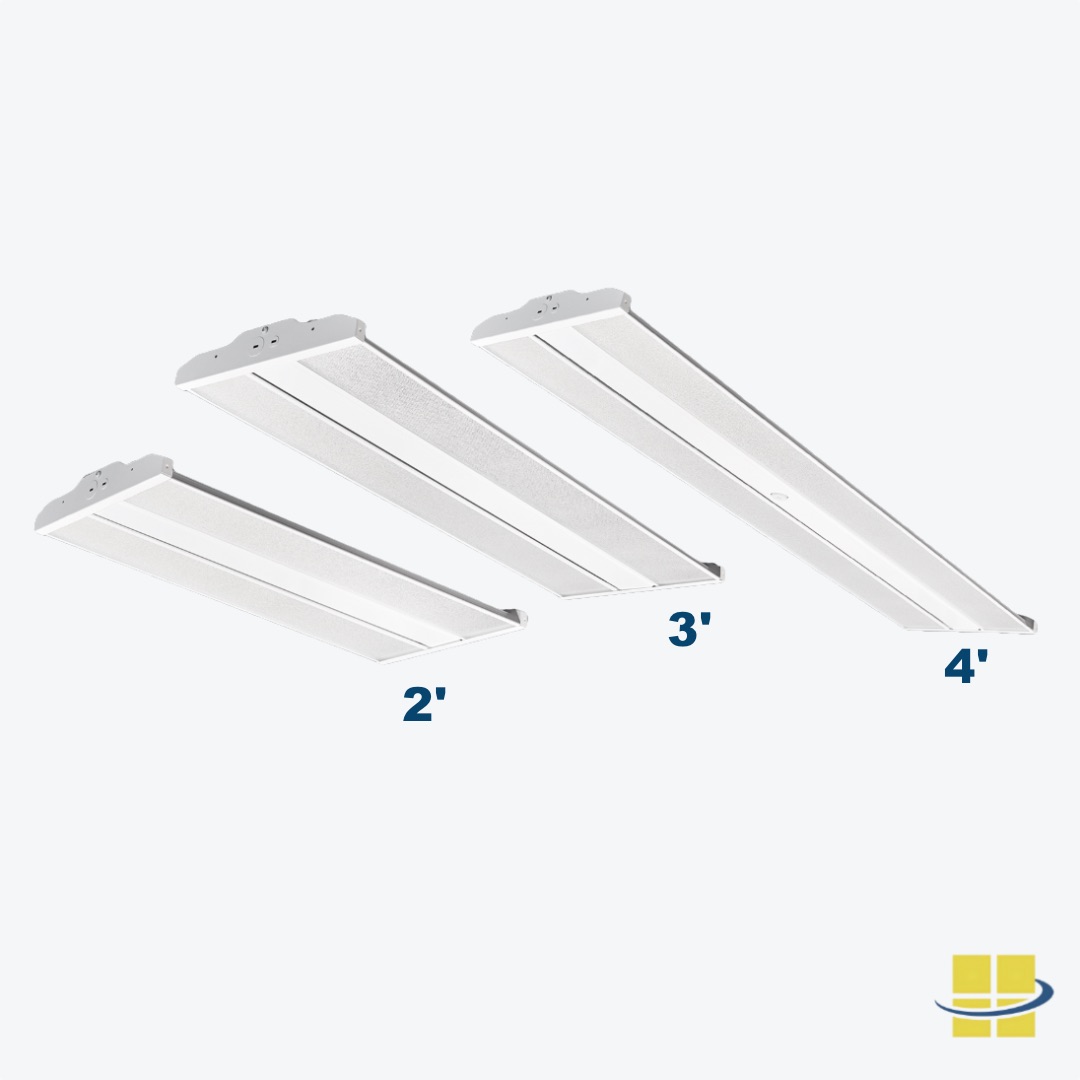
The OTOK LED High Bay Lights is a specialized luminaire designed for clean rooms, clean-tech manufacturing, and high-stakes assembly environments. Unlike traditional round high bays that create hot spots and contrast fatigue, OTOK uses a dispersed LED design to provide smooth, even illumination.
- Glare-Free Precision Optics: Featuring twin matte polycarbonate lenses and 85° × 85° precision optics, the OTOK eliminates the "shining" hot spots that lead to micro-sleeps and eye strain. It provides high footcandle levels where they matter most, supporting workers through visually demanding inspection tasks.
- Field-Selectable Performance: Facility managers can customize the biological stimulus on-site. OTOK is field-selectable for both wattage (available in 2', 3', and 4' lengths up to 400W) and color temperature (4000K or 5000K).
- Rugged, Clean Construction: Constructed from galvanized cold-rolled steel with a white powder-coated finish, it features 6kV surge protection and an L70 rating of 100,000 hours for maintenance-free operation in sensitive environments.
2. The New & Improved HIIO: Superior Visual Comfort
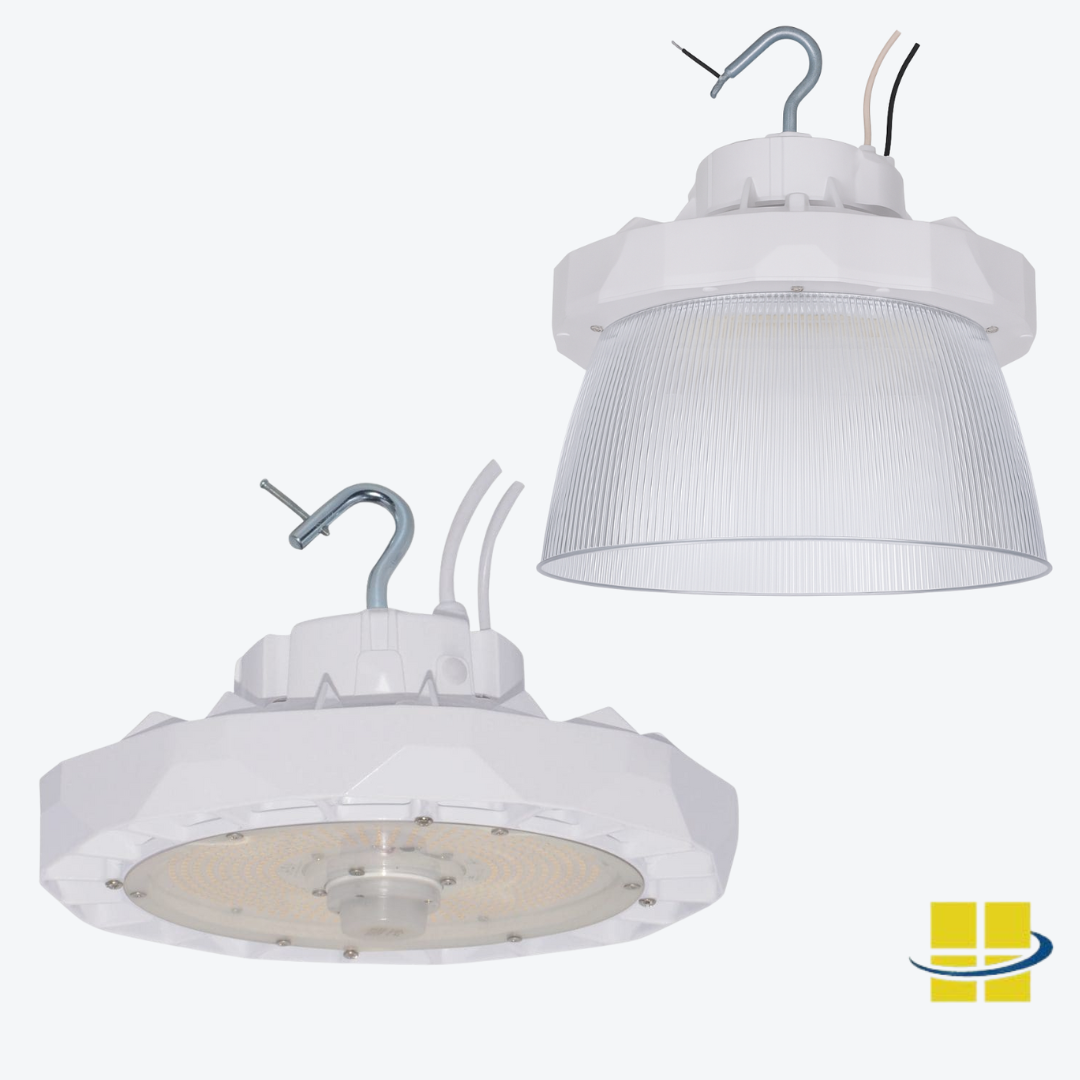
The HIIO LED High Bay Lights have been enhanced to offer industry-leading visual comfort. This fixture is the go-to solution for facilities seeking to maximize worker productivity through superior light distribution.
- The Refractor Lens Advantage: The new refractor lens diffuses light more evenly than standard polycarbonate, providing a softer, more uniform light. This significantly reduces glare and minimizes the eye strain that often triggers the body's fatigue response during a long shift.
- Tunable Wattage & Kelvin: The HIIO offers exceptional flexibility with two selectable wattage versions (ranging from 100W up to 240W) and selectable Kelvin switches. This allows for precise on-site tuning to meet the specific biological and footcandle requirements of any commercial or industrial workspace.
- Industrial Reliability: Built with a die-cast aluminum housing and integrated heat sinking, the HIIO is IP65 wet-location rated and features a quick-disconnect cable for simplified servicing.
3. UPTA: The Powerful Solution for Extreme Heights
For facilities with clear heights of 60 feet and more, such as hangars, stadiums, and convention centers, the UPTA LED High Bay Lights provide the raw power necessary to deliver biological lighting stimulus across vast distances.
- Extreme Output & Efficiency: Delivering up to 160 LPW and over 150,000 lumens from a single fixture, UPTA ensures that even at extreme mounting heights, sufficient footcandles reach the floor to suppress melatonin and keep workers alert.
- Spill Light Control: UPTA utilizes a patented, high-efficiency spill light control system to provide uniform anti-glare illumination. With color rendering up to Ra>90, it mimics natural light quality in even the largest industrial environments.
- Extreme-LIFE: Servicing lights at 60+ feet is a massive operational expense. UPTA's high-grade aluminum heat sink design produces an L70 rating of 200,000 hours, virtually eliminating maintenance downtime.
Advanced Customization: From bird spikes and SAC safety cables to microwave motion sensors (MMS) with remote controls, UPTA is a rugged, future-ready platform that integrates easily into existing infrastructure.
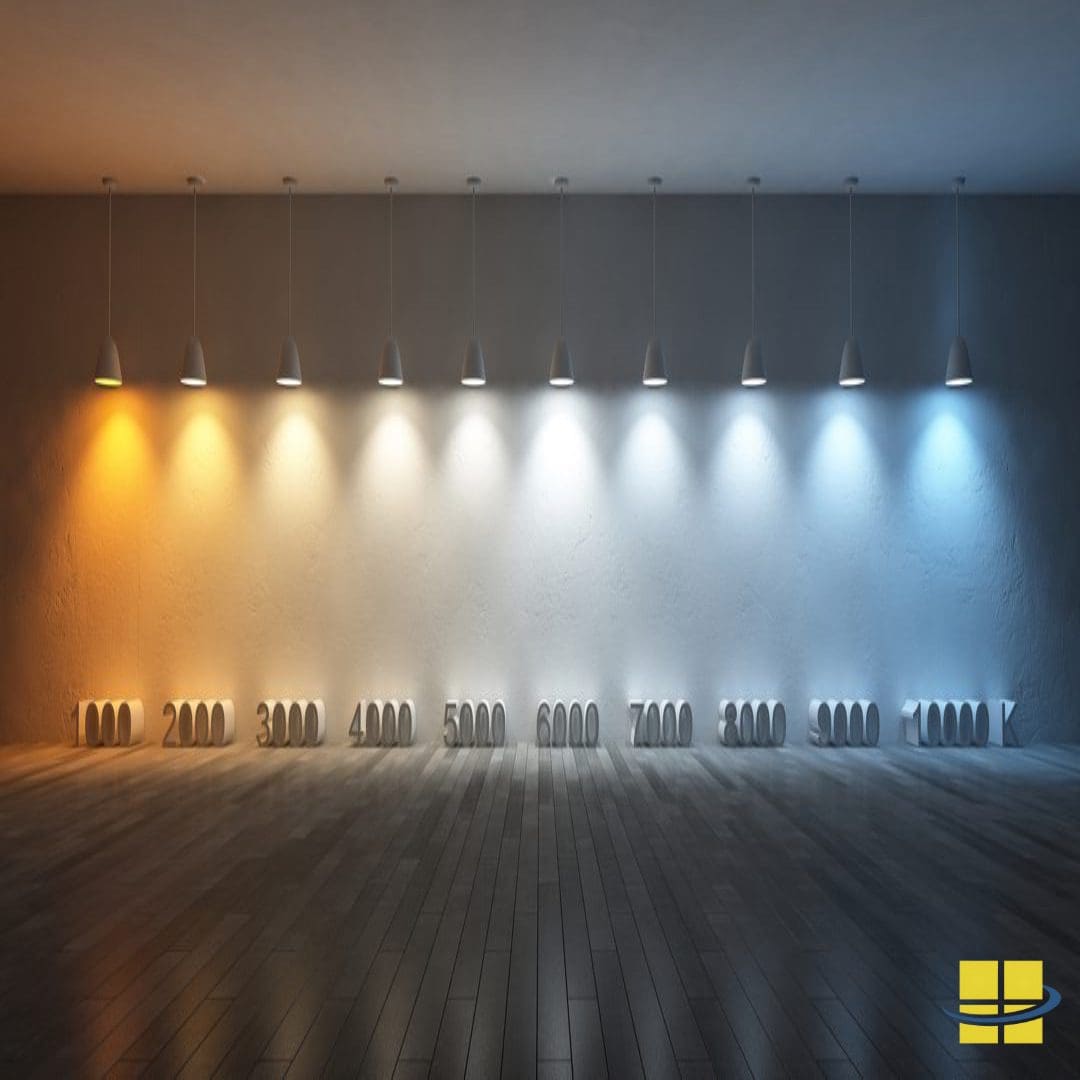
Kelvin Temperature Chart

| Fixture Model | Max Lumens | Rated Life (L70) | Best Application |
| OTOK | ~58,668 | 100,000 Hours | Clean Rooms / Quality Control |
| HIIO | ~35,000+ | 50,000 Hours | General Manufacturing / Retail |
| UPTA | ~150,000+ | 200,000 Hours | Hangars / Stadiums / High-Bay |
Conclusion
As we navigate the industrial landscape of 2026, the definition of "quality lighting" has evolved. It is no longer enough for a fixture to be bright; it must be biologically effective and economically viable for the long haul. By shifting the focus to Melanopic Footcandles, facility managers are moving away from the "brightness at all costs" model and toward a smarter, human-centric approach. Whether it is the precision-engineered OTOK for clean rooms, the visually comfortable HIIO with its new refractor lens, or the powerful UPTA for high-ceiling hangars, Access Fixtures offers the technical expertise to optimize your 24/7 operations and protect your most valuable asset: your workforce.
Frequently Asked Questions (FAQs)
How do I convert Footcandles to Lux for these calculations?
To find the Lux equivalent of your reading, simply multiply your footcandle measurement by 10.76.
What is a Melanopic Lux/Footcandle calculator?
This is a specialized tool used by lighting designers to convert standard light meter readings into biological "Equivalent Daylight Illuminance" to ensure workers stay alert during night shifts.
How does the HIIO refractor lens specifically help workers?
The refractor lens diffuses light more evenly than standard polycarbonate, which significantly reduces glare and "contrast fatigue"—the primary triggers for eye strain and mental exhaustion during long shifts.
What makes the UPTA suitable for 60-foot ceilings?
Its massive output of up to 960W and 160 LPW efficiency allow it to project the high footcandle levels and biological stimulus required over vast distances that standard high bays cannot reach.
Is OTOK suitable for clean rooms and tech manufacturing?
Yes. OTOK is specifically precision-engineered for clean room lighting, clean-tech assembly, and quality-control environments where uniform, low-glare light is required.
What is the "M/P Ratio"?
This is the ratio of Melanopic to Photopic light. A higher ratio (typically found in 5000K "cool" light) is much more effective at stimulating the circadian system and maintaining daytime alertness.
Can I adjust the brightness and color of these fixtures after installation?
Both the HIIO and OTOK series feature field-selectable wattage and Kelvin switches, allowing you to tune the brightness and biological impact of the light on-site.
What is "EXTREME-LIFE" in the context of the UPTA?
It refers to the UPTA’s L70 @ 200,000-hour rating. This ensures the light retains 70% of its initial brightness for 200,000 hours, which is 4x longer than standard industrial LEDs.
Why is 5000K preferred for night shifts over 3000K?
The blue-rich spectrum of 5000K light mimics natural daylight and suppresses melatonin production, helping night-shift workers stay focused and avoiding the "3 a.m. slump."
Do these fixtures support smart controls?
Yes. The OTOK, HIIO, and UPTA all support 0-10V dimming, and options like plug-and-play occupancy sensors or microwave motion sensors (MMS) are available for scalable energy management.