
Complete Guide to Outdoor Hockey Rink Lighting: LED Solutions for Winter Sports
Introduction: Why is Outdoor Lighting Essential for Outdoor Hockey Rinks?
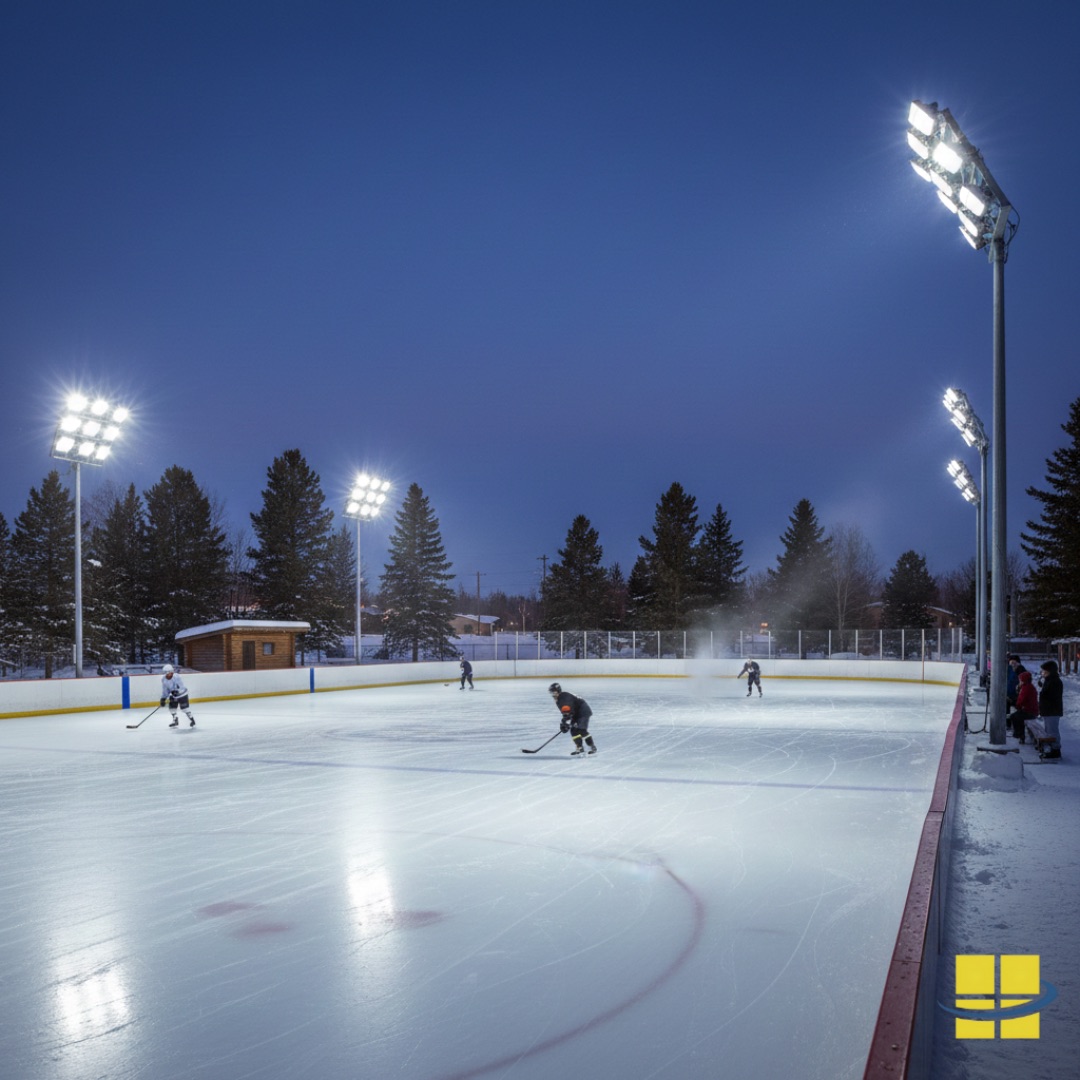
Outdoor hockey rink lighting systems provide essential illumination for ice hockey rinks during evening hours, overcast conditions, and winter months when natural light is insufficient. Modern LED hockey rink lights have revolutionized how facility owners approach rink lighting, delivering superior energy efficiency, enhanced light quality, and dramatically reduced operating costs compared to traditional metal halide fixtures.
Proper lighting transforms outdoor rinks from daylight-only facilities into versatile venues that extend playing hours and improve safety for players and spectators.
What Will This Guide Cover?
This comprehensive guide examines LED lighting solutions specifically designed for outdoor hockey rinks, covering technical requirements, installation considerations, energy efficiency benefits, and cost analysis. We focus exclusively on outdoor applications and do not address indoor hockey rinks or indoor facilities' lighting needs.
Who Should Read This Guide?
This guide is designed for facility managers, rink operators, municipal recreation departments, and private rink owners planning outdoor hockey lighting projects. Whether you’re retrofitting existing lighting on an established rink or designing illumination for a new outdoor ice hockey rink, you’ll find actionable guidance for making informed lighting decisions.
Why Does Optimal Rink Lighting Matter?
Inadequate rink lighting creates safety hazards, limits facility usage, and reduces spectator experience during outdoor ice hockey games. Modern LED hockey rink lighting addresses these challenges while delivering long-term savings through reduced energy costs and minimal maintenance requirements.
Key Takeaways
-
-
LED hockey rink lights offer superior energy efficiency and cold-weather performance, making them ideal for outdoor ice hockey rinks by reducing energy costs and providing instant, reliable illumination in harsh winter conditions.
-
Proper lighting design, including fixture placement, beam angle selection, and glare control, is essential to ensure uniform illumination, minimize shadows and reflections, and enhance safety and visibility for players and spectators.
-
Modern LED lighting solutions require minimal maintenance with long lifespans and weather-resistant construction, transforming outdoor rink lighting into a cost-effective, durable, and environmentally friendly solution that extends rink usability and improves the overall experience.
-
What Are the Fundamental Lighting Requirements for Outdoor Hockey Rink Lighting?
Outdoor hockey rink lighting refers to specialized lighting systems designed to illuminate ice hockey rinks during low natural light conditions while withstanding harsh winter weather.
Unlike indoor facilities that operate in controlled environments, outdoor rinks face unique challenges, including temperature extremes, precipitation, wind, and highly reflective ice surfaces that can create glare and shadows. These conditions demand robust fixtures with superior weather resistance and precise light distribution.
Proper lighting enables safe puck visibility, clear sight lines to corner boards and the blue line, and uniform illumination across the entire ice surface.
How Do Weather and Environment Affect Outdoor Rink Lighting?
Cold temperatures below freezing affect fixture performance, with traditional lighting systems experiencing reduced efficiency and longer warm-up times. Snow accumulation can block light output, while ice formation on fixtures creates maintenance challenges and potential safety hazards.
This connects to lighting system selection because outdoor rinks require fixtures with high impact resistance ratings and weatherproof enclosures to maintain consistent performance throughout winter seasons.
How Much Light (Footcandles) Is Needed to Play Hockey Safely?
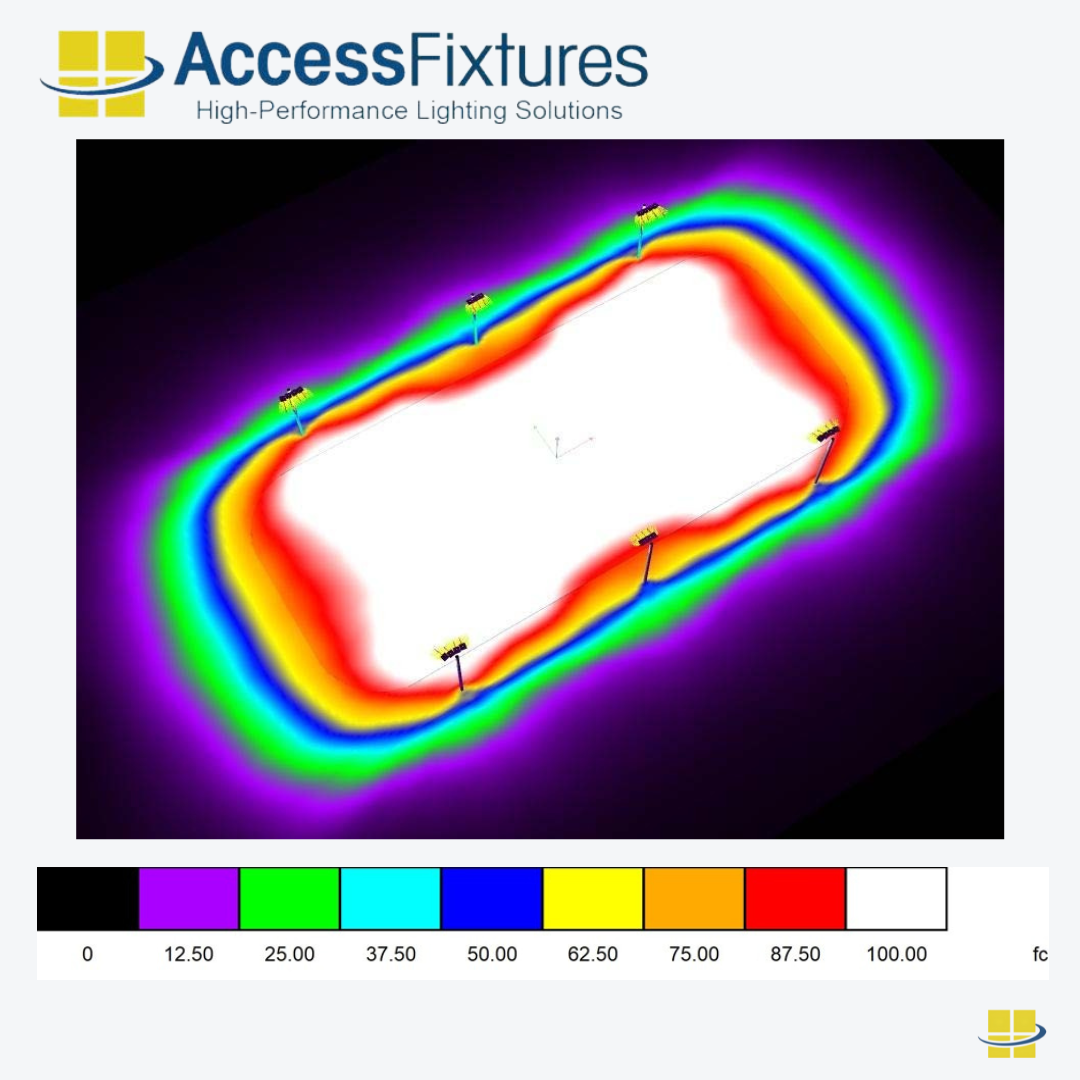
Recreational outdoor rinks typically require 20-30 footcandles at ice surface level for safe play, while competition-level facilities need 50-80 footcandles for tournaments and televised events. Light uniformity ratios should not exceed 3:1 to prevent dark spots that could hide pucks or create visibility challenges.
Building on environmental challenges, proper light quality becomes even more critical outdoors, where reflective ice surfaces can amplify glare problems if beam angles and fixture positioning are not carefully planned.
Why Is LED Technology the Best Choice for Outdoor Hockey Rinks?
LED hockey rink lights have emerged as the preferred lighting solution for outdoor ice hockey rinks, offering significant advantages over metal halide and high-pressure sodium fixtures traditionally used in these applications.
How Do LEDs Perform in Sub-Zero Temperatures?
LEDs provide improved efficiency in sub-zero temperatures, actually increasing light output as ambient temperatures drop. Unlike metal halides that require warm-up periods and may fail to ignite in extreme cold, LED lights provide instant-on capability regardless of temperature.
This connects directly to outdoor rink operations because games and practices cannot wait for traditional lighting systems to reach full output during cold winter conditions.
What Are the Energy Efficiency and Cost Savings Benefits of LED Hockey Rink Lights?
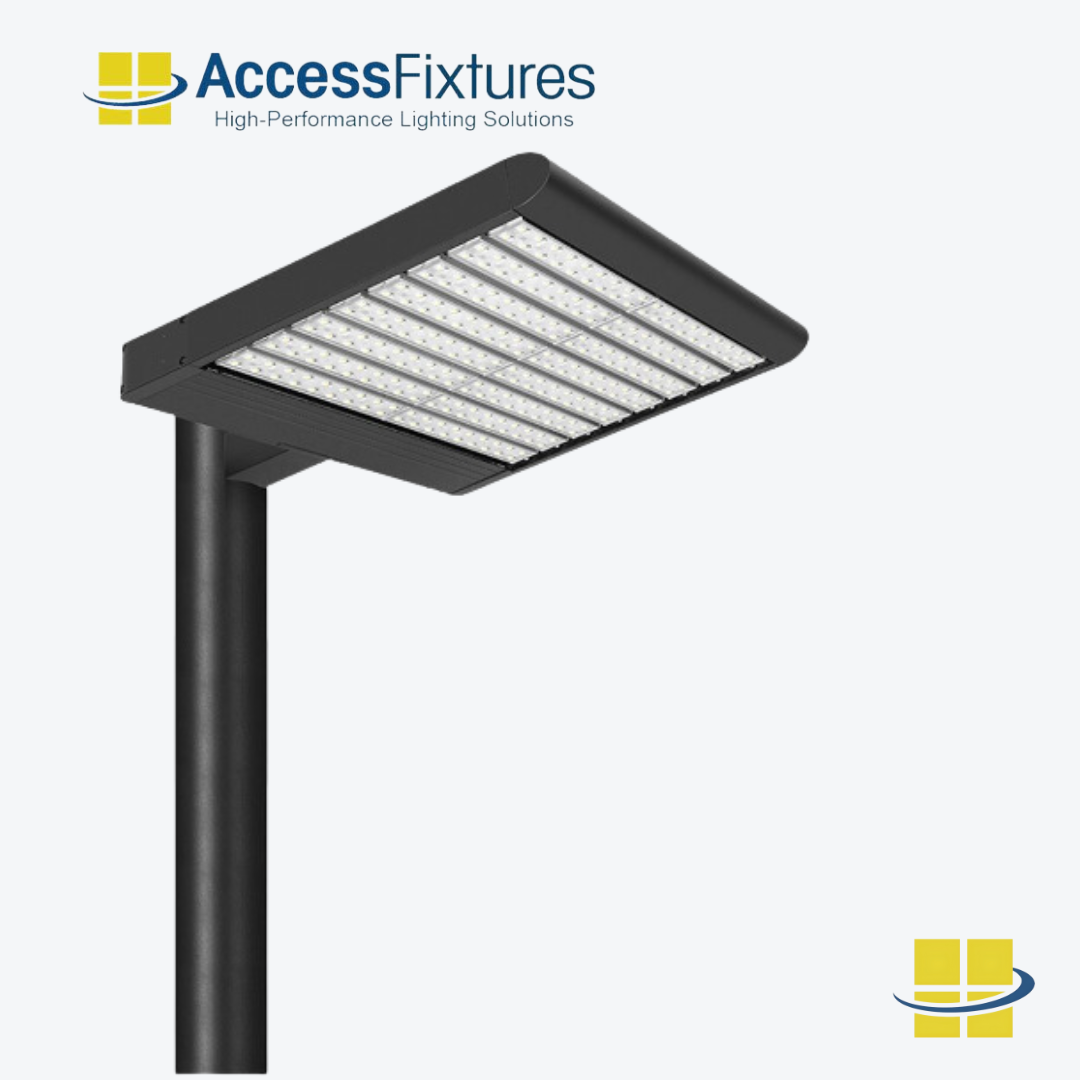
LED hockey rink lighting delivers 50-70% energy reduction compared to metal halide fixtures while providing superior light quality for ice hockey. A typical 400W LED fixture can replace a 1000W metal halide lamp while delivering equivalent or better illumination levels.
Unlike traditional lighting that generates substantial heat, potentially affecting ice quality, LED lights produce minimal heat output that preserves ice surface integrity.
What Durability and Weather Resistance Features Are Needed for Hockey Rink Lighting?
Modern LED hockey rink lights feature IP65 or IP66 ratings for complete protection against snow, ice, and moisture infiltration. Impact resistance ratings of IK08 or higher protect against pucks, equipment, and ice debris that could damage fixtures during play.
Key Points:
- L70 @ 100,000+ hour lifespan reduces maintenance requirements
- Instant restart capability after power interruptions
- No LED fixture replacement costs for decades of operation
What Should Be Considered During the Design and Installation of Outdoor Hockey Rink Lights?
Effective outdoor hockey rink lighting design builds on LED technology advantages to create lighting solutions that meet illumination requirements while minimizing glare, shadows, and maintenance challenges.
Step-by-Step: Outdoor Rink Lighting Design Process
| Step | Description | Key Action |
| 1. Site Assessment | Measure rink dimensions and evaluate electrical infrastructure capacity. | Identify optimal mounting locations. |
| 2. Photometric Analysis | Calculate required light levels based on use (recreational vs. competition). | Determine fixture quantities for uniform illumination. |
| 3. Fixture Selection | Choose LED lights with appropriate lumen output, beam angles, and weather resistance. | Ensure IP/IK ratings match local climate. |
| 4. Placement Planning | Position fixtures to minimize shadows and maintain proper setback distances. | Control glare near the corner boards and the blue line. |
| 5. Installation Scheduling | Coordinate electrical work and fixture mounting. | Schedule during off-season or warm weather periods. |
Comparison: Pole-Mounted vs. Structure-Mounted Systems
| Feature | Pole-Mounted | Structure-Mounted |
|---|---|---|
| Installation Cost | Higher initial cost | Lower if structures exist |
| Maintenance Access | Requires lift equipment | May use existing access |
| Light Distribution | Optimal positioning flexibility | Limited by structural locations |
| Aesthetic Impact | Purpose-built appearance | Integrates with existing buildings |
Pole-mounted lighting solutions provide superior light uniformity and fixture positioning control, while structure-mounted installations offer cost savings when suitable mounting points already exist.
How Can Control Systems Improve Efficiency and Use?
Motion sensors can automatically activate rink lights when players arrive, reducing energy costs during low-use periods while ensuring immediate illumination for safety. Photocell controls provide dusk-to-dawn operation, while timer systems enable scheduled lighting periods that align with facility operating hours.
What Are the Common Outdoor Hockey Rink Lighting Challenges and Their Solutions?
Understanding common obstacles in outdoor hockey rink lighting helps facility managers make better decisions during the planning and installation phases.
Challenge 1: Ice Glare and Reflection Management
Solution: Select fixtures with asymmetric beam angles and anti-glare shields that direct light downward while minimizing reflection off the ice surface.
Proper fixture mounting heights between 25-35 feet, combined with appropriate beam angles, create glare-free viewing conditions for players and spectators.
Challenge 2: Uneven Light Distribution
Solution: Professional photometric design ensures uniform light coverage by calculating precise fixture spacing and aiming angles.
Computer modeling identifies potential dark spots and shadow areas before installation, allowing designers to adjust fixture positions for optimal light uniformity across the entire rink.
Challenge 3: High Energy Costs
Solution: LED conversion reduces energy consumption by 50-70% while utility rebate programs often offset 20-40% of initial fixture costs.
Many facility owners achieve full return on investment within 3-5 years through reduced energy costs and eliminated lamp replacement expenses.
Challenge 4: Winter Maintenance Access
Solution: LED fixtures with 100,000+ hour lifespans eliminate routine fixture changes during winter months when lift access becomes difficult.
Weather-sealed designs prevent moisture infiltration that causes premature failure in traditional systems, ensuring reliable operation throughout winter seasons.
Conclusion and Next Steps
LED hockey rink lighting provides outdoor ice hockey facilities with energy-efficient, durable, and high-quality illumination that enhances safety while reducing operating costs. The technology’s superior cold-weather performance and minimal maintenance requirements make it the optimal lighting solution for outdoor rinks.
How Can I Get Started with My Outdoor Hockey Rink Lighting Upgrade?
- Conduct Site Assessment: Document current lighting conditions, electrical capacity, and mounting options available at your facility.
- Obtain Professional Consultation: Work with an Access Fixtures lighting specialist who understands hockey-specific requirements for glare control and light uniformity.
- Analyze Total Cost of Ownership: Calculate energy savings, maintenance reductions, and available utility rebates to determine project ROI.
Outdoor Hockey Rink Lighting Frequently Asked Questions (FAQs)
What are the benefits of LED lights for outdoor hockey rink lighting?
LED lights offer superior energy efficiency, instant full brightness even in cold weather, longer lifespan, reduced maintenance costs, and better light quality with uniform illumination and glare control.
How many footcandles are needed for outdoor hockey rink lighting?
Recreational outdoor rinks typically require 20-30 footcandles, while competition-level or televised events need 50-80 footcandles for optimal visibility and safety.
Can LED hockey rink lights withstand harsh winter conditions?
Yes, LED fixtures designed for outdoor hockey rinks have high impact resistance and weatherproof ratings (IP65/IP66), ensuring reliable operation despite snow, ice, and extreme cold.
What is the ideal mounting height for outdoor hockey rink lights?
Mounting heights between 25 and 35 feet are recommended to balance uniform light distribution, minimize glare, and reduce shadows on the ice surface.
How do LED lights help reduce energy costs at outdoor rinks?
LED lights consume 50-70% less energy compared to traditional metal halide fixtures and generate less heat, which also helps reduce refrigeration energy costs by preserving ice quality.
Are there control systems available for outdoor hockey rink lighting?
Yes, motion sensors, photocells, and timers can be integrated to automate lighting operation, improve energy efficiency, and provide flexibility for different rink usage schedules.
Can existing outdoor hockey rink lighting be retrofitted with LED fixtures?
Absolutely. Retrofitting existing lighting with LED fixtures is a common upgrade that improves light quality, reduces energy consumption, and lowers maintenance without major structural changes.
What role does glare control play in outdoor hockey rink lighting?
Glare control is crucial to prevent light reflection off the ice surface from impairing player and spectator vision. Proper beam angles and fixture placement help create a glare-free environment.
How long do LED hockey rink lights typically last?
Access Fixtures LED hockey rink lights generally have lifespans exceeding 1000,000 hours, offering decades of reliable operation with minimal maintenance.
Are there any rebates or incentives for upgrading to LED hockey rink lighting?
Many utility companies and government programs offer rebates and incentives for energy-efficient LED lighting upgrades, which can significantly reduce upfront costs.
Additional Resources
Lighting Calculation Tools: Professional photometric software helps model light distribution and verify compliance with hockey lighting standards.
Utility Rebate Programs: Most electric utilities offer substantial rebates for LED lighting retrofits that can offset 20-40% of project costs.
Industry Standards: Illuminating Engineering Society (IES) guidelines provide detailed specifications for sports lighting applications, including ice hockey.
Professional Installation: Certified electrical contractors experienced with outdoor sports lighting ensure proper installation and compliance with local codes.