

Ever wondered why some street lights are turning purple? The unusual color is primarily due to the degradation of the phosphor layer in LED bulbs, which raises the question: why are street lights purple? In this article, we’ll delve into the causes of this phenomenon, its implications, and what can be done to fix it.
Key Takeaways
-
-
Purple LED street lights result from the degradation of the phosphor layer, often due to manufacturing defects and environmental stressors.
-
The color shift to purple poses safety risks, decreasing visibility for drivers and pedestrians, and creates potential legal and financial liabilities for facility managers.
-
Preventive measures, including prompt replacements, regular inspections, and the use of advanced materials, are essential to maintain LED light performance and safety.
-
What Are The Causes of Purple LED Street Lights?
The primary cause of purple street lights is the degradation of the phosphor layer in LED bulbs. This layer is crucial for converting the blue light emitted by the LED chip into the white light we typically see. When this phosphor layer fails, often due to adhesion issues or poor manufacturing, the street lights shift from bright white to a deep blue or purple hue, sometimes exhibiting a purple glow, and mysteriously turning purple. Additionally, blue LEDs can also contribute to the overall color shift observed in these purple lights.
Adhesion failures in the silicone-phosphor layer, often resulting from poor manufacturing practices or subpar materials, lead to cracks and delamination. These defects expose the underlying blue led chip or violet LED chips, causing the emitted light to take on a purple appearance. Additionally, heat buildup and repeated vibrations can exacerbate this delamination process, further contributing to the color shift and affecting color consistency.
Moreover, the cumulative effect of multiple LEDs experiencing such degradation can result in entire arrays of street lights turning purple. The failure isn’t isolated to a single light but can spread across a network, making it a widespread issue that requires significant attention.
Why Are Purple Street Lights More Than Just a Cosmetic Issue?
While it might look funky or futuristic, purple LEDs don’t perform like the lights they were designed to replace.
Here’s what’s really happening:
- Reduced CRI (Color Rendering Index) – These lights no longer provide true-to-life color visibility, making it harder to see objects or faces clearly.
- Narrowed Spectrum – Instead of broad-spectrum 4000K–5000K lighting, you’re getting a limited blue-heavy spectrum, degrading overall visual effectiveness.
- Lower Effective Lumens – Even if the fixture still outputs the same lumens, the perceived brightness that your eye can effectively use is reduced. It’s the same principle we learned moving from HPS to LED, now working in reverse.
- Safety Risks – Diminished visibility can increase the risk of accidents or crime in poorly lit areas.
If a facility knows the lights in its parking lot have degraded and doesn’t take corrective action, this could raise liability concerns, especially in the event of an incident.
What Are The Factors Contributing to Phosphor Degradation?
Several factors contribute to the degradation of the phosphor layer in LED street lights. These include manufacturing defects, environmental stressors such as UV exposure and high humidity, and the natural aging of materials.
Understanding these factors is crucial for addressing and preventing the premature failure of LED lighting systems.
Manufacturing Defects
Manufacturing defects are a significant cause of phosphor degradation. Poor quality control, inconsistent phosphor application, and the use of subpar materials can all contribute to the premature failure of LED street lights. When the manufacturing process is flawed, it can lead to the deterioration of adhesion between the LED chip and the silicone-phosphor layer, resulting in brittleness and potential delamination.
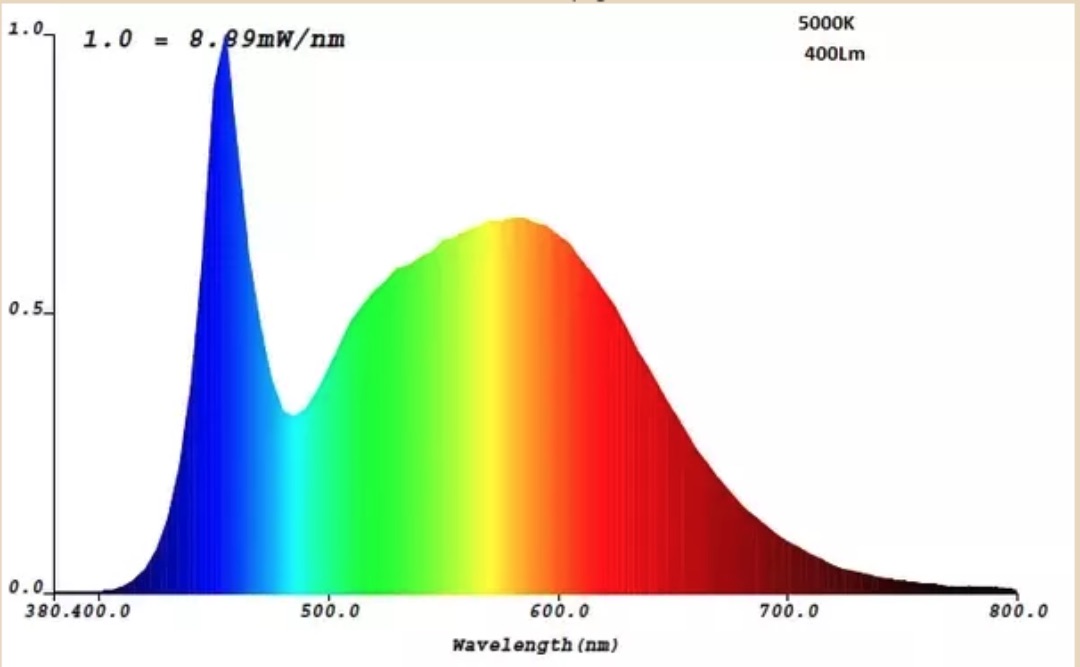
Spectrum Chart of an LED That is 5000 Kelvin

As The Light Degrades, it is shifting to a Narrower Blue Spectrum That Emits a Purple Light
These defects can cause fine cracks to develop in the phosphor layer, which can grow over time and lead to significant color shifts. Defective production processes not only affect the performance of the LEDs but also their longevity, making it essential for manufacturers to adhere to strict quality control measures.
Environmental Stressors
Environmental factors also play a crucial role in the degradation of the phosphor layer. UV exposure, high humidity, and temperature fluctuations can all accelerate the wear and tear of LED components. Despite the IP66 waterproofing standard that offers protection against dust, water, and adverse weather conditions, these stressors can still impact the long-term performance of LED street lights.
UV exposure, in particular, can cause cracks or complete delamination of the silicone phosphor layers, leading to the emission of blue or purple light instead of the intended white light. This highlights how these layers can emit light, emphasizing the importance of environmental resilience in the design and construction of LED lighting fixtures.
Material Aging
Over time, the materials used in LED lights naturally degrade, which can result in noticeable shifts in color, especially in older models. This aging process can weaken the phosphor layer, causing it to lose its effectiveness and leading to a shift in the light emitted from white to purple or blue.
Microscopic examination of the phosphor layer reveals the extent of its degradation, providing valuable insights into the aging process and helping to develop more durable materials for future LED lighting systems, including those with a phosphor coating and a phosphor silicone layer.
What Are The Implications of Purple LED Street Lights
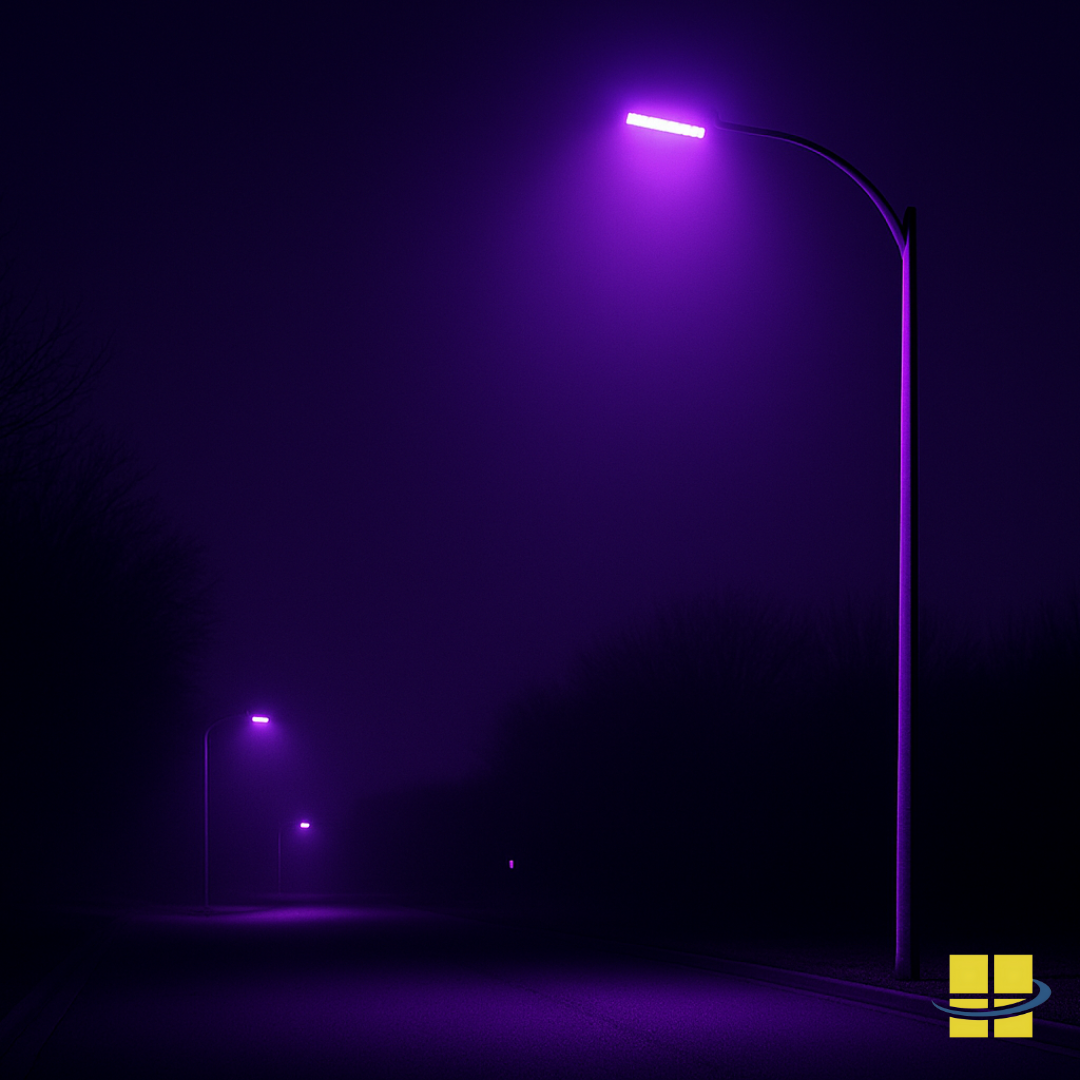
The shift to purple lighting has several implications, particularly concerning safety and legal liability. While these purple street lights can be visually striking, they pose significant safety concerns for both drivers and pedestrians due to reduced visibility and altered perception of surroundings. Additionally, this issue places a financial and legal burden on facility managers responsible for maintaining these lighting systems.
Health experts have also raised concerns about the potential impact of purple street lights on human health, including disturbances in circadian cycles and sleeping patterns. Utility providers, for their part, view this issue as a nuisance that complicates their operations. Additionally, some are questioning whether purple street lights harmful effects could extend beyond mere inconvenience.
Safety Concerns for Drivers and Pedestrians
The blue light emitted by purple street lights can significantly hinder the ability to see fine details at night, making it difficult for drivers to recognize obstacles, read signs, and discern traffic signal colors, especially with passing vehicles. Despite meeting minimum light intensity requirements, purple street lights are not as effective as white lights for visibility, leading to poorer visibility and potential safety hazards for both drivers and pedestrians. The blue hues of the light can further complicate these issues.
Diminished visibility from purple LED street lights increases safety risks, potentially leading to accidents or crime. The reduced Color Rendering Index (CRI) of degraded purple LEDs makes it difficult to see objects or faces clearly, further impacting driver and pedestrian safety.
Liability Issues for Facility Managers
The financial burden of addressing defective LED street lights can be substantial for facility managers. Many manufacturers offer warranties for LED streetlights, covering replacements for defects and alleviating some of the financial strain. Engaging with manufacturers can provide insights into potential defects associated with specific LED batches, helping facility managers plan maintenance and avoid legal liabilities.
Facility managers can face legal liabilities if defective LED street lights contribute to accidents or reduced visibility. Ensuring that lighting systems are in good working order is crucial for maintaining safety and avoiding a potential safety hazard.
What Is The Proven Solution to Purple Street Lights? | Access Fixtures
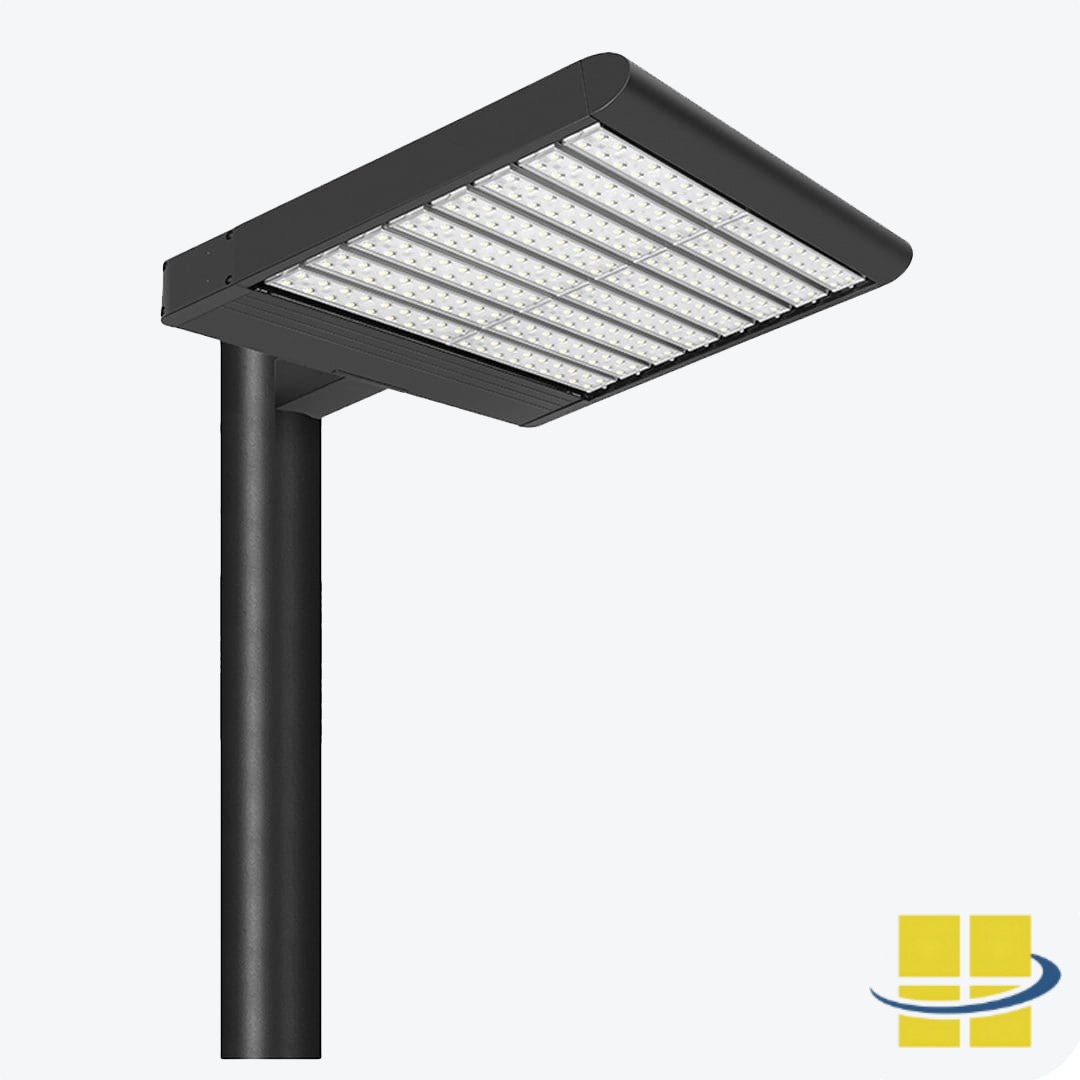
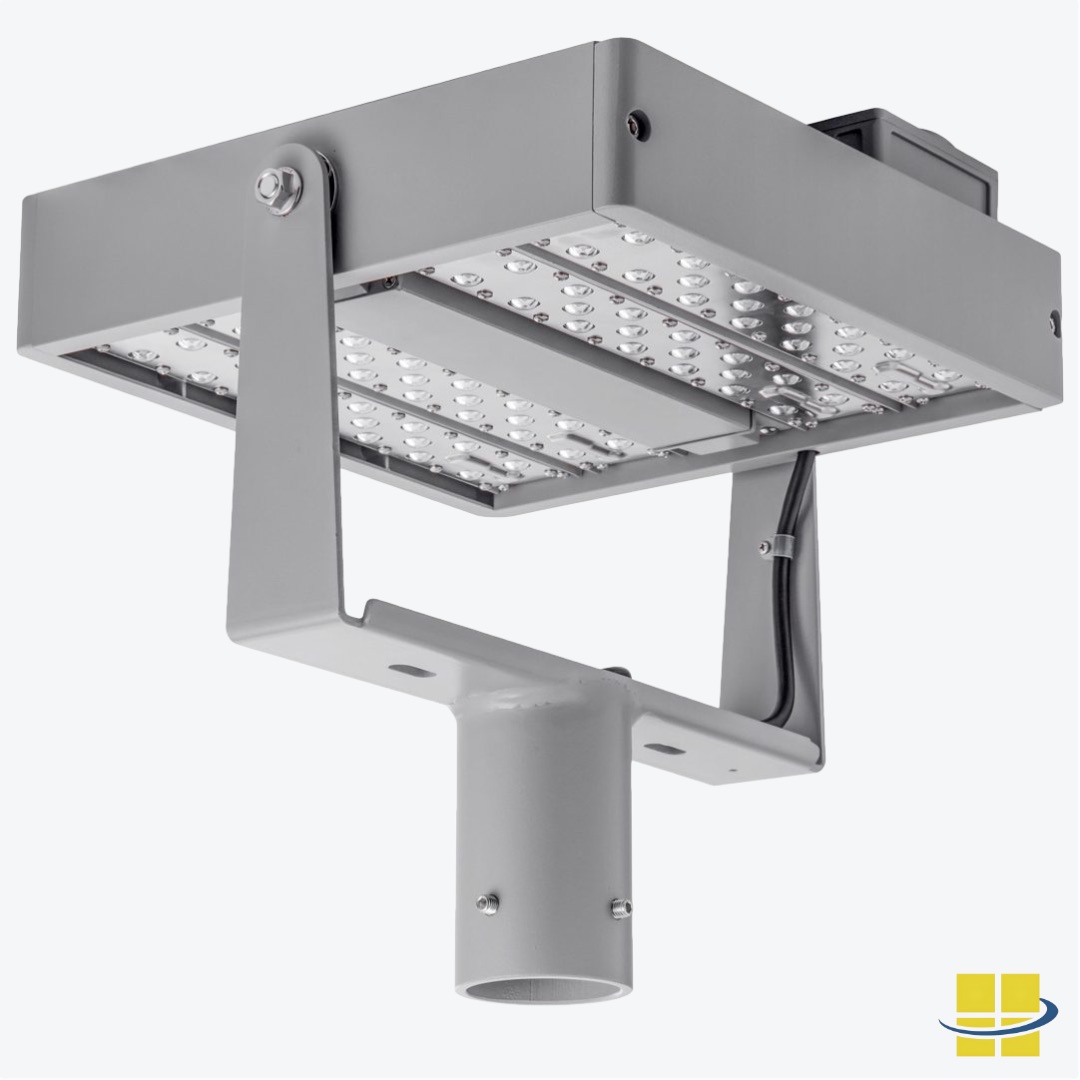
Purple streetlights aren’t just an eyesore they’re a safety hazard and a liability risk. The fastest and most effective solution is to replace defective fixtures with high-quality luminaires built to maintain true white light for years. Access Fixtures street and area lights are engineered with advanced phosphor technology, resilient construction, and rigorous quality control to prevent the color-shift issues that plague lower-grade products. Pairing our fixtures with a proactive inspection schedule ensures consistent performance, optimal visibility, and peace of mind for drivers, pedestrians, and facility managers alike.
Prompt Replacement Strategies
Quick replacement of defective lights purple LED lights is crucial for maintaining public safety and compliance with lighting standards. Immediate action to replace faulty lights can prevent further safety hazards and mitigate liability concerns related to road safety.
Communities are encouraged to replace malfunctioning lights promptly to ensure effective illumination in public and commercial spaces. Facility managers should plan for the replacement or upgrade of purple LED fixtures to high-quality options with tested phosphor stability, including light emitting diodes and a light fixture.
Conducting Nighttime Inspections
Regular nighttime inspections are essential to promptly identify any street lights that have turned purple. These inspections help detect and address issues with street lighting, ensuring proper illumination and safety for drivers and pedestrians.
Facility managers and property owners should conduct these inspections to identify affected purple LED fixtures and take corrective action. Nighttime inspections are a proactive measure to maintain the effectiveness and safety of public lighting systems.
What Are the Prevention Strategies for Premature Degradation of LED Lights?
Preventing the premature degradation of LED lights requires a combination of advanced phosphor blends, resilient construction techniques, and regular maintenance and testing. These strategies ensure the longevity and reliability of LED lighting systems, reducing the likelihood of color shifts and maintaining optimal light quality.
Advanced Phosphor Blends
Utilizing superior quality phosphor materials can significantly improve the durability of LED lights. Advanced phosphor blends enhance the longevity of LED lighting, preventing premature degradation and maintaining consistent light quality.
Reputable LED manufacturers use these advanced blends and resilient construction techniques to ensure the reliability of their products. By investing in high-quality materials and new technology, they can reduce the risk of phosphor degradation and color shifts.
Resilient Construction Techniques
Employing durable materials in the construction of LED lights can minimize damage from environmental factors. LED street lights often incorporate protection ratings like IP66 to defend against dust, water, and adverse weather conditions, ensuring their resilience in various environments.
Stringent quality control and inspection regimes are implemented by manufacturers to avoid defects in LED street lights. These measures help maintain the integrity and performance of LED lighting systems, providing reliable and energy-efficient illumination, as highlighted by the LED Systems reliability consortium.
Maintenance-Free Design with Long-Lasting Performance
Access Fixtures’ LEDs feature an industry-leading EXTREME-LIFE L70 rating of over 100,000 hours, delivering exceptional longevity that drastically reduces the need for replacements and repairs. Our fixtures are designed to be virtually maintenance-free, giving municipalities and facility managers peace of mind and freeing up resources for other priorities.
While routine inspections and photometric testing can further ensure optimal performance and compliance, the robust construction and advanced materials in our lighting solutions mean minimal upkeep is required, saving you significant time and maintenance costs over the lifetime of your installation. This combination of durability and low-maintenance design guarantees consistent, reliable illumination that stands the test of time.

Want to Learn More About High-Performance LED Lighting Solutions?
-
Why Are Some Street Lights Purple? - A broader look at the causes of purple street lights and how Access Fixtures helps prevent the issue.
-
Commercial Parking Lot Lighting Solutions - Improve safety, visibility, and performance with tailored lighting solutions.
-
Photometric Analysis Services - Ensure your project meets required light levels and uniformity with expert analysis.
-
Landscape Lighting Solutions - Enhance outdoor environments with efficient, durable, and attractive lighting designs.
Conclusion
Understanding why street lights are turning purple allows us to address the root causes and implement effective solutions. From manufacturing defects to environmental stressors and material aging, several factors contribute to the phosphor degradation in LED lights. Addressing these issues through prompt replacement, regular inspections, and preventive measures ensures the reliability and safety of public lighting systems.
By investing in advanced phosphor blends, resilient construction techniques, and ongoing maintenance, municipalities and facility managers can prevent premature degradation and maintain optimal light quality. Taking proactive steps to address and prevent purple street lights is essential for public safety and effective urban illumination.
Purple LED Street Lights Frequently Asked Questions (FAQs)
Why are street lights turning purple?
Street lights are turning purple because the phosphor layer in LED lights is degrading, which reveals the blue or violet LED chips underneath. This color shift is a sign that the lights may need replacement.
What are the main factors contributing to the phosphor degradation in LED street lights?
Phosphor degradation in LED street lights primarily arises from manufacturing defects, environmental stressors like UV exposure and high humidity, as well as the natural aging of materials. Addressing these factors is crucial for ensuring the longevity and performance of LED lighting.
How do purple street lights impact safety?
Purple street lights can compromise visibility for both drivers and pedestrians, leading to greater safety risks by making it harder to see obstacles and read important signs. It is essential to prioritize adequate lighting for ensuring safety on the roads.
What can facility managers do to address purple LED street lights?
Facility managers can effectively address purple LED street lights by conducting nighttime inspections to identify affected fixtures and replacing defective lights promptly. Engaging with manufacturers to address warranties and defects is also crucial. This proactive approach ensures lighting quality and community satisfaction.
How can the premature degradation of LED lights be prevented?
To prevent the premature degradation of LED lights, utilize advanced phosphor blends, employ durable construction techniques, and perform regular maintenance and testing. These practices ensure optimal light quality and longevity.