
Beyond Flagstaff: The Real Pioneer in Dark-Sky Compliant Amber Street Lighting
In April 2026, the Arizona Department of Transportation (ADOT) made headlines by unveiling plans to replace over 370 high-pressure sodium fixtures with dark-sky-compliant amber street lighting across I-17 and I-40 in Flagstaff. While media outlets are calling this a "groundbreaking" first for U.S. interstates, the technology behind this shift isn't a new experiment; it’s a proven standard that Access Fixtures has been implementing for over a decade.
As dark-sky lighting gains visibility in projects like those in Flagstaff, it’s worth looking at what’s already been implemented successfully long before the current headlines.
Key Takeaways
-
- Wavelength Precision: Dark-sky compliance requires more than dimming; it necessitates a shift to specific long-wavelength 590nm amber to minimize atmospheric scattering and skyglow.
- Ecological Imperative: Specialized amber lighting is a critical conservation tool, protecting the migratory patterns of wildlife and the visibility of world-class observatories.
- The "U0" Standard: True compliance relies on a U0 BUG rating, directing 100% of light downward with zero emissions into the upper atmosphere.
Setting the Record Straight: The Barbados Precedent
While Flagstaff is receiving accolades in 2026, the true global precedent for large-scale, dark-sky compliant amber street lighting was established years ago in Barbados.
This project was born from an ecological crisis. Coastal roads were lit with cool-white LEDs that disoriented endangered sea turtle hatchlings, leading them away from the ocean and toward traffic. Access Fixtures provided the specialized 590nm amber LED solution that protected the turtles and the night sky simultaneously. This wasn't just a "test" project; it was a full-scale infrastructure success that proved amber lighting could meet rigorous safety standards for international roadways.
The Access Fixtures Engineering Standard
Access Fixtures has led the industry in dark-sky engineering since the beginning. Our work in Barbados utilized the same principles ADOT is now adopting:
- Wildlife-Friendly 590nm Amber LEDs: Unlike "warm white" LEDs (which still contain blue light), our monochromatic amber LEDs are virtually invisible to sea turtles and reduce the "Rayleigh scattering" that causes city skyglow.
- Full Cutoff Precision: We don't just "shield" lights; we engineer them for zero uplight. Our fixtures ensure that 100% of the light hits the pavement, not the atmosphere.
- Advanced Photometric Modeling: Compliance cannot be left to guesswork. We provide digital photometric studies to guarantee zero light trespass before a single fixture is installed.
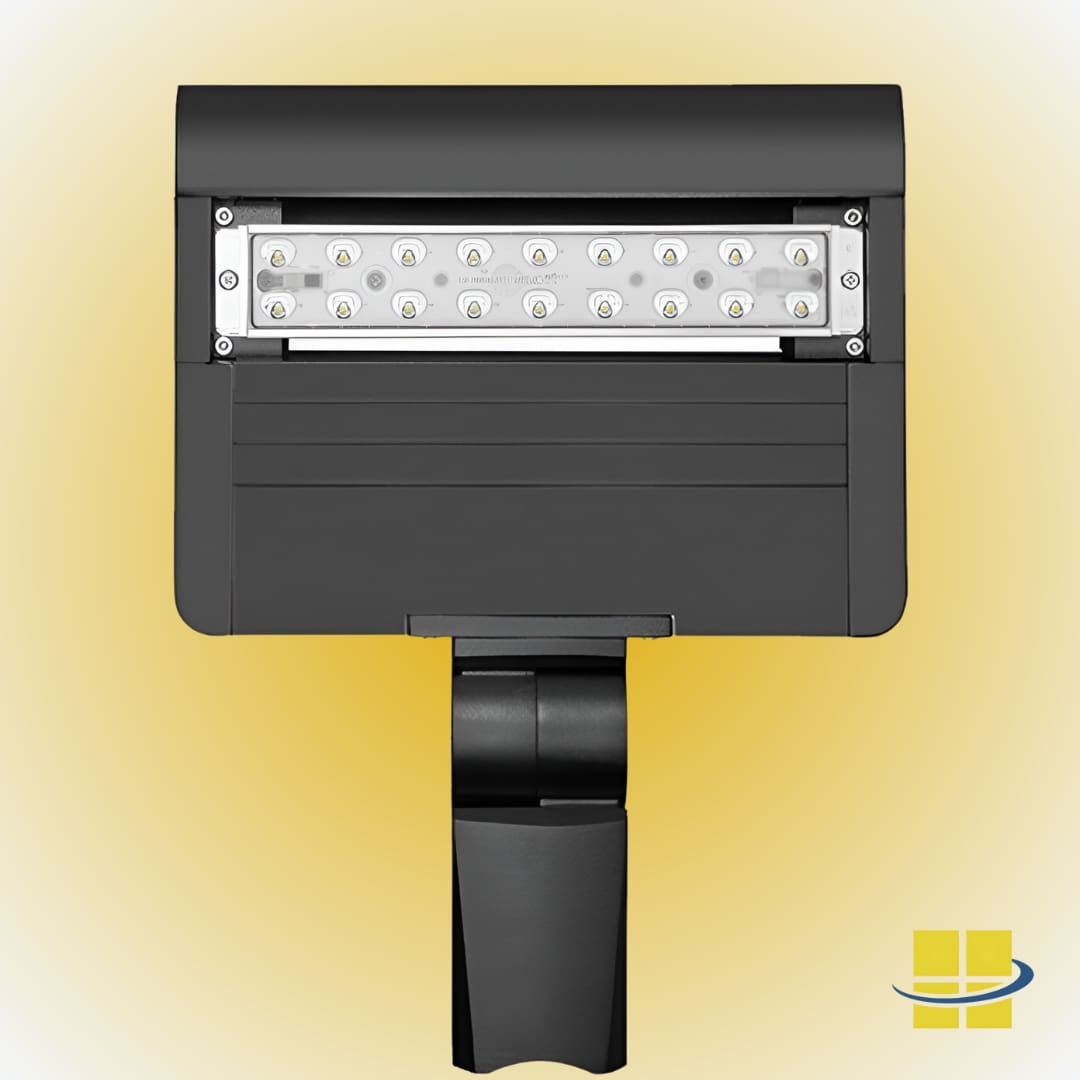
ASTA - 590nm Amber LED Street Light That is Dark Sky Compliant
Speak to an Access Fixtures Lighting Specialist About Your Amber LED Street Lighting Project. Call 800-468-9925
Why the Wavelength Matters (2026 Standards)
The Flagstaff project highlights the need to protect observatories, but the benefits of the Access Fixtures amber standard go further:
- Reduced Atmospheric Scattering: Blue light (4000K+) scatters easily, creating a "dome" of light over cities. Access Fixtures 590nm amber and 2200K ultra-warm options eliminate this effect.
- Enhanced Driver Safety: By eliminating "uncontrolled brightness" and glare, our amber fixtures improve visual contrast and reduce the harsh shadows that make night driving hazardous.
- Climate & Health: Reducing blue light exposure at night is increasingly recognized as vital for human circadian health and local biodiversity.
Conclusion
While we applaud ADOT’s 2026 initiative in Flagstaff, dark-sky compliant amber street lighting isn't a new concept for us; it’s a legacy. Access Fixtures didn't wait for a trend; we engineered solutions that protected Barbados' beaches years ago. As more cities look to reclaim their night skies, they aren't looking at an experiment; they are looking at a standard we’ve already set.
Explore our range of dark sky compliant amber street lighting fixtures
Dark Sky Compliant Amber Street Lighting Frequently Asked Questions (FAQs)
Is the Flagstaff project really the first of its kind?
While it is a significant step for U.S. interstates, the technology and large-scale implementation of dark-sky compliant amber street lighting were pioneered years earlier by Access Fixtures in projects like the Barbados coastal highway conversion.
What is the difference between "Amber" and "Warm White" (3000K) lighting?
Standard "warm white" LEDs still emit light in the blue spectrum. True dark-sky amber (590nm) is monochromatic, meaning it lacks the short-wavelength blue light that causes the most significant light pollution and wildlife disorientation.
What is a U0 BUG rating?
BUG stands for Backlight, Uplight, and Glare. A U0 rating means the fixture emits zero light above the 90-degree horizontal plane. This is the gold standard for dark-sky compliance and is a feature of all Access Fixtures' dark-sky roadway lights.
How does 590nm amber light help sea turtles?
Sea turtles are attracted to shorter wavelengths (blue/green). By using long-wavelength amber (590nm), the light becomes virtually invisible to them, preventing them from wandering toward roads and ensuring they reach the ocean safely.
Does amber lighting meet modern traffic safety standards?
Yes. Modern amber LED optics provide excellent uniformity and glare reduction. By performing a professional photometric analysis, Access Fixtures ensures that amber lighting meets all municipal and DOT safety requirements for visibility and foot-candles.