
The 2026 Guide to Dark Sky-Compliant Sports Lighting: Illuminating Courts Without Annoying the Neighbors
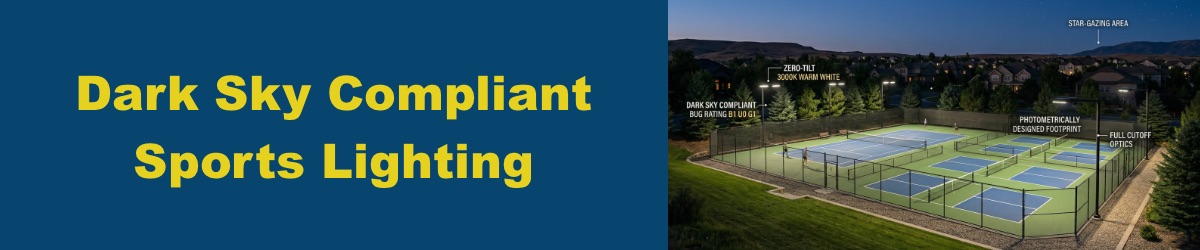
Parks and Recreation directors, HOA board members, and facility managers are currently navigating a "perfect storm." The relentless pickleball and tennis boom has pushed play later into the evening, while residential neighbors have become more litigious and vocal about "light trespass" than ever before.
The challenge: Players need high-visibility light to track a ball moving at 60 mph, but neighbors need darkness to sleep. Bridging this gap requires moving beyond generic floodlights toward precision, Dark Sky-compliant sports lighting.
Key Takeaways
-
-
3000K is the New Non-Negotiable Standard: The era of stark, blue-white 5000K stadium lighting in residential areas is over. To be Dark Sky compliant in 2026, you must utilize 3000K (Warm White). Modern LED technology ensures this doesn't sacrifice performance; instead, it provides a high-contrast, premium "resort feel" that reduces atmospheric skyglow and significantly lowers the chance of neighbor disputes.
-
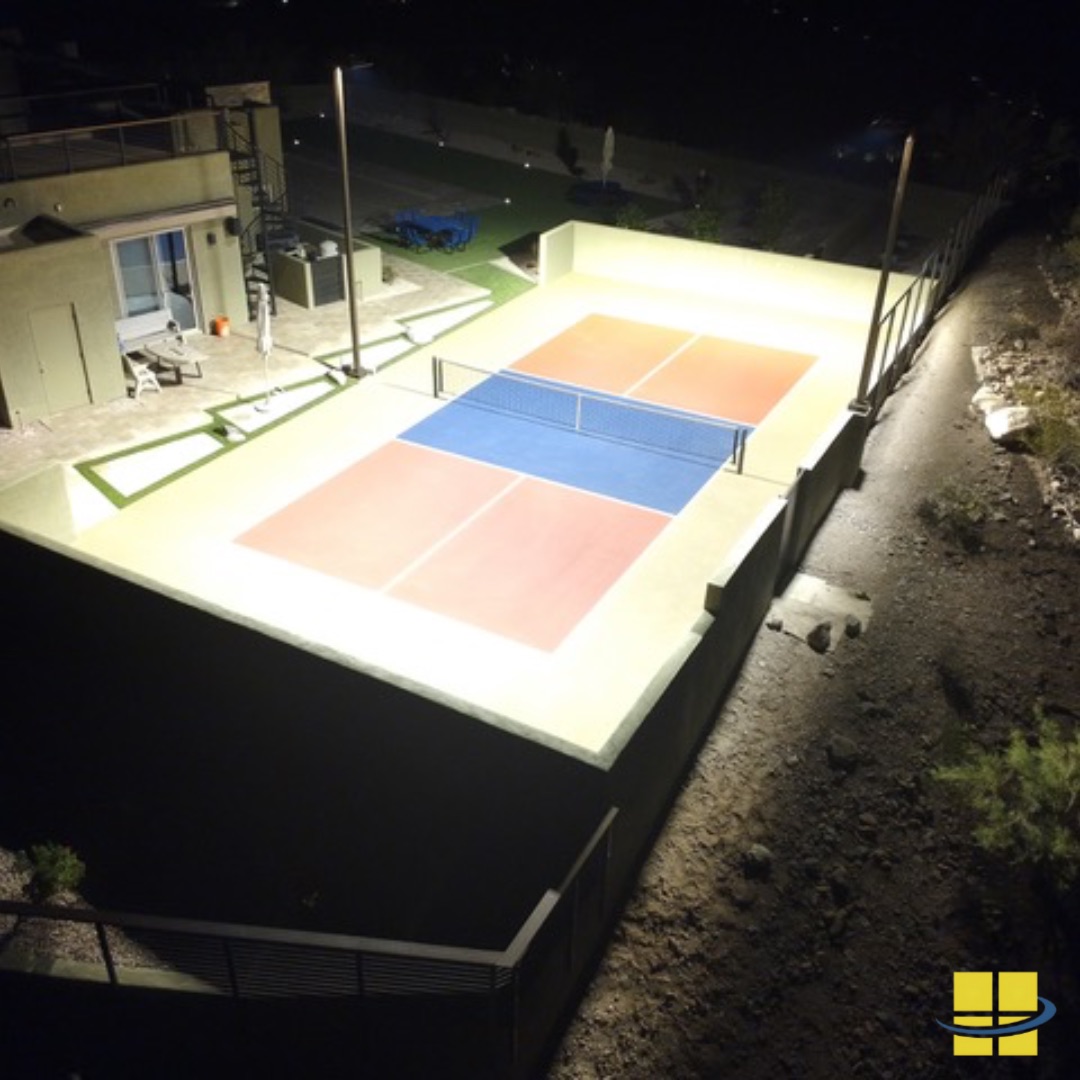
Precision Optics: It’s no longer about how many lumens you throw at a court, but where those lumens land. By using Zero-Tilt mounting and internal precision optics, you create a "surgical" light footprint. This creates the "Black Hole" effect: a brilliantly illuminated court that ends abruptly at the fence line, ensuring you satisfy pro-level players without spilling a single watt into a neighbor’s window.
-
Certification is Your Best Legal Defense: In an increasingly litigious environment, "looking dim enough" isn't a defense. Achieving DarkSky International Certification (specifically Phase 1 Design and Phase 2 Field Verification) provides a scientific, third-party shield against light nuisance claims. Combined with smart automated curfews, this certification proves to city councils and HOAs that your facility is a responsible, "good neighbor" asset.
-
Decoding the BUG Rating: The Science of Being a Good Neighbor
In 2026, for lighting ordinances, the BUG (Backlight, Uplight, Glare) rating is the only metric that matters. If you can’t show a city council your fixture’s BUG rating, your project likely won’t get permitted.
- B - Backlight (The "Property Line" Metric): This is the light that spills behind the pole. If your court sits 15 feet from a neighbor’s bedroom, you need a B0 or B1 rating. This ensures the court is high-definition while the neighbor’s backyard remains in total darkness.
- U - Uplight (The "Starry Sky" Metric): This is light escaping above the 90-degree horizontal plane. To be Dark Sky compliant, fixtures must be U0 (Full Cutoff). We’re aiming to see the Milky Way, not a glowing orange haze over the suburbs.
- G - Glare (The "Player Comfort" Metric): Glare is high-angle light that causes visual discomfort. For athletes, glare makes the ball "disappear" mid-air. For neighbors, it’s the "bright spot" that keeps them awake. Precision-optic fixtures like the ASTA Series use recessed LEDs to keep the "G" rating at a minimum.
DarkSky International: Navigating the 2026 Certification
Google rewards authority, and so do planning commissions. Addressing the DarkSky Approved Outdoor Sports Lighting Program is no longer a "suggestion"; it is the gold standard for 2026 compliance.
Phase 1: DarkSky Design Compliance
Before the first hole is dug, a photometric design must be audited.
- The 10% Rule: DarkSky International mandates that the average light level on your court cannot be more than 10% above the target level. In 2026, over-lighting isn't just wasteful, it's considered a form of pollution.
- Smart Integration & Curfews: You must provide a formal policy for automated dimming. In the 2026 ecosystem, this often means lighting tied to court reservation apps, the lights only activate when a player checks in and dim automatically the moment the session ends.
Phase 2: Field Verification
Once installed, an inspector verifies that your "Real World" installation matches the "Digital Plan." If your contractor tilted the fixtures upward to "reach further," you will fail Phase 2.
Pro Tip: Use fixtures designed for Zero-Tilt mounting. These sit perfectly horizontal, using internal lenses to push light forward. This removes the human error of "aiming" and ensures 100% compliance from day one.
Precision Optics: The Black Hole Effect
The secret to satisfying both a pro-level tennis player and a sleeping neighbor lies in Visual Contrast.
- The "Cutoff" Edge: Advanced luminaires don’t just "glow"; they shape light into a surgical rectangle that matches the court's dimensions.
- T4VVSB Shielding: For high-stakes perimeters, we utilize physical barriers that stop light at the fence line. This creates a "Black Hole" effect: the court is brilliantly lit, but three inches past the fence, it is pitch black. This contrast actually helps players track the ball better by removing "background noise."
- 3000K vs. 5000K: While 5000K (blue-white) was the old stadium standard, 3000K (Warm White) is the 2026 residential king. Modern 3000K LEDs offer high CRI (Color Rendering Index), meaning the ball is just as crisp, but the light scatters less in the atmosphere and respects human circadian rhythms.
Why Facility Managers are Switching to 3000K Amber
In 2026, the industry has officially moved away from the stark, blue-white 5000K light for residential sports. 3000K (Warm White) is the requirement for Dark Sky compliance.
- Atmospheric scattering: 3000K light has significantly less blue-light content. This means it scatters less in the atmosphere, drastically reducing "skyglow."
- Premium Visuals: Modern 3000K LEDs offer high CRI (Color Rendering Index). It’s no longer the "dim yellow" of old streetlamps; it’s a crisp, warm white that feels high-end and resort-like, which significantly reduces neighbor complaints.
ROI and Community Diplomacy: A Guide for HOA Boards
- ROI and Community Diplomacy: The Board Member’s Defense. Will the court be too dark? No. By removing glare and spill, the court actually looks sharper. It’s the "Stage Effect" when the house lights are down, the stage looks brighter
- Does it save money? Yes. By not wasting lumens on the neighbor’s roof, you can use lower-wattage fixtures to achieve the same on-court results
- The Legal Shield: Providing a DarkSky Approved certificate is the strongest legal defense an HOA can have. While you can't always stop the thwack of a pickleball paddle, you can scientifically prove that your lighting is not a "nuisance."
Summary: The "Good Neighbor" Checklist
- Select U0-rated fixtures: No light should ever go up.
- Use 3000K CCT: Warmer light is the 2026 community standard.
- Implement Automated Curfews: Use smart controls to ensure lights are off when the park is closed.
- Demand a Photometric Plan: Never install without seeing the "spill lines" on a map first.
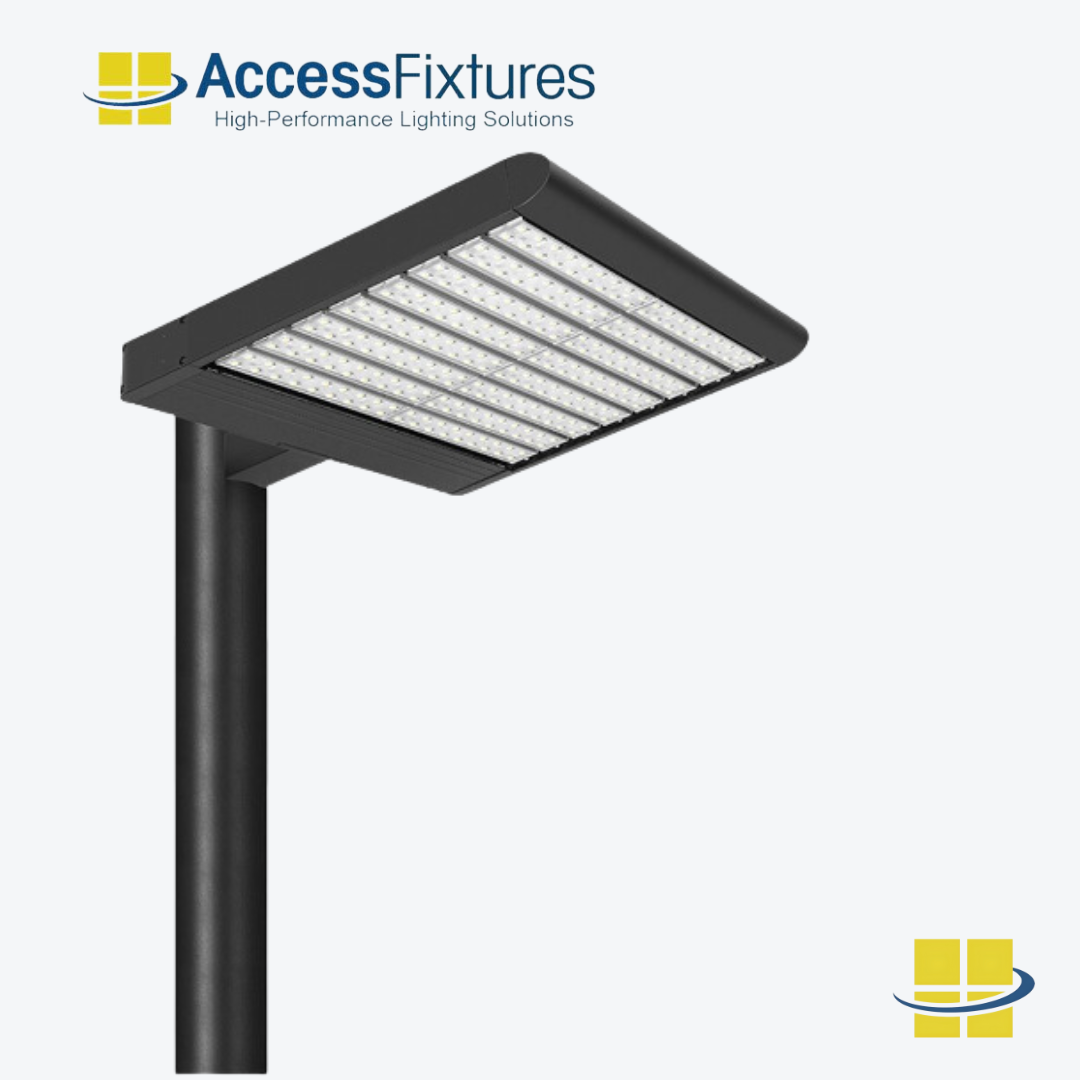
ASTA LED Sports Lights - Dark Sky Compliant When Equipped with 3000K LEDs
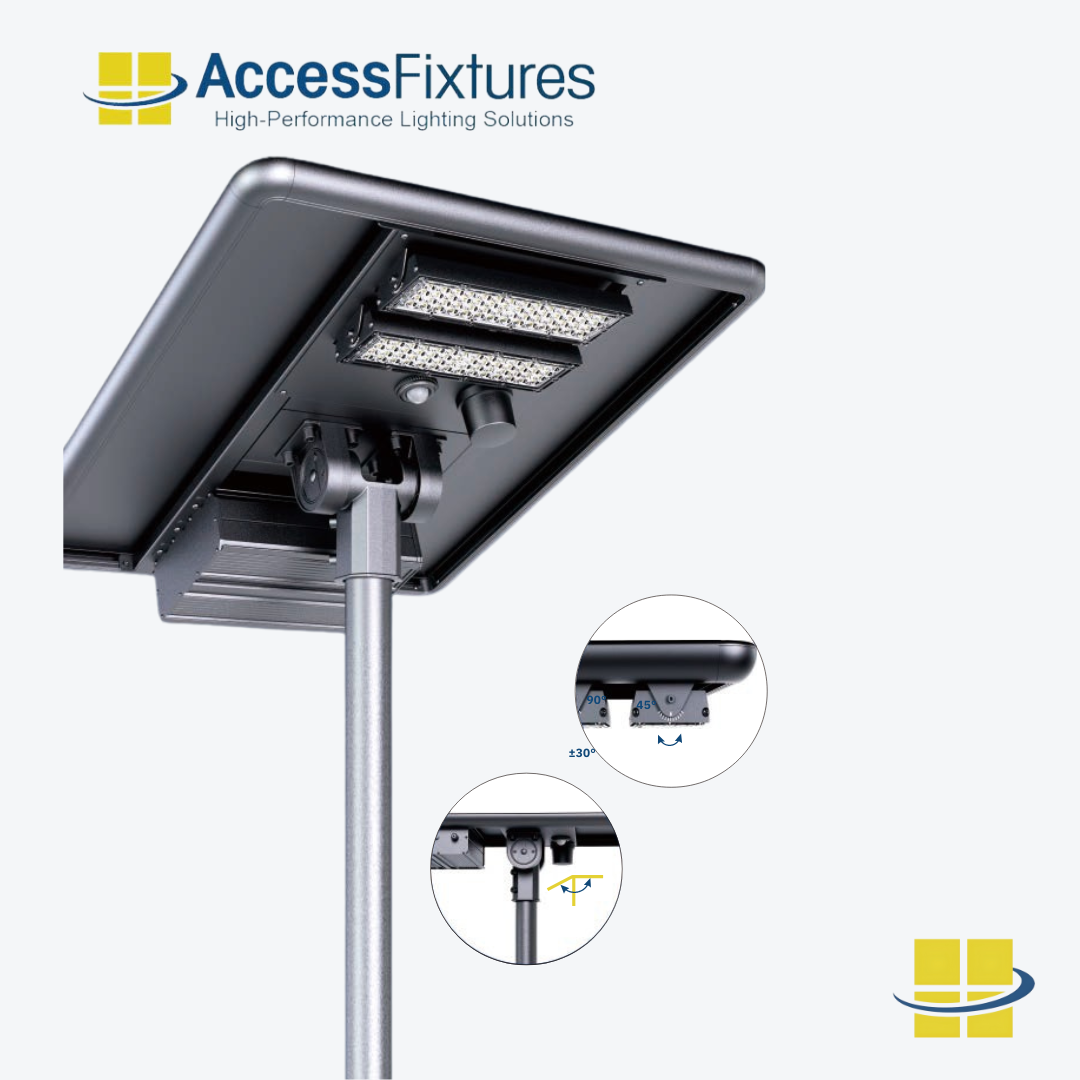
SUNA - Solar LED Lights for Sports Applications (Available in 3000K)
Frequently Asked Questions (FAQs): Dark Sky Compliant Sports Lighting
What exactly is Dark Sky compliant sports lighting?
Dark Sky compliant sports lighting refers to fixtures and design plans that meet the rigorous standards set by DarkSky International. These systems are engineered to eliminate uplight (light shining into the sky), minimize glare, and strictly control light trespass onto neighboring properties. In 2026, this typically requires a U0 BUG rating and precision internal optics that keep high-lumen output contained within the court's perimeter.
How does the BUG rating for outdoor courts affect my project?
The BUG rating (Backlight, Uplight, Glare) is the technical DNA of your fixture. For outdoor courts, a low Backlight (B) rating is critical for avoiding neighbor disputes, as it measures the light spilling behind the pole. A U0 (Uplight) rating is required for Dark Sky compliance to prevent skyglow. Understanding the BUG rating allows facility managers to prove to HOAs and city councils that their lighting is scientifically "neighbor-friendly."
Can I really reduce tennis court light spill without making the court too dark for players?
Yes. Modern precision-optic fixtures like the ASTA series actually improve playability while they reduce tennis court light spill. By using internal shielding and specialized lenses, the light is "cut off" at the fence line. This creates higher contrast on the court and removes the "veiling glare" that often makes it hard for athletes to track fast-moving balls against a dark, hazy sky.
Is 3000K or 5000K better for Dark Sky compliant sports lighting?
In 2026, 3000K (Warm White) is the preferred standard for Dark Sky compliance in residential areas. While 5000K provides a stark, blue-white light often seen in professional stadiums, 3000K scatters less in the atmosphere, reducing skyglow and the disruption of local wildlife. Access Fixtures also offers 590nm Amber options for the most sensitive ecological zones.
What is the difference between Phase 1 and Phase 2 DarkSky Certification?
Phase 1 is the Design Compliance stage, where your photometric plan is audited to ensure the courts aren't "over-lit" (no more than 10% above target levels). Phase 2 is the Installation Certification, where an on-site inspection confirms that the fixtures were installed at a 0-degree tilt and that automated dimming/curfews are functioning as promised.
Why is "Zero-Tilt" mounting important for sports lighting?
Traditional sports lights are often tilted upward to throw light across a court. However, tilting a fixture immediately creates Uplight and Glare, violating Dark Sky standards. Dark Sky compliant sports lighting uses precision internal optics to push light forward while the fixture head remains perfectly horizontal (Zero-Tilt), ensuring 100% spill control.