
A child born in Chicago or London in the early 2020s may never see the Milky Way. Skyglow from too much artificial light has erased what humans have observed for millennia—the stars, celestial objects, and the dark canvas of night. Light pollution is simply human-caused brightening of the night sky that hides stars and disrupts natural darkness occurring naturally across the earth.
Global sky brightness increased by about 9–10% per year from 2011 to 2022, meaning the night sky is getting dramatically brighter in less than a decade. This article covers the negative effects on human health, wildlife, and energy waste, then provides practical steps anyone can take to reduce light pollution at home, in their community, and across their city.
Key Takeaways
-
-
Light pollution is a human-made alteration of outdoor light levels that obscures stars, disrupts ecosystems, and negatively impacts human health by interfering with natural circadian rhythms.
-
The rise of LED lighting, while energy-efficient, has intensified light pollution due to increased brightness and blue-rich light emissions, but properly shielded, warm white LEDs can help reduce these negative effects.
-
Practical solutions such as using fully shielded fixtures, selecting amber or warm white lighting, limiting brightness and operating hours, and supporting dark sky policies can significantly reduce light pollution and restore the beauty and health of the night sky.
-
What Is Light Pollution and How Is It Getting Worse?
Light pollution is unwanted, excessive, or poorly managed artificial light at night, particularly from outdoor lighting. The International Dark Sky Association breaks it into four components: skyglow (the bright dome visible over cities), glare (blinding brightness from unshielded sources), light trespass (light spilling into bedrooms and yards), and clutter (chaotic, over-lit commercial areas).
The numbers are stark. Visible stars are decreasing for observers by roughly 9-10% annually, based on ground reports faster than satellite estimates suggest. From the early 1990s to late 2018, global light at night rose by at least 49% due to urban expansion and electrification. Satellites actually undercount the problem because many sensors cannot detect blue light wavelengths where modern LEDs emit most strongly, meaning the real increase is even larger.
How LEDs Have Changed - and Intensified - Light Pollution
LEDs have helped cities cut energy use significantly, replacing older sodium and metal halide street lighting since around 2010. However, their efficiency created an unintended consequence: because LEDs are cheap to run, cities and homeowners installed more fixtures, ran them brighter, and left them on longer, offsetting energy gains.
The shift from warmer orange lamps to white and cool LEDs (4000-6500K) increased blue-rich light, which scatters 3-10 times more in the atmosphere than warmer tones, worsening skyglow over huge areas. Ground observations confirm sky brightness climbed approximately 9-10% yearly through the 2010s, far beyond what energy savings alone would predict.
This is a design and management failure, not a technology problem. Properly designed LEDs with warm white spectra and full-cutoff optics can be part of the solution.
Human Health Effects of Nighttime Light
Blue light from outdoor sources suppresses melatonin by 20–50% even at low intensities, disrupting circadian rhythm and sleep. Chronic exposure correlates with immune and hormonal imbalances, and research links night-shift work under such lighting to elevated breast and prostate cancer risks.
Glare and light trespass from unshielded LEDs reduce visual contrast, increasing accident risks for pedestrians and drivers by 20-40% in some studies. In dense neighborhoods, constant nighttime brightness acts as a public-health stressor. Imagine an apartment where a new security floodlight makes bedrooms as bright as twilight all night. This is less glare and more illumination than anyone needs, and it wastes energy while harming sleep.
Impacts on Wildlife, Ecosystems, and the Night Sky
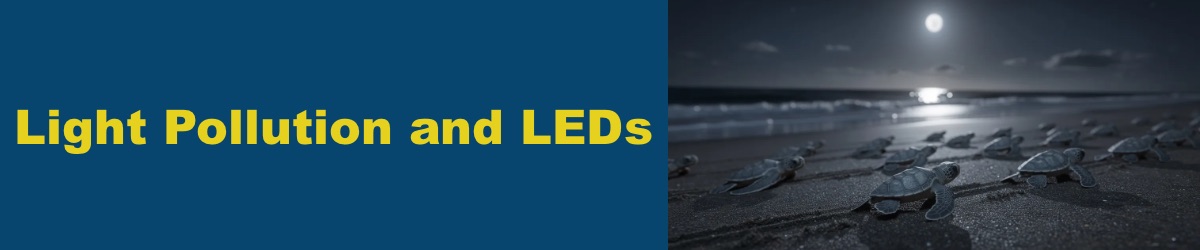
Ecologists now treat artificial light at night as habitat loss. Migratory birds become disoriented by lit buildings, with hundreds of millions dying annually in collisions across the U.S. Sea turtles on Florida beaches head toward hotel lights instead of the sea, with mortality spiking 20-50% on lit coasts, underscoring how critical turtle-friendly coastal lighting to protect sea turtles has become in many regions. Insects swarm LED fixtures, decimating populations and disrupting pollination for plants.
Blue-rich LEDs extend the perceived daylight, altering animal behaviors, mating cycles, and wildlife interactions across species from amphibians to birds. Most urban residents cannot see the Milky Way at all 80% of the world lives under light-polluted skies, limiting astronomy, education, and cultural traditions tied to stars and other celestial objects.
Practical Ways to Reduce Light Pollution at Home and in Your Community
Significant reductions are achievable with better design, not darkness or reduced safety. The guiding principles: direct light only where needed, only when needed, only as bright as needed, and only in warm white spectra. Access Fixtures dark sky compliant lighting embodies these principles with fully shielded fixtures that minimize skyglow, and dark sky solar-powered outdoor LED lighting can further cut energy use while preserving the night.
Choose Warmer, Low-Glare LED Lighting
Select outdoor lights rated 2200K to 3000K, which appear amber or warm white. Avoid cool white LEDs labeled 4000-6500K for outdoor use, they produce more blue light that scatters widely. Check product labels for Kelvin ratings, not just wattage. Access Fixtures offers dark sky friendly options such as PC amber Lighting for dark sky applications, specifically designed to limit blue emissions.
Use Fully Shielded, Downward-Facing Fixtures
Full cutoff or properly shielded fixtures mean the light source is invisible from above or the side, with all light directed downward. Replace bare bulbs and globe fixtures with shielded wall packs, pathway lights, and parking fixtures. The National Park Service and dark sky places worldwide require these specifications for preserving the truly dark sky.
Reduce Brightness and Limit Hours of Operation
More light does not mean more safety. Overly bright lights create harsh shadows. Use lower lumen outputs for residential areas. Install timers and motion sensors so lights operate only when needed. Many modern systems allow remote dimming, letting municipalities reduce outdoor light levels overnight and save energy while restoring darkness. Speak to an Access Fixtures Lighting Specialist About Field Configurable Lighting Options.
Reduce Decorative, Security, and Indoor Lighting
Minimize string lights, landscape uplighting, and constant signage after evening hours. Security lighting works best when motion-activated rather than all-night flooding that creates glare. Indoor lighting contributes to skyglow through windows; use curtains or dimming at night. Businesses should set automatic shut-off times for nonessential illumination.
Promote Dark Sky Policies and Community Standards
Local ordinances can mandate fixture shielding, maximum brightness, and color temperature caps. Central Idaho Dark Sky Reserve achieved this through strict lighting codes, saving money while boosting visible star counts. Work with homeowners’ associations and local councils to adopt dark sky guidelines specifying compliant products like those from Access Fixtures, and ensure they align with stringent dark sky lighting requirements such as those in Flagstaff, Arizona.
Dark Sky Compliant Fixtures and Resources
Dark sky compliant means fixtures designed to minimize skyglow, glare, and light trespass while providing safe space illumination. Access Fixtures offers compliant luminaires for parking lots, pathways, sports facilities, and residential properties shielded, downward-facing, with warm color temperatures that dramatically cut negative impacts.
Visit Access Fixtures’ dark sky resource page for product examples, guidance, and FAQs on meeting international dark sky standards.

Stop light trespass with full cutoff LED wall packs engineered to keep light on your property and out of the sky.
Preserve local ecosystems with turtle-friendly 590nm Amber lighting designed to minimize blue light emissions.
Elegant pathway illumination without the glare. Access Fixtures Dark Sky bollards provide safe, downward-facing light for any community.
Off-grid efficiency meets sky protection. Dark sky solar-powered LEDs provide powerful illumination with zero energy footprint.
Conclusion: Reclaiming the Night, One Light at a Time
Light pollution is rising rapidly, but remains one of the easiest environmental problems to solve with smarter lighting, not necessarily less lighting. Choose warm (2200-3000K) LEDs, use fully shielded light fixtures, avoid over-lighting, and control when lights operate with motion detectors and timers.
The benefits extend across the world: better sleep for humans, restored habitats for animals and insects, reduced energy costs, and action on climate change through efficiency. With the right choices, that child in Chicago might yet see the milky way. Audit your outdoor lighting this week and explore dark sky compliant options from Access Fixtures for your next upgrade.
Light Pollution Frequently Asked Questions (FAQs) / People Also Ask
What is light pollution?
Light pollution is the human-made alteration of outdoor light levels from those occurring naturally. It includes excessive, misdirected, or poorly managed artificial light at night, which brightens the night sky and obscures stars and other celestial objects.
Why is light pollution harmful?
Light pollution negatively impacts human health by disrupting circadian rhythms and melatonin production, affects wildlife by interfering with animal behaviors and ecosystems, wastes energy, and diminishes the natural beauty of the night sky.
How can I reduce light pollution at home?
You can reduce light pollution by using fully shielded, downward-facing outdoor light fixtures, choosing warm white or amber LED lights, installing motion sensors or timers to limit light use, minimizing decorative and security lighting, and closing curtains at night to prevent indoor light from escaping.
What role do LED lights play in light pollution?
While LED lights are energy-efficient, their increased brightness and blue-rich light emissions have intensified light pollution. However, properly shielded LEDs with warm white spectra can help reduce negative effects.
What are dark sky places?
Dark sky places are areas certified to have minimal light pollution, managed to preserve natural darkness, support ecological integrity, and promote public engagement about the importance of dark skies.
Can light pollution affect wildlife?
Yes, light pollution can disorient migrating birds, confuse sea turtle hatchlings, disrupt mating and feeding behaviors, and interfere with plant pollination, threatening ecosystem health.
Are there policies to combat light pollution?
Yes, some countries and municipalities have enacted lighting ordinances and dark sky policies that regulate fixture shielding, brightness, and color temperature to reduce light pollution.
How does light pollution impact human health?
Exposure to artificial light at night suppresses melatonin production, disrupts sleep patterns, and has been linked to increased risks of certain cancers and other health issues.
What is the best color temperature for outdoor lighting to reduce light pollution?
Outdoor lighting with warm white or amber tones, typically between 2200K and 3000K, is best to minimize blue light emissions and reduce light pollution.
How does light pollution affect astronomy?
Light pollution creates skyglow that obscures stars and other celestial objects, hindering both amateur and professional astronomical observations.