

Across commercial and industrial facilities, a definitive trend has emerged: first-generation LED lighting systems installed between 2010 and 2018 are reaching their technical end-of-life. What was once heralded as a "permanent" upgrade is now entering a critical replacement cycle. If you are currently replacing first-generation LED lighting, the issue is rarely the diodes themselves. The real culprits are driver fatigue, thermal degradation, and outdated system architecture. At Access Fixtures, we specialize in the "Second Wave" of LED adoption, engineered systems designed to outlast the failures of the past decade.
Key Takeaways
-
-
The Driver, Not the Diode: Most failures are caused by aging capacitors in early LED drivers, not the light source itself
-
Lumen Depreciation is Real: First-gen LEDs often lose 30-40% of their brightness over a decade, meaning your facility may no longer meet safety or productivity standards
-
Superior Optics Save Money: Modern engineered fixtures like the OTOK series provide better light uniformity, often allowing you to achieve superior results with fewer total fixtures.
-
The Science of the "Second Wave": Why 1st-Gen LEDs Fail
To understand why your facility is dimming or flickering, you must understand the "Bathtub Curve" of electronics. First-generation fixtures have exited their "useful life" phase and are now entering the "wear-out" phase simultaneously.
1. LED Driver Fatigue & Capacitor "Drying"
The driver is the heart of the fixture. Early drivers often used lower-grade electrolytic capacitors. Over 50,000+ hours of operation, these components dry out due to heat stress, leading to the "Strobe Effect" (rapid flickering), ghosting, or total fixture shutdown. Learn more about Flickering LED Lights: A Complete Troubleshooting Guide
2. Chromaticity Drift (The "Purple Light" Phenomenon)
In early LED manufacturing, the phosphor coating degrades over time, causing white lights to shift toward purple, pink, or sickly green. Modern fixtures use superior phosphor stability to ensure a crisp 4000K or 5000K temperature for the life of the product. Learn more about Why Some Street Lights Are Purple.
3. Lumen Depreciation (L70 Failure)
LEDs don't "burn out"; they fade. Many first-gen lights have suffered 30-40% light loss, known as L70 failure. While they are still "on," they no longer meet OSHA safety standards or the footcandle requirements for high-precision tasks. Learn more about L70 LED Lifetime Rating and Lumen Depreciation.
Common Failure Points by Location
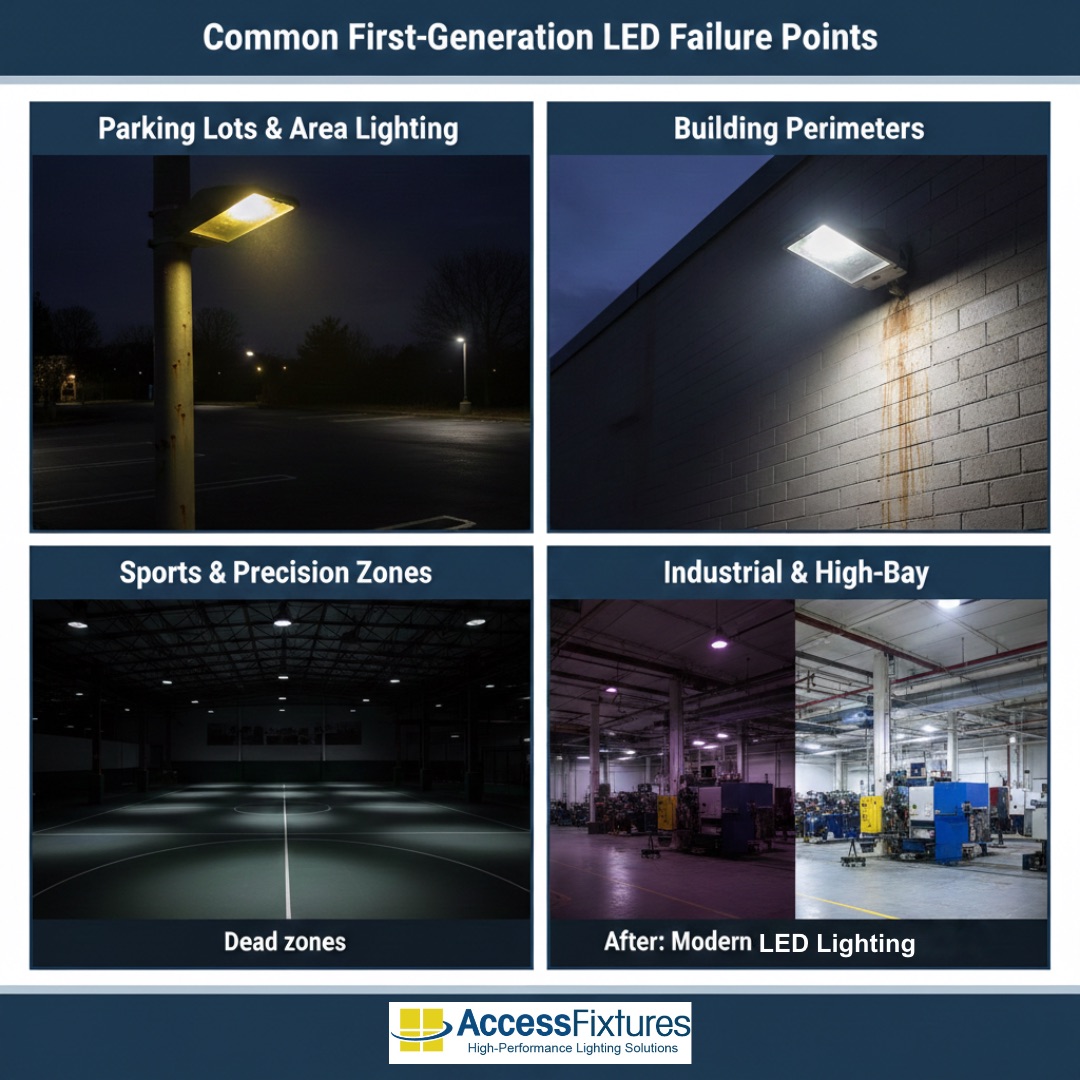
Replacing first-generation LED lighting isn't just an interior task; the wave of failure is hitting every corner of the property. Parking lots and area lighting often suffer from seal failure, where moisture ingress "cooks" the internal chips and yellows the lenses. Exterior wall packs are notorious for strobing as drivers fail under the extreme thermal stress of sun-baked walls. In sports and precision zones, "dead zones" appear as individual LED modules fail, creating safety liabilities and poor uniformity.
Case Study: Precision Lighting at Upstart Technology
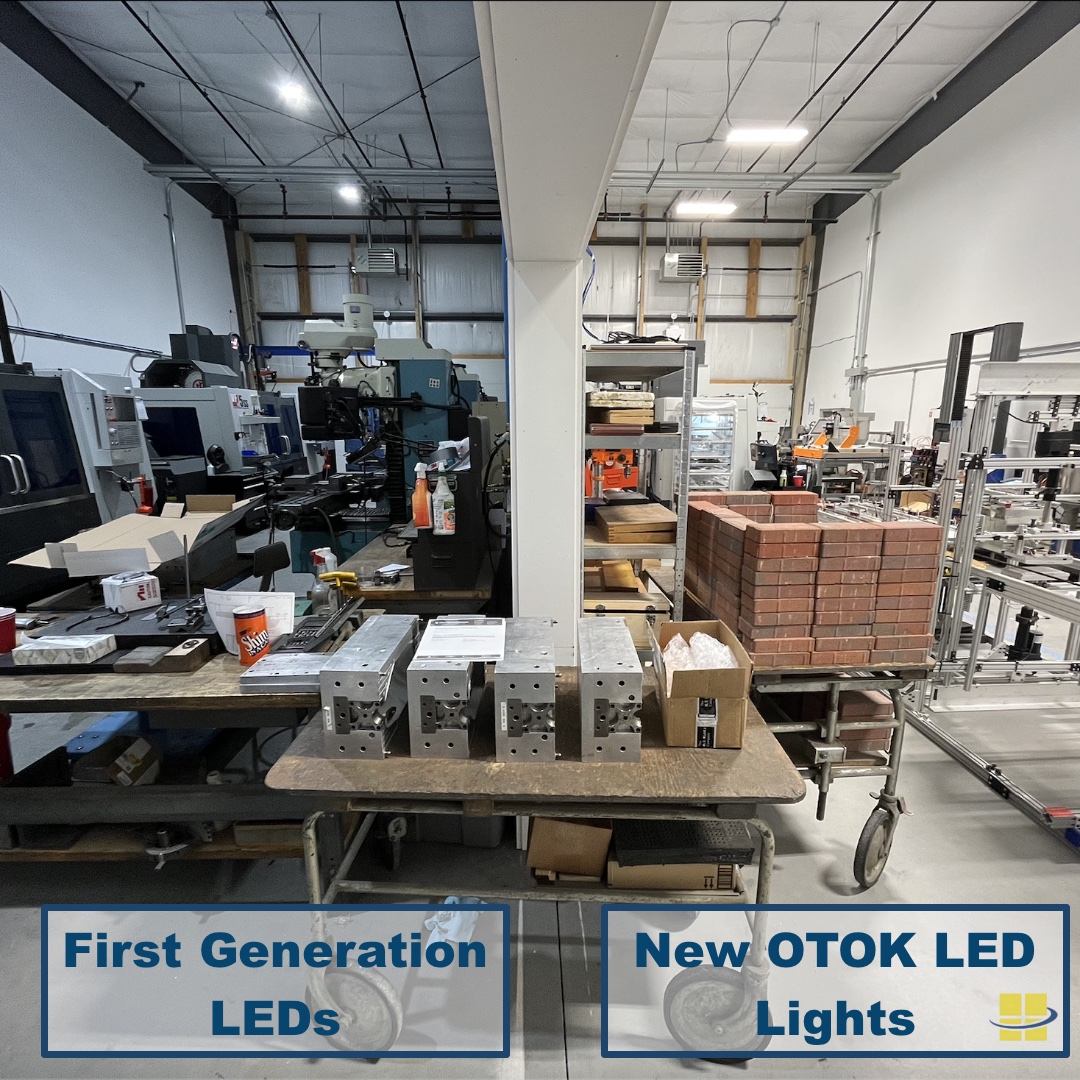
In Southborough, MA, Upstart Technology operates a high-tech research and manufacturing facility. Their transition from aging first-gen LEDs to modern OTOK systems highlights the difference between "commodity" lighting and "engineered" lighting. While many facilities default to standard round LED high bays, clean-tech leaders like Upstart, Multiscale, and Tru Robotics require a higher level of optical control. The OTOK design works where others fail because the LEDs are more dispersed and the lenses are diffused, achieving higher footcandles with fewer shadows, perfect for environments where dust and glare cannot be tolerated.
Beyond the High Bay: A Strategy for Every Square Foot
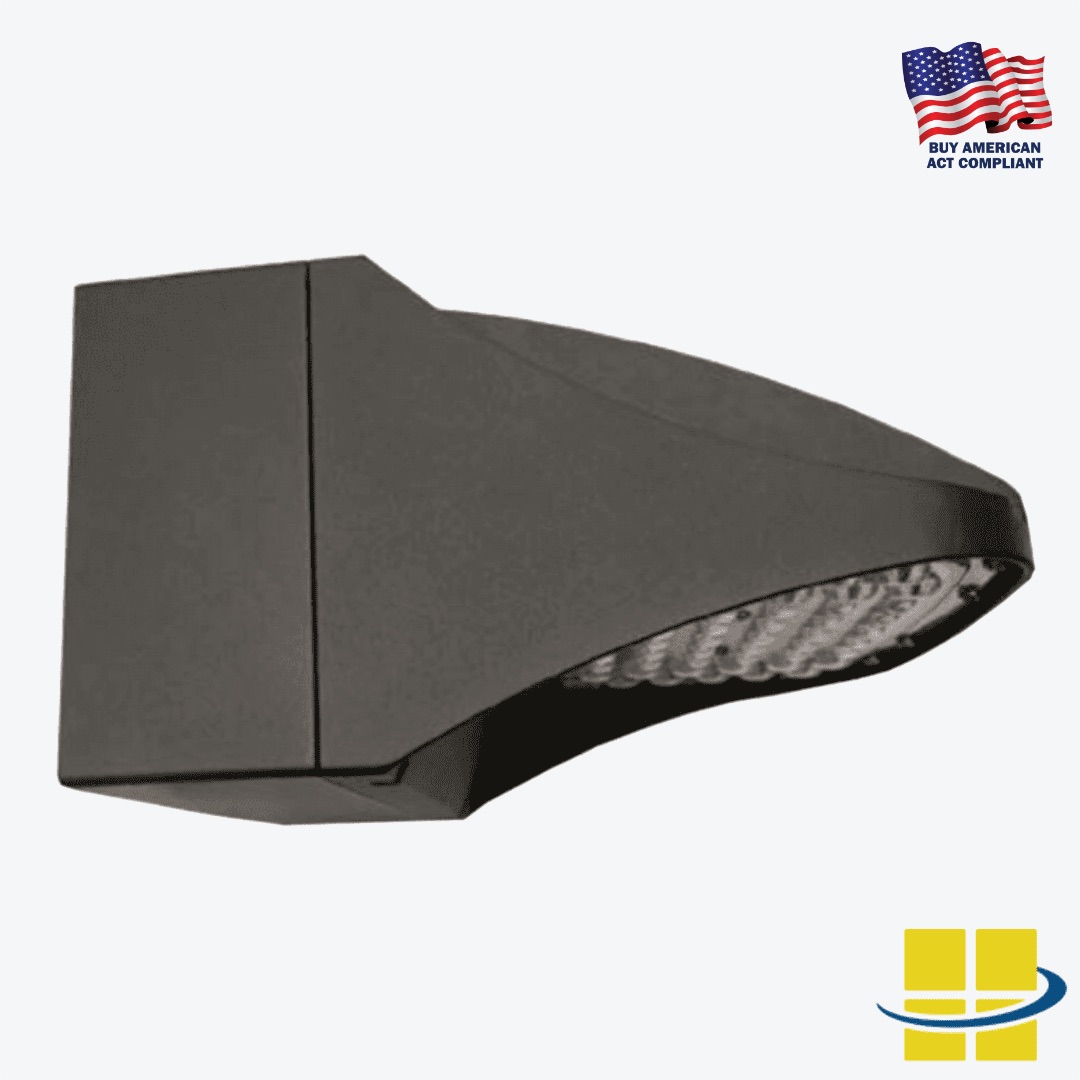
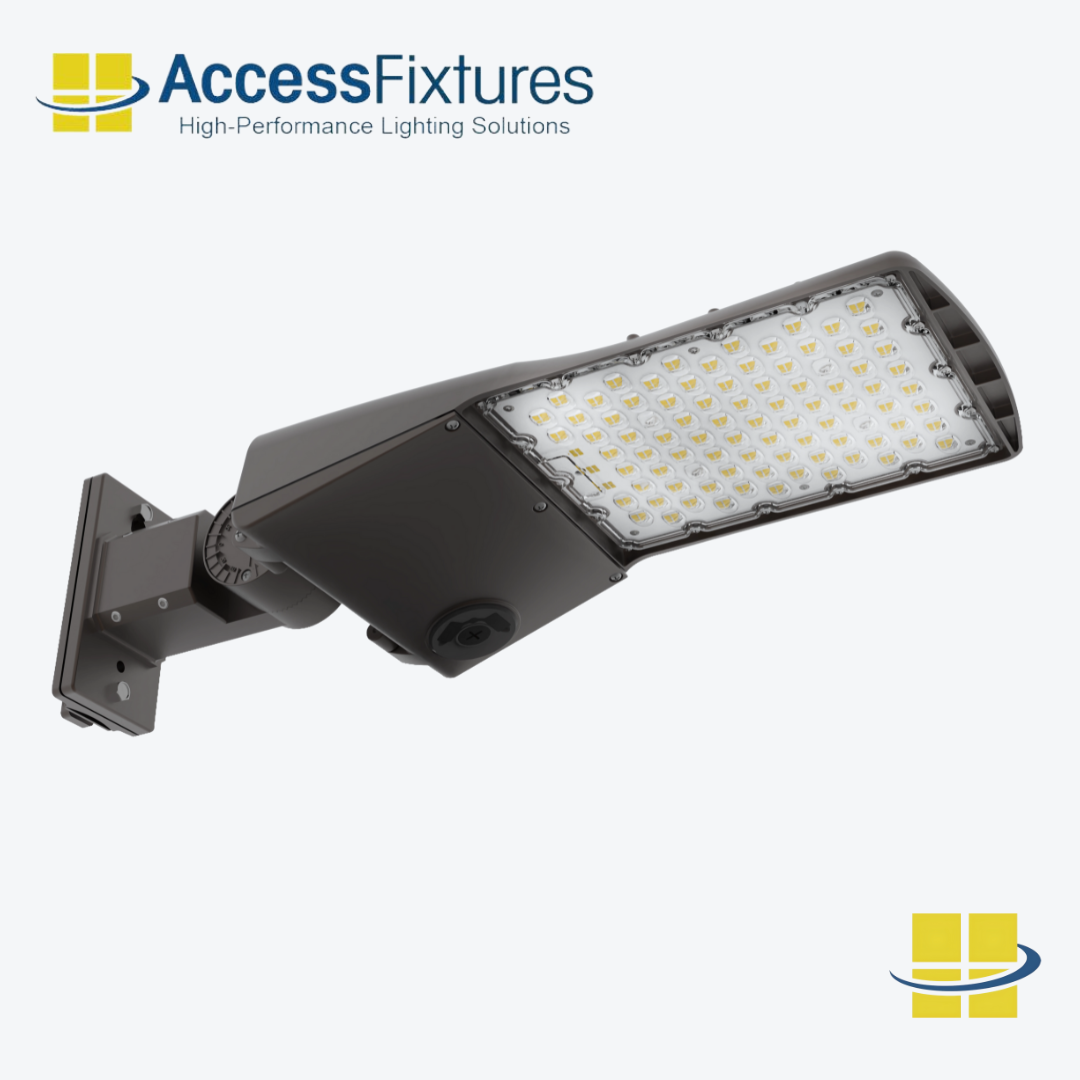
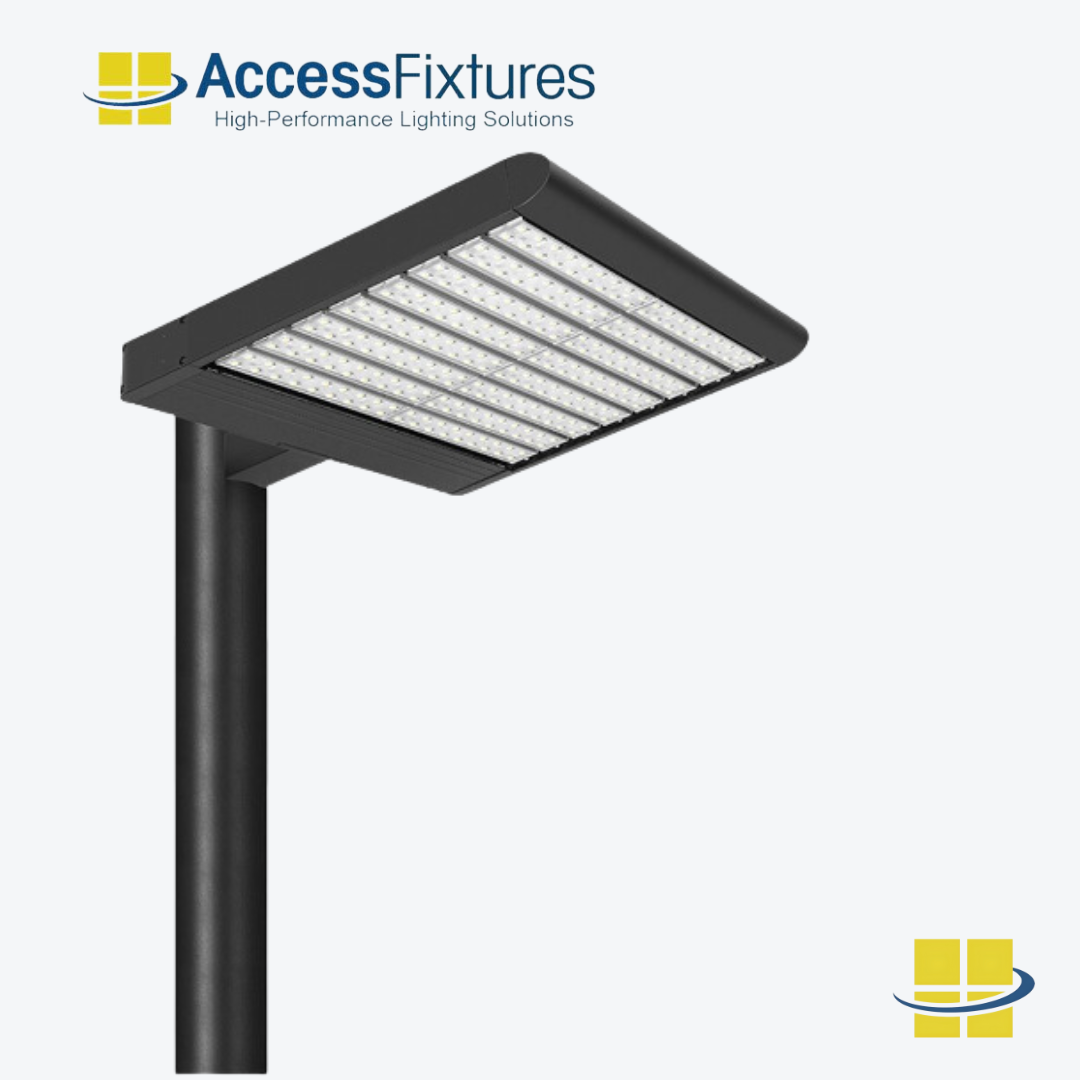
At Access Fixtures, we apply the same high-tech engineering found in the OTOK series to your entire facility infrastructure. For Area and Site Lighting, we replace fading pole lights with our APTA, CARO, or SUNA Solar series, featuring glass optics that won't yellow. Access Fixtures LED Wall Packs utilize oversized heat sinks to prevent the flicker-and-fade cycle, while our modular sports fixtures allow for precise beam aiming to ensure zero dark spots on the field.
OTOK vs. "The Round Ones"
-
Light Distribution: First-generation round LED high bays offer concentrated "hot spots," while OTOK systems provide even, dispersed footcandles.
-
Glare Control: First-generation round LED high bays often cause eye strain; OTOK uses frosted, high-diffusion optics.
-
Flexibility: While early LEDs had fixed settings, OTOK features field-adjustable CCT and power switches.
-
Reliability: OTOK systems include high-surge (10kV+) protection compared to basic early drivers.
The 2026 Performance Boost: Efficiency Beyond Energy Savings
Upgrading from a first-generation system isn't just about fixing a failure; it’s about a massive leap in light quality. New LED fixtures provide instant lumen recovery, restoring 100% of your light levels immediately with zero fade. Today’s LEDs offer significantly higher efficacy (up to 160+ LPW) than 2015-era models, meaning you get more light while drawing less power. Furthermore, modern precision lenses direct light more effectively; while you could try to achieve more light by doubling the number of basic fixtures, you will not attain the same level of evenness and reduced glare provided by modern, engineered optics.
The Access Fixtures Audit: How We Choose Your Solution
We don't believe in "one size fits all." When replacing your 1st-gen system, we follow a three-tier reliability protocol. First, a Thermal Audit ensures fixtures are rated for your specific environment. Second, we prioritize Surge Resilience, specifying drivers with 10kV to 20kV protection. Third, we use Photometric Mapping to provide 3D light maps, ensuring your new layout uses the fewest fixtures possible while maximizing brightness.
Repair vs. Replace: Making the Financial Choice
Is it worth fixing an old fixture? Generally, no. The labor cost for a lift rental and an electrician to swap out a driver often exceeds 50% of the cost of a brand-new, warranted fixture. A strategic upgrade resets your warranty and leverages modern efficacy to reduce both operational risk and total cost of ownership.
Conclusion: Future-Proofing Your Facility
The "install and forget" promise of first-generation LEDs was a significant step forward in energy management, but the reality of electronic wear-out has arrived. Replacing first-generation LED lighting is an opportunity to do more than just restore visibility; it is a chance to implement smarter, more resilient, and more efficient optical designs that were not available a decade ago. By choosing engineered solutions like the OTOK series and prioritizing professional photometric planning, you can eliminate the maintenance cycles of the past and ensure your facility operates at peak performance for the next decade and beyond.
Request a Commercial LED Replacement Evaluation - Call (800) 468 9925.
View OTOK Series Specifications
Explore Outdoor Area Lighting Solutions and Wall Pack Solutions
Replacing First Generation LED Lighting Frequently Asked Questions (FAQs)
You have questions about replacing first generation LED lighting. We have answers. If you have a question that isn’t answered below, contact an Access Fixtures lighting specialist at (800) 468-9925 or click here.
Why are my 10-year-old LEDs turning purple?
This is caused by "chromaticity drift." The phosphor coating on the LED chip, which creates white light, has degraded, allowing the underlying blue light of the diode to show through.
Can I just replace the driver instead of the whole fixture?
While possible, it is often not cost-effective. Between the cost of the replacement driver and the labor/lift rental, you are usually 60–70% of the way to the cost of a new, higher-efficiency fixture with a full manufacturer's warranty.
What is the difference between L70 and L90?
These ratings indicate how long a fixture takes to lose a certain percentage of its brightness. L70 means the fixture has reached 70% of its original output (a 30% loss). Modern fixtures often have much higher L-ratings, maintaining brightness far longer than first-gen models.
Do I need an IP65 or IP67 rating for an indoor clean-tech facility?
Not necessarily. In clean environments like those at Upstart Technology, prioritizing high-diffusion optics (like OTOK) is often more beneficial than paying for high IP waterproof ratings required for "wet or dirty" locations like barns or wash bays.
Stop Managing Failures. Start Managing Excellence.
If your facility is suffering from dimming, flickering, or inconsistent color, it is time for a professional evaluation. Call 800-468-9925 or request a photometric analysis - an Access Fixtures lighting specialist will assess your current system and recommend the right engineered replacement.