The Light Pollution Mitigation Hierarchy: Four Steps to Reduce Outdoor Light Pollution
By Access Fixtures Lighting Specialists·Dark Sky Friendly Lighting·Published November 2026
What Is the Light Pollution Mitigation Hierarchy?
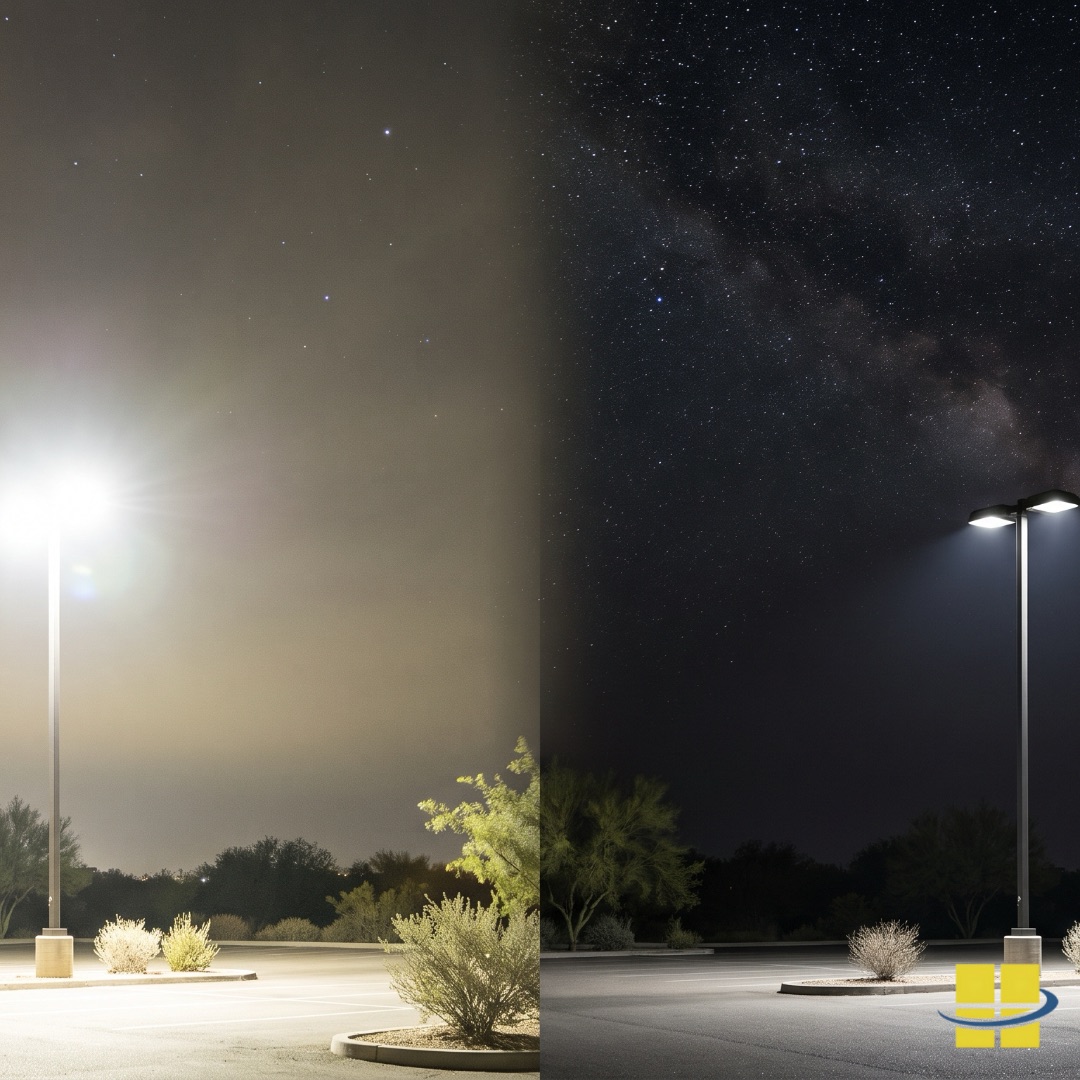
The light pollution mitigation hierarchy is a ranked sequence of four actions for reducing the ecological impact of outdoor lighting, with the most effective action first. Researchers from the Leibniz Institute of Freshwater Ecology and Inland Fisheries (IGB) in Berlin and the Brandenburg University of Applied Sciences proposed it in a review published in Nature Reviews Biodiversity, as reported by Mirage News.
- Remove light sources permanently unless a justified need exists.
- Confine and dim light with tailored optics or shielding, and reduce output through dimming.
- Limit the hours with timers and motion sensors.
- Adjust the spectrum of the light that remains.
The order matters. A fixture that is switched off produces no glare, no skyglow, and no wildlife impact. Spectrum is the last step, not the first, because changing the color of an unneeded light still leaves an unneeded light.
Why the Order Matters: What the 2026 Review Found
The review documents how widespread the problem has become. According to Mirage News coverage of the review, the night sky has brightened “by an average of nearly 10 percent per year” over the past decade, and projections indicate that by 2052, half of the Earth's land area will be affected by light pollution.
- Wildlife: As reported, light pollution suppresses melatonin release in all vertebrate groups, including birds, mammals, amphibians, reptiles, and fish, by 36 percent on average.
- Plants: Urban trees leaf out earlier and drop leaves later. Light pollution lengthens the urban growing season more strongly than air temperature does.
- Habitat use: Insects and their predators gather at street lamps, while pumas and migratory birds avoid lit habitat, according to the German science outlet astronews.com (November 4, 2026).
According to the coverage, lead author Dr. Ashton Dickerson of IGB describes the natural light-dark cycle as one of the most stable environmental signals over the course of evolution. Co-author Dr. Franz Hölker notes a remaining gap between scientific knowledge and the protection of biodiversity.
Step 1: Remove Lights Without a Justified Need
Start with an audit. List every exterior fixture, what it lights, and who uses that space after dark. Fixtures that light empty fields, unused drives, or building faces with no security purpose are candidates for removal. Lights at entrances, walkways, stairs, and loading areas have a need and stay. Our wildlife lighting guide makes the same point: turning off unnecessary lights is the most effective way to reduce the impact of artificial light on wildlife.
Step 2: Confine and Dim the Light That Remains
Direct light only where people need it. Fully shielded, downward-aimed fixtures keep light off the sky and off neighboring property. House-side and backlight shields correct light trespass on existing poles; see how light shields work. Then dim to the level the task requires. A photometric study from an Access Fixtures lighting engineer confirms the target light levels before you buy, so you avoid over-lighting from day one.
Step 3: Limit the Hours With Timers and Motion Sensors
Most sites do not need full output all night. Time clocks, photocells, and occupancy sensors cut burn hours without cutting safety when people are present. Our lighting controls guide covers the options, and our guide to part-night lighting shows how councils and property owners schedule dimming and curfews. The APTA area light offers an optional photocell, and its microwave motion sensor can control multiple APTA fixtures (APTA product page).
Step 4: Adjust the Spectrum
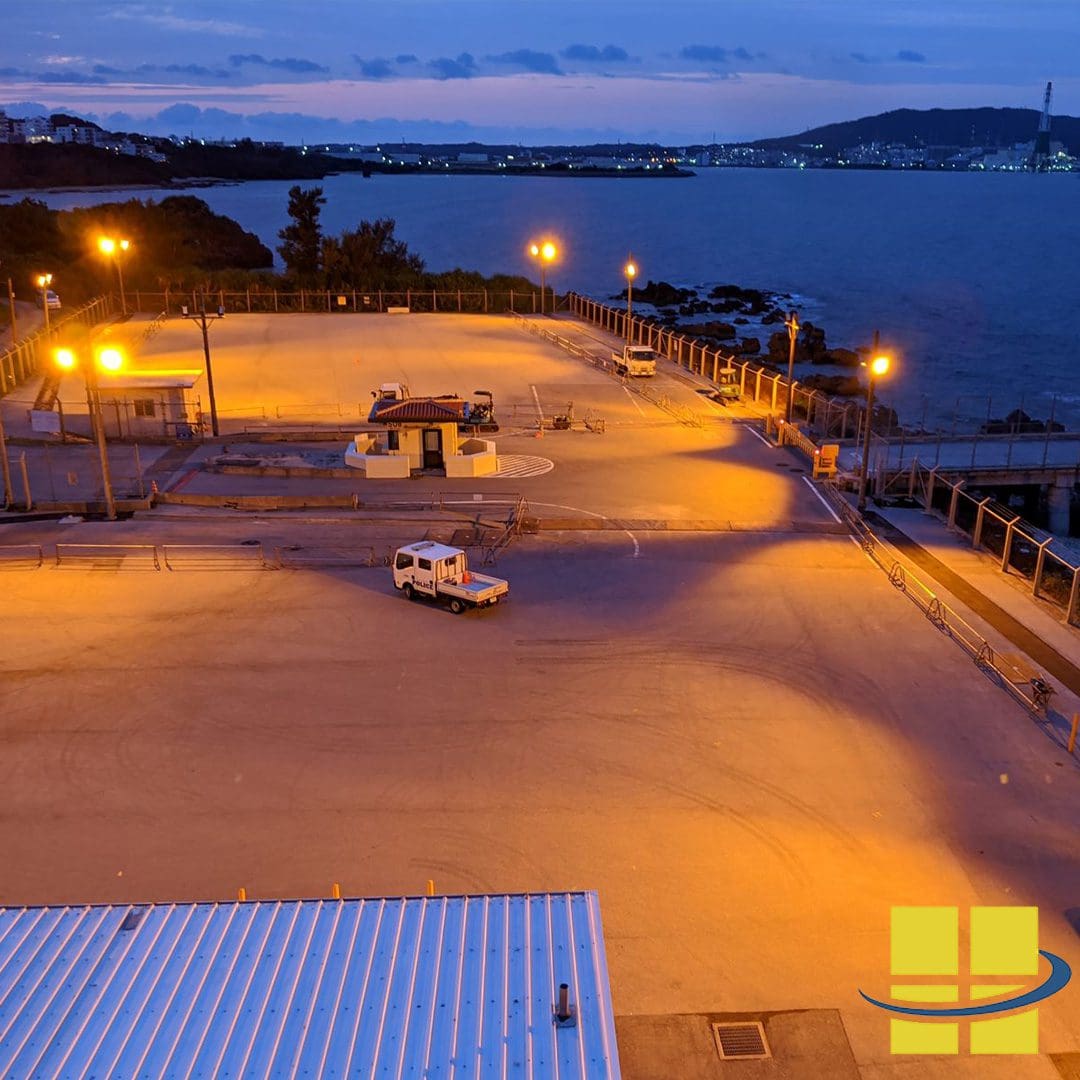
Once the light is necessary, confined, and timed, choose a spectrum that reduces biological impact. Long-wavelength amber light is a common approach near sea turtle nesting beaches and other sensitive habitat. Access Fixtures offers dedicated 590nm amber LED options across area lights, wall packs, and bollards. Coastal customers can start with our FWC sea turtle lighting collection and our turtle and wildlife friendly lighting guide.

Dark Corridors: Planning Beyond a Single Site
The review's authors propose “dark corridors” — connected strips of unlit or minimally lit land that link key habitats so nocturnal species can move between them. They present dark corridors as a complement to existing conservation networks such as the European Union's Natura 2000. For a park district, campus, or municipality, the practical step is to map which edges of your property border habitat, then apply Steps 1 through 4 most strictly along those edges.
Where Policy Is Heading
The authors recommend that lawmakers set evidence-based emission limits tailored to each type of lighting. Their reasoning: fixed limits let manufacturers, distributors, and lighting planners design to the rule before installation, instead of proving environmental harm after the fact. The review points to three existing frameworks:
- Germany: the 2021 Insect Protection Act, Section 41a of the Federal Nature Conservation Act (BNatSchG).
- International: the International Light Pollution Guidelines adopted under the Convention on Migratory Species at COP 14 in 2024.
- Australia: the 2023 National Light Pollution Guidelines for Wildlife. Read our summary of Australia's wildlife lighting guidelines.
In the United States, rules are already taking this shape. Maine's LD 1934, in force since October 1, 2026, sets numeric limits for public outdoor lighting: full shielding for fixtures over 1,000 lumens, a 3000K cap for most uses, and a nightly off-time for nonessential lighting. See the specific numbers in Maine's law. U.S. owners face a growing patchwork of local dark sky ordinances, and designing to the four-step hierarchy now helps a project stay ahead of them as they tighten. For the broader research picture, see our summary of DarkSky International's State of the Science 2026.
Sources: “Mitigating Ecological Consequences Of Light Pollution,” Mirage News, November 5, 2026; “Lichtverschmutzung: Abgeschirmte Lampen und dunkle Korridore,” Stefan Deiters, astronews.com, November 4, 2026 (German).
Frequently Asked Questions
What is the light pollution mitigation hierarchy?
It is a four-step order for reducing the impact of outdoor lighting: remove unneeded lights, confine and dim the remaining light, limit operating hours with timers and motion sensors, then adjust the spectrum. A 2026 review in Nature Reviews Biodiversity, as reported by Mirage News, proposed this sequence.
What is the most effective way to reduce light pollution?
Removing lights that serve no justified purpose is the most effective step. A fixture that is off produces no skyglow, glare, or light trespass. Shielding, dimming, scheduling, and spectrum changes then reduce the impact of the lights you keep.
Is amber lighting enough to make a site dark sky friendly?
No. Spectrum is the fourth step in the hierarchy, not the first. An unshielded amber fixture that runs all night still adds light to the sky. Amber LEDs work best on fixtures that are already necessary, fully shielded, dimmed, and on controls.
What are dark corridors?
Dark corridors are connected strips of unlit or minimally lit land that link habitats so nocturnal animals can move between them. The 2026 review proposes them as a complement to conservation networks such as Natura 2000.
Do motion sensors reduce light pollution?
Yes. Motion sensors and timers limit the hours a light operates, which is Step 3 of the hierarchy. Lights stay off or dimmed when no one is present and respond when someone arrives.
Do I have to remove lights that serve a safety purpose?
No. Step 1 removes lights without a justified need. Lights at entrances, walkways, stairs, and loading areas have a need and stay. Steps 2 through 4 reduce their impact with shielding, dimming, schedules, and spectrum.
Are there U.S. rules that follow this approach?
Yes. Maine's LD 1934, in force since October 1, 2026, sets numeric limits for public outdoor lighting, including full shielding for fixtures over 1,000 lumens, a 3000K cap for most uses, and a nightly off-time for nonessential lighting. Other states and cities have passed or are considering similar rules.
How do I start reducing light pollution at my site?
Start with a fixture audit and a photometric study. An Access Fixtures lighting specialist can identify lights to remove, specify shielding and dimming, and recommend controls and spectrum. Call 800-468-9925.
Request a Photometric Study
Every step of the hierarchy starts with knowing where your light goes today. An Access Fixtures lighting specialist will review your site and arrange a photometric study from a lighting engineer that shows what to remove, what to shield, and what to put on controls. Call 800-468-9925 or request your photometric study online.
800-468-9925