

Introduction
Solar-powered lighting bollards are self-contained outdoor lighting fixtures that integrate solar panels, rechargeable batteries, and LED bulbs into a single unit, providing wire-free security illumination for pathways, perimeters, and outdoor areas. These energy-efficient systems harness renewable solar energy during daylight hours to power all-night illumination without electrical infrastructure.
This guide covers bollard conversion systems, such as SECU, that transform existing security posts into illuminated bollards, and practical applications for safety and security lighting. The information applies to property managers evaluating retrofit options, security professionals upgrading perimeter lighting, and facility maintenance teams seeking cost-effective solutions that eliminate wiring complexity and ongoing utility expenses.
Direct answer: Solar-powered lighting bollards are self-contained LED lighting systems that convert existing security bollards into illuminated fixtures, delivering powerful outdoor lighting without any electrical wiring, trenching, or grid connection. Browse SECU 590nm Amber Solar Security Bollard Light or SECU Solar Security Bollard Light (3K, 4K, 5K)
Key Takeaways
-
- Understand the difference between bollard conversion systems and new installations, including how SECU adds light to concrete-filled 5" Schedule 80 steel bollards.
- Learn how SECU installs with no trenching, conduit, or electrician, and calculate real savings from eliminating electrical infrastructure.
- Select the right height, color, and optics for your site’s security requirements. Understand the difference between bollard conversion systems and new installations, including how SECU adds light to concrete-filled 5" Schedule 80 steel bollards.
Learn how SECU installs with no trenching, conduit, or electrician, and calculate real savings from eliminating electrical infrastructure.
Select the right height, color, and optics for your site’s security requirements.
What Are Solar Powered Lighting Bollards?
Solar powered lighting bollards integrate photovoltaic technology with LED illumination to deliver autonomous outdoor lighting. These fixtures capture sunlight through built-in solar panel arrays, store energy in internal batteries, and automatically illuminate pathways and security perimeters from dusk to dawn without external power sources.
Their relevance to modern security infrastructure stems from two converging priorities: the push toward sustainability and the practical need to reduce installation complexity. Traditional wired bollard lights require trenching, electrical permits, and ongoing utility costs. Solar bollards eliminate these requirements.
Conversion Systems
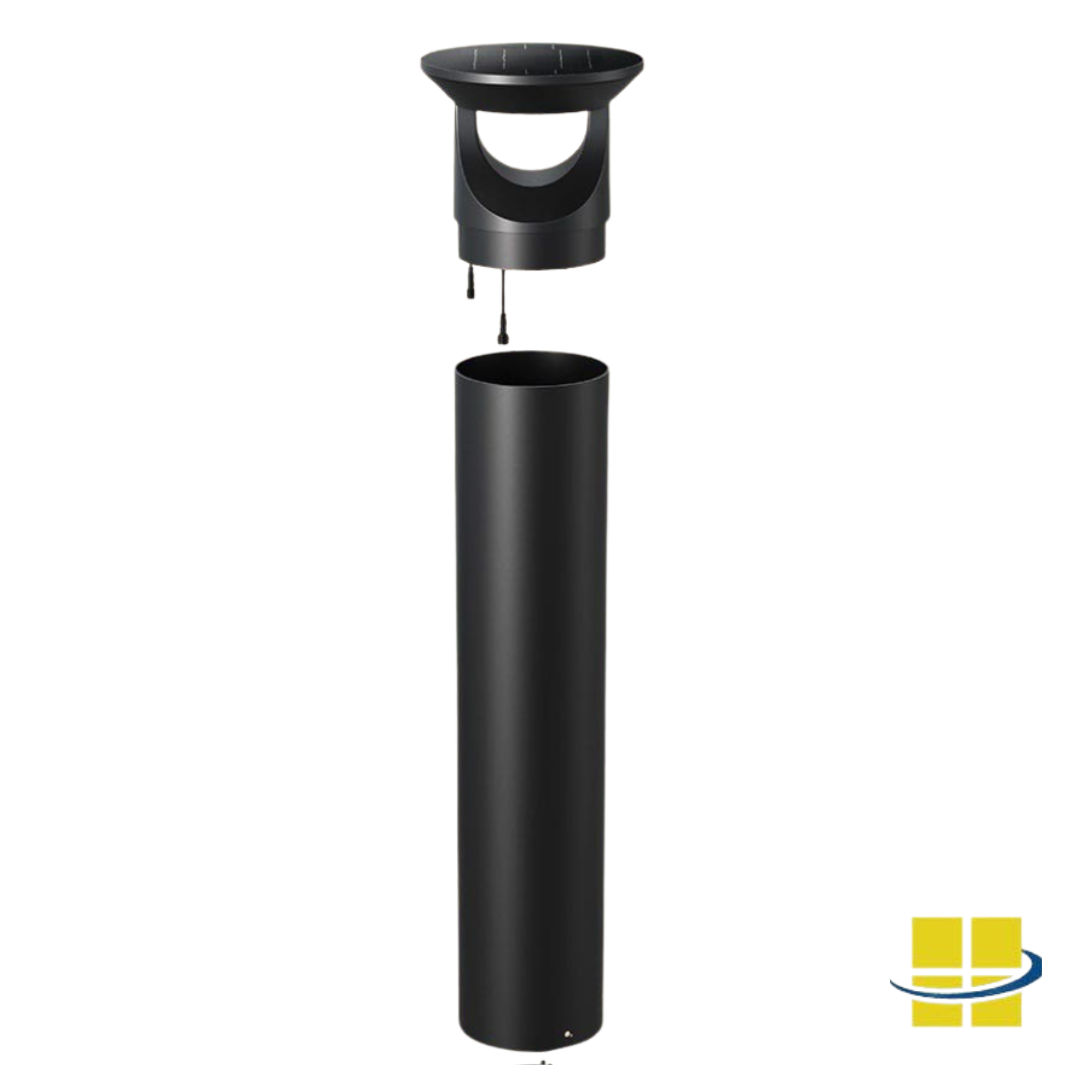
Conversion systems add light to the steel already doing the stopping. The SECU 3w Solar-Powered Security Bollard Light slides over a concrete-filled 5" Schedule 80 steel pipe (5.563 in OD / 141.3 mm). It comes in a 44 in body over a 36 in pipe or a 56 in body over a 48 in pipe. Existing 5" Schedule 80 bollards may qualify, and a lighting specialist confirms pipe size and height before you order.
The cost advantage is the work SECU removes: no trenching, no conduit, no electrician, and no utility bill. The body slides over the pipe on beads of silicone caulk, and the solar head locks on with tamper-resistant hardware.
Solar Technology Components
Modern solar bollards feature several core technologies in weather-resistant housings. Photovoltaic cells capture sunlight and connect to charge controllers that optimize energy harvest and prevent battery damage.
Battery technology has advanced significantly, with lithium iron phosphate (LiFePO4) replacing older lead-acid designs. LiFePO4 offers longer cycle life and safer chemistry than standard lithium-ion. SECU’s replaceable LiFePO4 battery is rated for 3,000 to 6,000 charge cycles and for 32°F to 122°F operation, based on optimal battery charging.
LEDs serve as the light source. SECU delivers 390 lm at 130 lm/W from a 3W system, enough light for genuine security applications rather than decorative accent lighting. Die-cast aluminum housings with a marine-grade powder coat stand up to harsh outdoor conditions.
These integrated systems need less maintenance than wired alternatives. There is no wiring to inspect and no connections to degrade, and an IP66 rating protects the electronics from dust and powerful water jets.
Learn more about How Solar Lights Work here
What Are the Types and Security Applications?
Building on the technology overview, specific bollard configurations serve different security and illumination needs. The product category spans from low-output pathway markers to high-performance security fixtures.
Security Bollard Conversion Systems
More than 100 vehicles strike U.S. commercial buildings and storefronts every day, according to the Storefront Safety Council, and about 9% are intentional smash-and-grab and ram-raid attacks. A lit bollard line makes the barrier visible to drivers and signals a monitored property.
SECU is purpose-built for security applications. Its die-cast aluminum construction carries a marine-grade powder coat that resists corrosion in coastal and industrial environments.
Technical specifications position SECU for demanding applications:
- Output: 390 lumens from a 3w LED module
- Efficiency: 130 lumens per watt
- Height options: 44” for standard installations, 56” to fit over 48” high security bollards
- Optics: Type IV for roadway-style distribution or Type V for symmetric area lighting
- Color temperature: 3000K, 4000K, or 5000K options
- BUG rating: B0-U1-G0 for dark sky compliance
SECU slides over 5" Schedule 80 steel pipe, 5.563 in OD, and the solar head locks to the body with tamper-resistant hardware. Controls include a solar remote and an optional house-side shield that directs light away from adjacent buildings.
By adding light to concrete-filled steel bollards, [SECU] puts visible light on the perimeter without wiring or infrastructure upgrades. The steel core and its engineered foundation stop the vehicle; SECU makes the barrier visible after dark and makes the property a harder target.
Commercial and Pathway Applications
Corporate campuses deploy solar bollard lights along pedestrian routes, parking lot perimeters, and building entries. Loading docks, parking structures, and entrances with concrete-filled 5" Schedule 80 bollards can add light with SECU without running power.
Municipal applications include park pathways, trail access points, and public plaza borders. Solar operation eliminates the infrastructure cost that often blocks lighting in parks far from electrical service. Each fixture runs independently and stays lit during grid outages that take wired systems down.
Retail and industrial facilities use solar bollards to separate vehicle and pedestrian zones, light emergency exit routes, and give perimeter cameras usable detail after dark, with no utility bill regardless of bollard count.
Architectural Integration Options
Modern solar bollards offer sleek designs compatible with contemporary architecture. Clean cylindrical profiles in black or custom color finishes integrate with site aesthetics rather than appearing as utilitarian afterthoughts. Powder-coated aluminum resists fading and maintains appearance over years of outdoor exposure.
The SECU design specifically matches the profile of security bollards already installed across commercial and municipal properties. Rather than introducing a visually inconsistent lighting fixture, the conversion maintains the established bollard aesthetic while adding powerful illumination.
What Are the Installation and Implementation Methods?
Understanding bollard types leads naturally to installation considerations. The method varies dramatically between conversion systems, new solar installations, and traditional wired bollards.
SECU Conversion Installation Process
SECU installs on concrete-filled 5" Schedule 80 steel pipe once the core has fully cured.
- Verify compatibility: Confirm the pipe is 5" Schedule 80 (5.563 in OD) at 36 in above grade for the 44 in SECU, or 48 in for the 56 in SECU. Clean the pipe exterior of concrete splatter, dust, and grease.
- Apply caulk rings and spacers: Run heavy, concentric beads of structural silicone caulk around the pipe at spaced intervals above grade, and set temporary 1/2 in non-marring spacers on the finished grade.
- Mount the body and head: Lower the SECU body straight down over the pipe until it rests on the spacers. Insert the solar head into the top of the body, where it seats in the 8-1/2 in clearance above the pipe rim.
- Lock and configure: Secure the head with the tamper-resistant hardware provided, remove the spacers, and wipe away excess caulk. Set modes with the solar remote, and add the optional house-side shield where needed.
No conduit, no wiring, and no electrician. The bollard foundation itself is designed by a licensed structural engineer (PE).
Installation Method Comparison
| Factor | SECU | Traditional Wired |
|---|---|---|
| Bollard foundation | Required, the same structural work | Required |
| Power to each bollard | None | Trench, conduit, and wire |
| Electrical work | None | Licensed electrician |
| Utility connection | None, 100% solar | Required, with an ongoing bill |
| During a grid outage | Stays lit on its LiFePO4 battery | Goes dark |
Both options need the same bollard foundation. SECU removes the second project: trenching, conduit, an electrician, and a permanent utility bill. Wired bollard lighting remains the better choice where solar exposure is inadequate.
What Are Common Challenges and Solutions When Installing Bollard Lights?
Several concerns arise when evaluating solar bollard installations. Understanding these issues and their solutions ensures successful implementation.
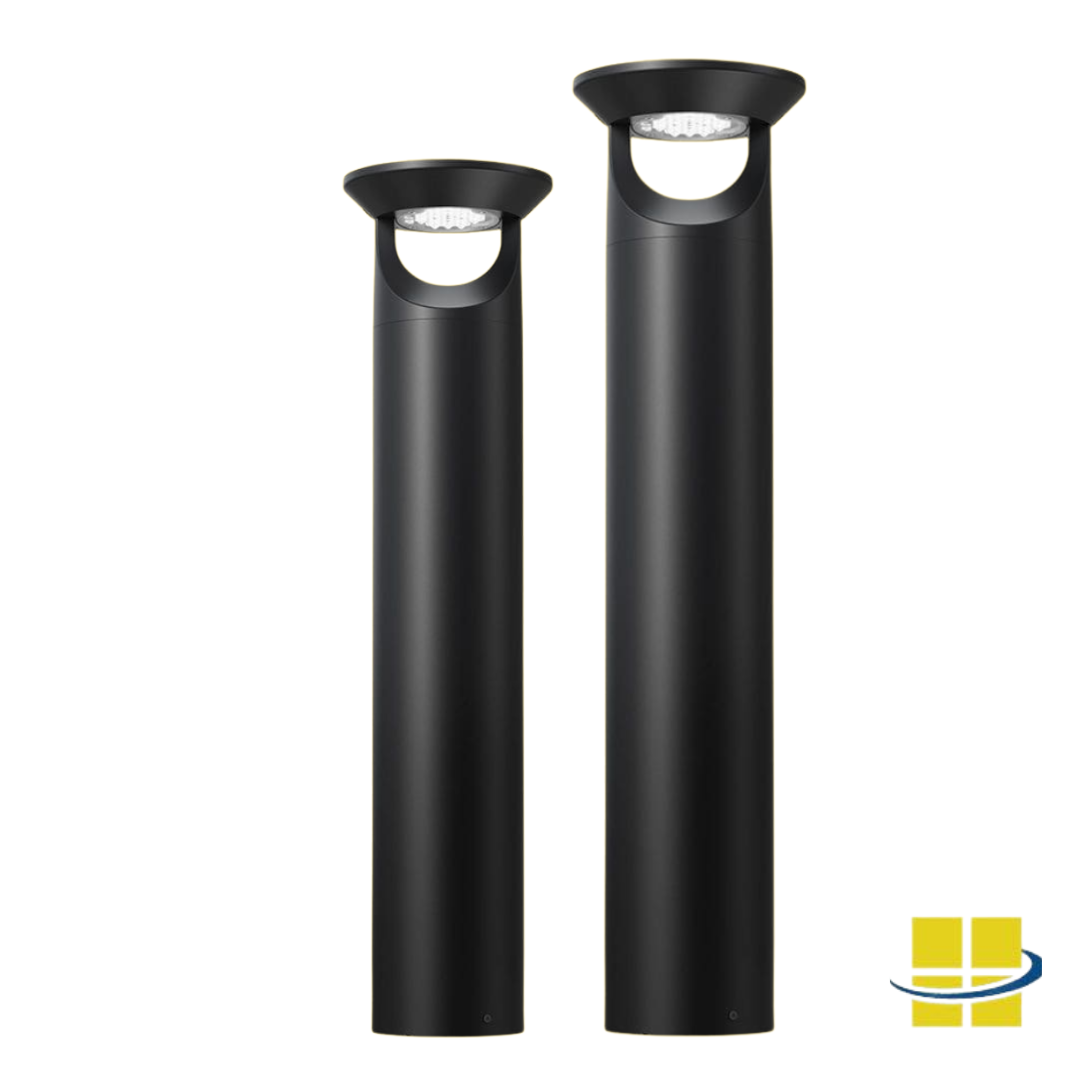
SECU 3w Solar-Powered Security Bollard Light

SECU 3w Solar-Powered Security Bollard Light (White Light Bollard Head)

SECU 3w Solar-Powered Security Bollard Light (Bollard Cover or Sleeve)

SECU Spacing Calculator: Straight Line
Enter the length of your bollard line. The calculator finds the fewest SECU solar security bollard lights that space evenly, keep a small car from passing between them, and leave an accessible route for wheelchairs and mobility devices.
Spacing rules from the SECU Engineering & Installation Guide: clear gap between adjacent SECU bodies no more than 48 in (anti-ram) and no less than 36 in (accessible route); recommended 48 to 54 in center to center; SECU sleeve diameter 6.50 in. Results are a layout estimate, not a site design. A licensed structural engineer (PE) confirms foundation type, pier size, depth, concrete, and rebar for every site. SECU includes the body sleeve and solar head; the 5 in Schedule 80 steel pipe, rebar, and concrete are purchased separately.
SECU Spacing Calculator: Lines with Corners
Lay out a SECU perimeter that turns a corner, such as a line along a parking edge that returns back to the building. A SECU sits at every corner. The calculator spaces each leg evenly, keeps a small car from passing, and leaves an accessible route for wheelchairs and mobility devices.
When a return ends at a building wall, the gap between the last SECU and the wall follows the same 36 to 48 in clear-gap rule, so a car cannot squeeze past and a wheelchair can.
Spacing rules from the SECU Engineering & Installation Guide: clear gap between adjacent SECU bodies no more than 48 in (anti-ram) and no less than 36 in (accessible route); recommended 48 to 54 in center to center; SECU sleeve diameter 6.50 in. Results are a layout estimate, not a site design. A licensed structural engineer (PE) confirms foundation type, pier size, depth, concrete, and rebar for every site. SECU includes the body sleeve and solar head; the 5 in Schedule 80 steel pipe, rebar, and concrete are purchased separately.
Insufficient Sunlight Exposure
Solar bollards need adequate sunlight to charge for all-night operation. Position units away from building shadows, tree canopy, and other obstructions that block direct sun. SECU pairs [EXTREME-LIFE LEDs rated L70 @ 270,000 hours] with a replaceable LiFePO4 battery rated for 3,000 to 6,000 charge cycles.
Performance depends on latitude, season, and weather, so a lighting specialist reviews your site’s location and shortest winter days before you order.
Read About Bollard Light Spacing
Watch the Bollard Light Spacing Video
Vandalism and Durability Concerns
Outdoor fixtures face impact from vehicles, equipment, and intentional damage. Select products with verified ratings: SECU is rated IK07 for impact and sealed to IP66 against dust and powerful water jets.
Materials matter for long-term durability. Die-cast aluminum housings with marine-grade powder coat resist corrosion far better than plastic alternatives, and tamper-resistant hardware secures the solar head to the body.
Learn More About Vandal-Resistant Lighting
Light Output and Distribution Issues
Matching optics to the application ensures the right coverage. Type IV optics suit roadway and pathway edges, where light should project forward and to the sides but not backward. Type V optics give a symmetric distribution for area lighting, where the bollard sits inside the lit zone.
For sites under dark sky regulations, check the BUG (Backlight-Uplight-Glare) rating. SECU’s B0-U1-G0 is the lowest backlight and glare rating with a low uplight rating, which makes it dark sky friendly. An optional house-side shield stops spill toward buildings or neighbors.
Specify color by application: 3000K is a warm white suited to pedestrian areas and dark sky ordinances, 5000K is a bright white that closely mimics daylight, and 590 nm amber serves turtle-safe and wildlife-sensitive sites.
Next Steps
Solar-powered lighting bollards deliver wire-free security lighting with immediate installation benefits and long-term operating savings. SECU adds light to concrete-filled 5" Schedule 80 steel bollards with no electrical work, trenching, or utility connection. A 5-year warranty, EXTREME-LIFE LEDs rated L70 @ 270,000 hours, and zero energy cost make it a strong alternative to wired installations.
Immediate actions to take:
- Confirm existing bollards are 5" Schedule 80 steel pipe at 36 or 48 in above grade, or specify that pipe for a new perimeter.
- Assess solar exposure at proposed locations.
- Calculate the total cost comparison, including trenching, electrical, and utility expenses.
- Request product specifications and current lead time from a lighting specialist.
- Choose optics, color, and the optional house-side shield for your site.
Additional Resources
SECU Technical Specifications
- Model: AF59XBL04-003-50.5
- Weight: 13 lbs (16 lbs shipping weight)
- Dimensions: Φ9.06” × 50.5”
- Listings: CE certified
- Stock availability and updates: Contact the manufacturer (Access Fixtures) for the current lead time
Installation Planning Tools
- Site solar exposure assessment guidelines
- Bollard compatibility measurement procedures
- ROI calculator comparing wired vs. solar installation costs
Other Similar Articles
Conclusion
Solar-powered lighting bollards offer an efficient, sustainable way to light security perimeters and pathways. Adding SECU to concrete-filled 5" Schedule 80 bollards eliminates trenching, wiring, and ongoing electricity costs. With die-cast aluminum construction, integrated solar charging, EXTREME-LIFE LEDs, and a replaceable battery, SECU improves safety and security with minimal maintenance. Property managers, security professionals, and facility teams get perimeter light without an electrical project, and years of service without a utility bill.
Converting Security Bollards into Solar Security Bollard Lights: Frequently Asked Questions (FAQs)
What are solar-powered lighting bollards?
Solar-powered lighting bollards are self-contained outdoor lighting fixtures that combine integrated solar panels, rechargeable batteries, and energy-efficient LED bulbs to provide wire-free illumination for pathways, perimeters, and outdoor areas.
How do solar bollards work?
They capture sunlight through built-in solar panels during the day, store the energy in internal batteries, and automatically power LED lights at night, providing illumination without external wiring or electrical connections.
Can solar bollards be installed anywhere?
Solar bollards require access to direct sunlight to charge effectively, so they can be installed in most outdoor locations with adequate sun exposure, without the need for trenching or electrical wiring.
How long does the battery last in a solar bollard?
Battery life depends on chemistry and charge cycles. SECU uses a replaceable LiFePO4 battery rated for 3,000 to 6,000 charge cycles.
Are solar bollards durable and weather-resistant?
Yes, most solar bollards feature robust housings made from materials like die-cast aluminum with powder-coated finishes and polycarbonate lenses, providing resistance to weather, vandalism, and impacts.
Do solar bollards have motion sensors?
Many models include motion sensors to conserve energy. SECU runs dusk to dawn, and its modes are set with the solar remote control.
How easy is it to install solar-powered lighting bollards?
Installation is straightforward and quick, often requiring just mounting the bollard without trenching or electrical work, making it ideal for retrofit projects and remote locations.
What warranty is typically offered for solar bollards?
Most solar bollard products carry warranties of 2 to 5 years covering defects in materials and workmanship. SECU carries a 5-year warranty.
Can existing safety bollards be converted to solar-powered lighting bollards?
Yes, if they qualify. SECU fits concrete-filled 5" Schedule 80 steel pipe (5.563 in OD) at 36 or 48 in above grade. A lighting specialist confirms pipe size and height before you order.
Are solar-powered lighting bollards environmentally friendly?
Absolutely. They use renewable solar energy, eliminate electrical grid dependence, reduce carbon footprint, and minimize ongoing energy costs.
If you have additional questions or need help selecting the right solar bollard for your project, please contact our support team or request a consultation.
