
Total Cost of Ownership Calculator Solar Lighting vs. Grid Lighting
Solar-Powered Light Fixtures
Cost of Installation
Batteries typically last 7–10 years; this assumes 7-year replacement.
Grid-Powered Light Fixtures
Cost of Installation
Annual Usage
Results are calculated automatically based on the values entered.
Disclaimer: This calculator provides an estimate for total cost of ownership. The 'Cost of Installation' should include all expenses for trenching, wiring, labor, permitting, battery replacement, and any optional charges.
Example: Parking Lot Lighting Project (Massachusetts)
This commercial project example assumes poles and wiring are already in place; only fixtures are needed. Flood lights are ideal for illuminating large parking lots, making them a suitable choice for commercial applications.
- Solar-Powered (SUNA 200W @ $1,599.87 each) 30 fixtures = $47,996 total 10-Year TCO: $47,996
- Grid-Powered (CARA 199W @ $969.87 each) 30 fixtures = $29,096 total Annual energy: 28,685 kWh at $0.24/kWh = $6,884/year 10-Year TCO: $97,939
Result: Solar lighting saves about $49,943 over 10 years compared to grid lighting when electricity costs are $0.24/kWh.
Solar Lighting ROI: Solar vs. Grid-Tied Total Cost of Ownership (TCO) Calculator
When evaluating the total cost of ownership (TCO) for solar lighting versus grid-tied lighting, it's important to consider all components of the initial investment. Labor costs are a significant part of the upfront expenses for both solar and grid-tied lighting systems, as installation can require specialized skills and time. The TCO calculator helps you compare these costs, along with equipment and ongoing maintenance, to determine the best return on investment for your project.
Introduction
Solar vs Low Voltage Landscape Lighting: How to calculate and compare the total cost of ownership of your Solar vs. grid/wired LED lighting solution? Solar landscape lighting delivers superior long-term ROI compared to low-voltage landscape lighting systems, with total cost of ownership savings averaging 15-40% over 10 years, depending on installation size and local electricity rates. This comprehensive financial analysis examines the true costs of Access Fixtures solar lighting systems versus their low-voltage alternatives, including hidden expenses many property managers overlook. While low-voltage lighting systems require lower upfront equipment costs, solar landscape lights eliminate ongoing electricity bills and reduce installation complexity, creating substantial savings over time.
Key Takeaways
-
- Solar landscape lighting systems offer superior long-term cost savings by eliminating electricity bills and reducing installation complexity, making them a cost-effective choice for many outdoor lighting projects.
- Low voltage landscape lighting provides consistent brightness and greater design flexibility but involves higher upfront installation costs and ongoing electricity expenses.
- Accurate total cost of ownership analysis, including hidden costs and maintenance, is essential for making informed decisions and maximizing return on investment for your landscape lighting system.
What This Guide Covers
This guide provides detailed total cost of ownership formulas, ROI calculations spanning 6 months to 10 years, and specific cost breakdowns using Access Fixtures product lines. We include step-by-step calculation methods, real-dollar amounts, hidden-cost analysis, and payback-period formulas you can apply to your specific project.
Who This Is For:
This guide is designed for property owners, facility managers, and contractors evaluating lighting investments for commercial and residential projects. Whether you’re planning a 20-fixture pathway installation or a comprehensive outdoor lighting system, you’ll find actionable financial analysis and calculation tools.
Why This Matters:
Landscape lighting represents a significant long-term investment that directly impacts operational budgets and energy costs. Choosing the wrong system can result in thousands of dollars in unnecessary expenses over the system’s 10-15 year lifespan, while the right choice delivers measurable savings and improved energy efficiency.
What You’ll Learn:
- Total cost of ownership formulas with step-by-step calculations
- ROI analysis for 6-month, 1-year, 5-year, and 10-year timeframes
- Access Fixtures solar vs low voltage cost breakdowns with real pricing
- Hidden costs and long-term savings analysis with specific dollar amounts
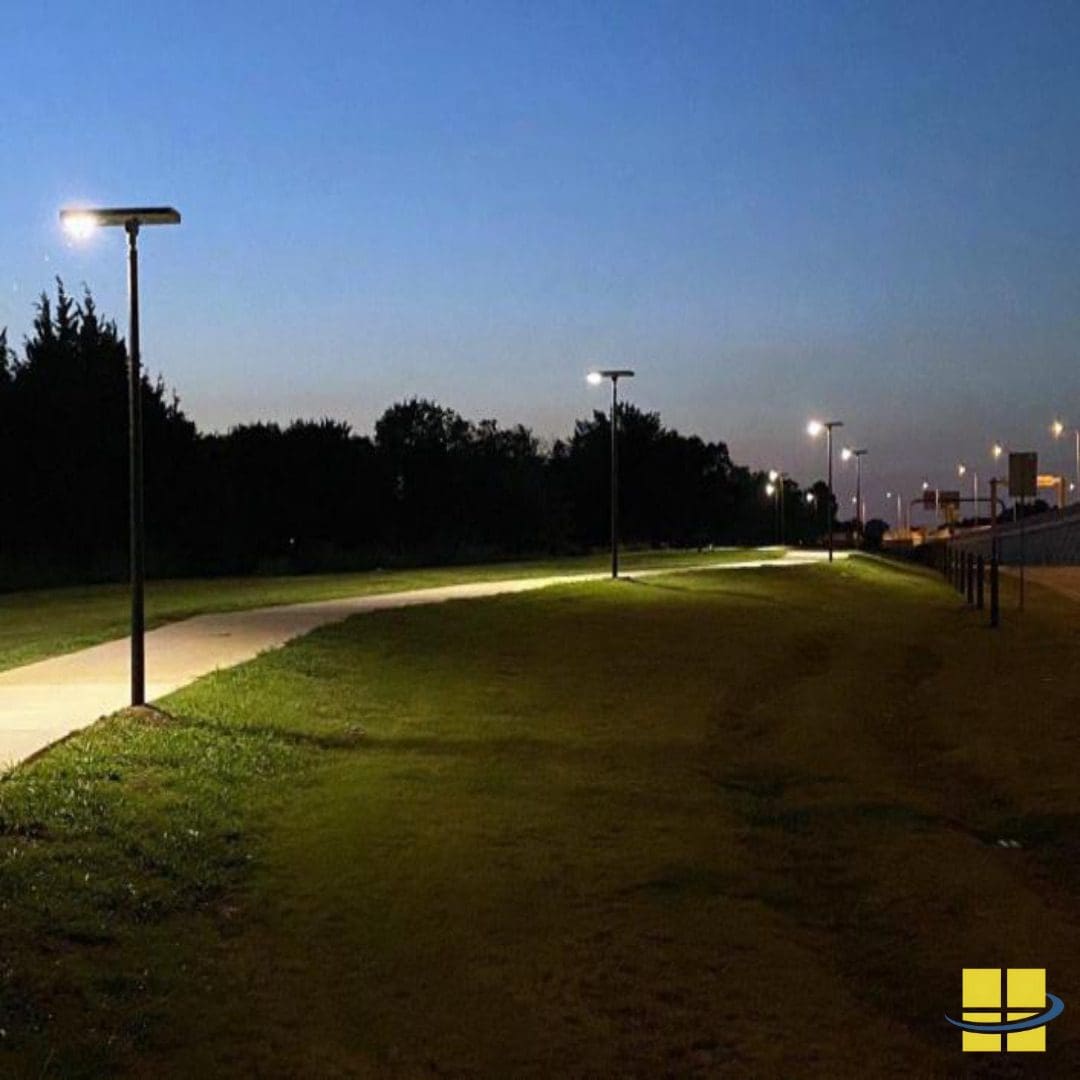
SUNA - LED Solar Lights Illuminating a Pathway
Understanding Total Cost of Ownership for Solar and Grid-Powered Lighting Systems
Total cost of ownership (TCO) for lighting systems encompasses all expenses from initial purchase through the system’s operational lifetime, including equipment, installation, energy consumption, maintenance, and component replacement costs. TCO analysis reveals the true financial impact of lighting system choices by capturing ongoing operational expenses that often exceed initial equipment costs. For outdoor lighting systems with 10-15 year lifespans, operational costs frequently represent 60-80% of total ownership expenses. Understanding TCO prevents costly decision-making based solely on upfront equipment prices, which can mislead property managers into choosing systems with higher long-term costs.
Understanding Energy Consumption
Understanding energy consumption is essential when evaluating the effectiveness and efficiency of solar lighting solutions. Energy consumption refers to the total amount of electrical energy used by a lighting system over time. Solar lighting systems stand out by significantly reducing energy consumption compared to traditional grid-tied lighting. By harnessing renewable energy through solar panels, these systems convert sunlight into electrical energy, which is then stored and used to power LED fixtures at night. This process not only minimizes reliance on non-renewable energy sources but also leads to substantial reductions in electricity costs and carbon emissions.
For example, a commercial solar lighting project can achieve annual energy savings of up to 70% compared to conventional lighting systems. These savings translate directly into lower energy bills and a reduced carbon footprint, making solar lighting an environmentally responsible and cost-effective choice. By optimizing energy use and leveraging the benefits of renewable energy, solar lighting solutions help property owners and facility managers achieve both financial and environmental goals.
Solar Lighting System Cost Components
Access Fixtures solar lights include integrated solar panels, lithium-ion rechargeable batteries, LED light fixtures, and control systems in single units. Initial costs range from $150-$350 per fixture, depending on output and features, with professional installation optional since most units install without wiring. Choosing products with advanced features, such as motion sensors or dimming capabilities, can enhance energy efficiency and help the system operate at peak efficiency. This connects to TCO analysis because solar systems front-load costs into equipment purchase while eliminating ongoing electricity expenses and reducing installation complexity.
Low Voltage Lighting System Cost Components
Access Fixtures low voltage landscape lighting systems require LED light fixtures ($80-$200 each), transformers ($150-$400 depending on capacity), buried wiring, and professional installation. Low-voltage systems offer unlimited design flexibility and consistent brightness but create ongoing electricity bills and higher installation costs. Building on solar costs, low-voltage systems typically cost less per fixture initially but generate substantial ongoing operational expenses through energy consumption and installation complexity. Transition: These foundational cost components establish the framework for detailed financial calculations that reveal each system’s true long-term value.
Financial Analysis: Solar vs Line Voltage Cost Calculations
Accurate cost analysis requires systematic calculation of initial investments, ongoing operational expenses, and component replacement costs using standardized formulas that account for system-specific variables.
Initial Investment Calculations
Access Fixtures Solar System Costs:
- Solar pathway lights: $200-$300 per fixture (installation included)
- Solar area lights: $300-$500 per fixture (installation included)
- No transformer, wiring, or trenching required
Access Fixtures Low Voltage System Costs:
- LED pathway fixtures: $120-$180 per fixture
- LED area lights: $150-$250 per fixture
- Transformer: $200-$400 (300W-600W capacity)
- Professional installation: $75-$150 per fixture, including trenching and wiring
Installation Cost Formula:
Total Installation Cost = (Fixture Count × Installation Rate) + Transformer Cost + Permit Fees
Operational Cost Formulas
Annual Electricity Cost (Low Voltage):
Annual Cost = (Total System Wattage ÷ 1000) × Hours per Day × 365 × Electricity Rate ($/kWh)
Example Calculation (20 fixtures, 5W each):
- Total wattage: 20 × 5W = 100W = 0.1 kW
- Annual consumption: 0.1 kW × 8 hours × 365 = 292 kWh
- Annual cost: 292 kWh × $0.15 = $43.80
Solar Battery Replacement Cost:
Replacement Cost = (Fixture Count × Battery Cost) ÷ Replacement Interval (years)
Access Fixtures solar units typically require battery replacement every 4-5 years at $25-$40 per unit.
ROI Calculation Methodology
ROI Formula:
ROI = [(Annual Savings × Years) - Additional Initial Investment] ÷ Additional Initial Investment × 100
Payback Period Formula:
Payback Period = Additional Initial Investment ÷ Annual Savings
The typical payback period for solar lighting is usually between 3 and 7 years for most projects. Solar lighting systems typically offer a 10%–20% annual ROI.
Net Present Value (NPV) considers inflation and energy rate increases:
NPV = Σ [Annual Savings ÷ (1 + Discount Rate)^Year] - Initial Investment
Transition: These calculation methodologies provide the foundation for comprehensive ROI analysis across multiple timeframes.
ROI Analysis: 6 Months to 10 Years Comparison
Real-world ROI analysis demonstrates how solar landscape lighting systems generate increasing financial advantages over extended timeframes, with break-even typically occurring between 2-4 years, depending on installation size and local electricity rates.
Step-by-Step: ROI Calculation Process
When to use this: Property managers and facility owners evaluating 20-fixture Access Fixtures installation costs and returns.
- Calculate Initial System Costs: Solar system: 20 × $250 = $5,000 total. Low voltage system: (20 × $150) + $300 transformer + $2,000 installation = $5,300 total.
- Determine Annual Operational Costs: Solar: $150 annual battery replacement reserve. Low voltage: $44 electricity + $50 maintenance = $94 annually.
- Apply ROI Formula: Year 5 solar savings: $94 × 5 - $150 × 1.25 = $282 net savings vs $300 lower initial cost = -$18 cumulative difference.
- Factor Energy Rate Increases: Apply 3% annual electricity cost increases: Year 5 low voltage costs = $94 × 1.16 = $109 annually.
Comparison: Solar vs Low Voltage ROI by Timeframe
| Timeframe | Solar Total Cost | Low Voltage Total Cost | Cumulative Savings | Solar ROI % |
|---|---|---|---|---|
| 6 months | $5,075 | $5,347 | $272 | 5.4% |
| 1 year | $5,150 | $5,394 | $244 | 4.8% |
| 5 years | $5,750 | $6,173 | $423 | 8.1% |
| 10 years | $6,500 | $7,442 | $942 | 16.9% |
Solar lighting systems achieve positive ROI within the first year and deliver accelerating returns through eliminated electricity bills and reduced maintenance requirements. The 10-year analysis shows solar systems saving approximately $942 per 20-fixture installation. Transition: Understanding common calculation challenges helps ensure accurate financial projections and prevents costly oversights.
Outdoor Space Considerations
When planning outdoor lighting for commercial or residential spaces, it’s important to consider several key factors to ensure the lighting system is both effective and energy efficient. The size and layout of the outdoor space, the types of activities that will occur, and the desired level of illumination all play a role in selecting the right lighting system. Solar pathway lights and solar street lights are increasingly popular for outdoor spaces due to their ability to deliver reliable illumination with minimal maintenance and no need for a grid connection.
A well-designed solar lighting system can dramatically reduce energy consumption by as much as 50% in applications like parking lots—while maintaining or even enhancing lighting quality. Solar street lights and pathway lights are ideal for illuminating walkways, parking areas, and public spaces, offering the added benefits of easy installation and lower ongoing costs. Additionally, solar lighting can enhance the visual appeal and safety of outdoor spaces, making them more inviting for visitors and residents alike. By choosing solar lighting, property owners can create attractive, functional, and sustainable outdoor environments with minimal maintenance requirements.
Common Cost Calculation Challenges and Solutions
Accurate financial planning requires addressing hidden costs and performance variables that can significantly impact long-term ROI calculations and system selection decisions.
Challenge 1: Hidden Installation Costs for Low Voltage Systems
Solution: Include trenching ($8-$15 per linear foot), electrical permits ($50-$200), and contractor mobilization fees ($200-$500) in calculations. Regional variations can increase installation costs by 40-60% in areas with difficult soil conditions or strict permitting requirements, making solar systems more attractive in challenging installation environments.
Challenge 2: Solar Battery Degradation Impact on Performance
Solution: Factor 15-20% efficiency loss annually after year 3 in cost projections, requiring earlier battery replacement or reduced runtime. Access Fixtures solar units include lithium-ion batteries with 5-year warranties, but performance degradation may necessitate replacement after 3-4 years in high-use applications, adding $25-$40 per fixture to operational costs.
Challenge 3: Energy Rate Fluctuations Affecting Long-term Projections
Solution: Use 3-5% annual energy cost increases in 10-year ROI calculations based on historical utility rate trends and inflation projections. Historical energy rate data show consistent 3-4% annual increases over the past decade, making conservative projections essential for accurate long-term financial analysis of grid-connected lighting systems.
Transition: These solutions ensure a comprehensive cost analysis that supports confident investment decisions.
Future Trends in Lighting
The lighting industry is rapidly evolving, with future trends pointing toward greater adoption of solar lighting technology and energy-efficient solutions. One of the most significant developments is the integration of smart control systems, which allow users to remotely monitor and adjust lighting settings to optimize energy use and reduce energy costs. Advances in solar panels and battery storage are also enhancing the performance and reliability of solar lighting systems, making them an increasingly attractive option for a wide range of applications.
LED lighting continues to play a pivotal role in this evolution, offering superior energy efficiency and longer lifespans compared to traditional lighting technologies. As solar lighting solutions become more sophisticated, we can expect to see even greater energy cost savings and improved environmental benefits. The combination of smart controls, high-efficiency solar panels, and LED fixtures is set to drive the next generation of solar lighting, enabling property owners to optimize energy use, lower operational costs, and contribute to a more sustainable future.
Conclusion and Next Steps
Solar landscape lighting systems deliver superior long-term ROI for most commercial and residential applications, with total cost savings averaging $400-$1,200 per 20-fixture installation over 10 years. Government incentives and tax credits, including federal incentives, can reduce initial investment costs by up to 30% or more. The 30% federal investment tax credit is available until at least 2032. Additionally, the lifespan of solar lights can exceed 25 years, significantly reducing replacement needs. While low-voltage systems offer design flexibility and consistent brightness, solar solutions eliminate ongoing electricity expenses and reduce installation complexity.
To get started:
- Contact Access Fixtures for project-specific quotes and technical specifications
- Calculate your site’s solar exposure and energy costs using the provided formulas
- Download the ROI calculation worksheet to model different scenarios and timeframes
Related Topics: Federal and state energy rebate programs can reduce solar system costs by 10-30%, while smart lighting controls and LED upgrades offer additional savings opportunities for comprehensive outdoor lighting system optimization.
Final Considerations
When evaluating solar lighting for your commercial or residential project, it’s important to weigh several final considerations to ensure the best possible outcome. Key factors include the initial investment, the expected payback period, and the potential for long-term energy cost savings. While solar lighting systems may require a higher upfront cost compared to traditional lighting, they offer significant long-term savings through reduced energy consumption and lower maintenance costs. The payback period, the time it takes for energy cost savings to offset the initial investment, can vary based on local energy rates, usage patterns, and system design.
By carefully assessing these factors and selecting a solar lighting system tailored to your project’s needs, you can maximize your return on investment and enjoy ongoing cost savings. Additionally, exploring available tax incentives and rebates can further improve the financial benefits of solar lighting projects, making them an even more compelling choice for those seeking to reduce both their environmental impact and energy expenses. Ultimately, investing in solar lighting supports long-term sustainability while delivering reliable, efficient, and cost-effective illumination for any outdoor space.
Solar Lighting ROI Frequently Asked Questions (FAQs)
You have questions on high-performance LED bollard lighting. We have answers. If you have a question that isn’t answered below, contact an Access Fixtures lighting specialist at (800) 468-9925 or click here.
What is the main difference between solar and low-voltage landscape lighting?
Solar landscape lighting uses solar panels to absorb the sun’s energy during daylight hours, storing it in rechargeable batteries to power LED bulbs at night. Low-voltage landscape lighting connects to your home’s power supply through wiring and transformers, providing consistent brightness regardless of weather conditions.
Are solar landscape lights energy efficient?
Yes, solar-powered lights are energy efficient as they harness free energy from the sun, reducing your electric bill and minimizing environmental impact.
How long do solar landscape lights last?
Solar lights typically have LED bulbs that can last for many years, but their rechargeable batteries usually need replacement every 3 to 5 years to maintain consistent performance.
Can solar landscape lights work on cloudy days or in winter months?
Solar lights rely on direct sunlight to charge efficiently, so their brightness and runtime may decrease on cloudy days or during winter months with limited sunlight.
Is professional installation necessary for wired landscape lights?
Yes, wired lights require professional installation to ensure they are installed correctly, safely, and comply with electrical codes.
Which lighting system is better for security lighting?
Wired landscape lights offer more consistent brightness and reliability, making them better suited for security lighting compared to solar lights.
Can I mix solar and wired landscape lighting in the same outdoor space?
Absolutely. Many homeowners combine solar and wired lights to balance easy installation and energy efficiency with consistent brightness and design flexibility.
How do I maintain solar landscape lights?
Maintenance mainly involves cleaning the solar panels to ensure they absorb adequate sunlight and replacing batteries as needed.
What factors affect the performance of solar landscape lights?
Performance depends on adequate sunlight exposure, proper placement to avoid shade, and regular maintenance of solar panels and batteries.
Are solar landscape lights environmentally friendly?
Yes, solar-powered lights are eco-friendly because they use renewable energy and reduce reliance on grid electricity, lowering carbon emissions.