
Wall Lights Exterior: Complete Guide to Outdoor Wall Lighting Solutions
Introduction
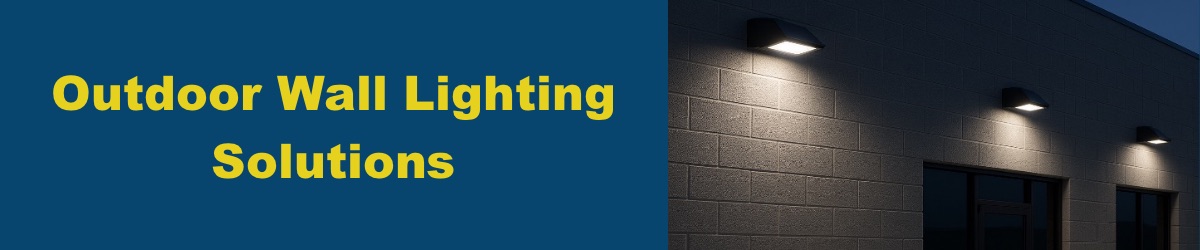
Wall lights exterior are weather-resistant fixtures mounted directly on building surfaces to illuminate entrances, pathways, perimeters, and architectural features. These outdoor wall lights serve as an essential element for any property requiring reliable security, safety, and aesthetic enhancement of the home’s exterior or commercial façade.
This guide covers residential and commercial exterior wall lighting applications, from decorative outdoor wall sconces to heavy-duty industrial wall packs. Interior fixtures and ground-mounted landscape lighting fall outside this scope. Whether you’re a property owner upgrading your home, a facility manager responsible for building security, or a lighting designer specifying fixtures for a new construction project, this content addresses your need for professional-grade outdoor lighting solutions that deliver performance and durability.
Direct answer: Wall lights exterior are purpose-built luminaires that mount on vertical building surfaces to provide adequate illumination for safety, security, and visual appeal while withstanding environmental exposure through weather-resistant materials and robust construction.
Key Takeaways
-
- Clear fixture selection criteria based on application requirements and performance specifications
- Installation considerations for proper mounting, sealing, and electrical integration
- Understanding of energy efficiency benefits with modern LED technology
- Knowledge of safety compliance standards and certifications
- Design coordination strategies to match your home’s architecture or commercial brand image
Understanding Exterior Wall Lighting Fundamentals
Exterior wall lights function as the primary interface between a building and its immediate surroundings after dark. These fixtures illuminate walkways, entrances, loading docks, and perimeter zones where adequate illumination prevents accidents and deters intrusion. Beyond functional requirements, they contribute to aesthetic identity. The right wall light can elevate a building’s curb appeal and create a welcoming atmosphere for visitors.
Understanding how these fixtures work and what makes them perform reliably in outdoor areas requires examining their construction and performance characteristics.
Essential Components and Construction
Weather-resistant housing forms the foundation of any quality exterior wall fixture. Most commercial-grade outdoor wall lights use die-cast aluminum for its combination of strength, corrosion resistance, and heat dissipation properties. For coastal installations or locations with salt air exposure, marine-grade finishes featuring powder coatings over chromate conversion coating meeting AAMA 2605 standards provide approximately 4,000 hours of salt spray resistance. Access Fixtures offers marine-grade wall packs specifically engineered for these demanding environments.
Optical systems control how light is distributed from the fixture. These include tempered glass or polycarbonate lenses, reflectors (asymmetric for forward throw or symmetric for flood patterns), and cutoff shields that limit upward light emission. Mounting hardware must seal completely against moisture intrusion. Silicone gaskets, waterproof junction box connections, and properly torqued fasteners are essential. Access Fixtures’ installation guidance explicitly states that improper sealing voids warranty coverage, emphasizing how critical this component is to long-term performance.
These construction elements work together to ensure reliable outdoor performance across temperature extremes, precipitation, and environmental contamination.
Lighting Performance Characteristics
Lumen output determines how much light a fixture produces. Decorative porch applications typically require 150-300 lumens, while security wall packs for commercial perimeters often exceed 700-1,200 lumens. Selecting appropriate brightness for your application prevents both inadequate coverage and excessive glare.
Beam patterns describe light distribution. Type IV distributions project light forward from the wall, ideal for illuminating parking areas or walkways. Type V patterns spread light evenly in circular footprints, suitable for general area lighting. Up-down wall sconces create architectural accent effects with controlled vertical beams.
Color temperature, measured in Kelvin (K), affects both aesthetics and compliance. Warm tones (2700-3000K) suit residential entrances and architectural features, creating a welcoming ambiance. Many municipal codes now cap exterior lighting at 3000K maximum to reduce light pollution and protect wildlife, a trend accelerating through 2026 ordinances requiring lower color temperatures and full-cutoff optics.
Understanding these performance characteristics enables informed fixture selection that matches your specific site requirements.
Exterior Wall Light Categories and Applications
With foundational concepts established, examining specific fixture categories reveals how different designs address distinct functional and aesthetic needs. Each category balances light output, distribution pattern, construction, and style to serve particular applications.
Security and Perimeter Lighting
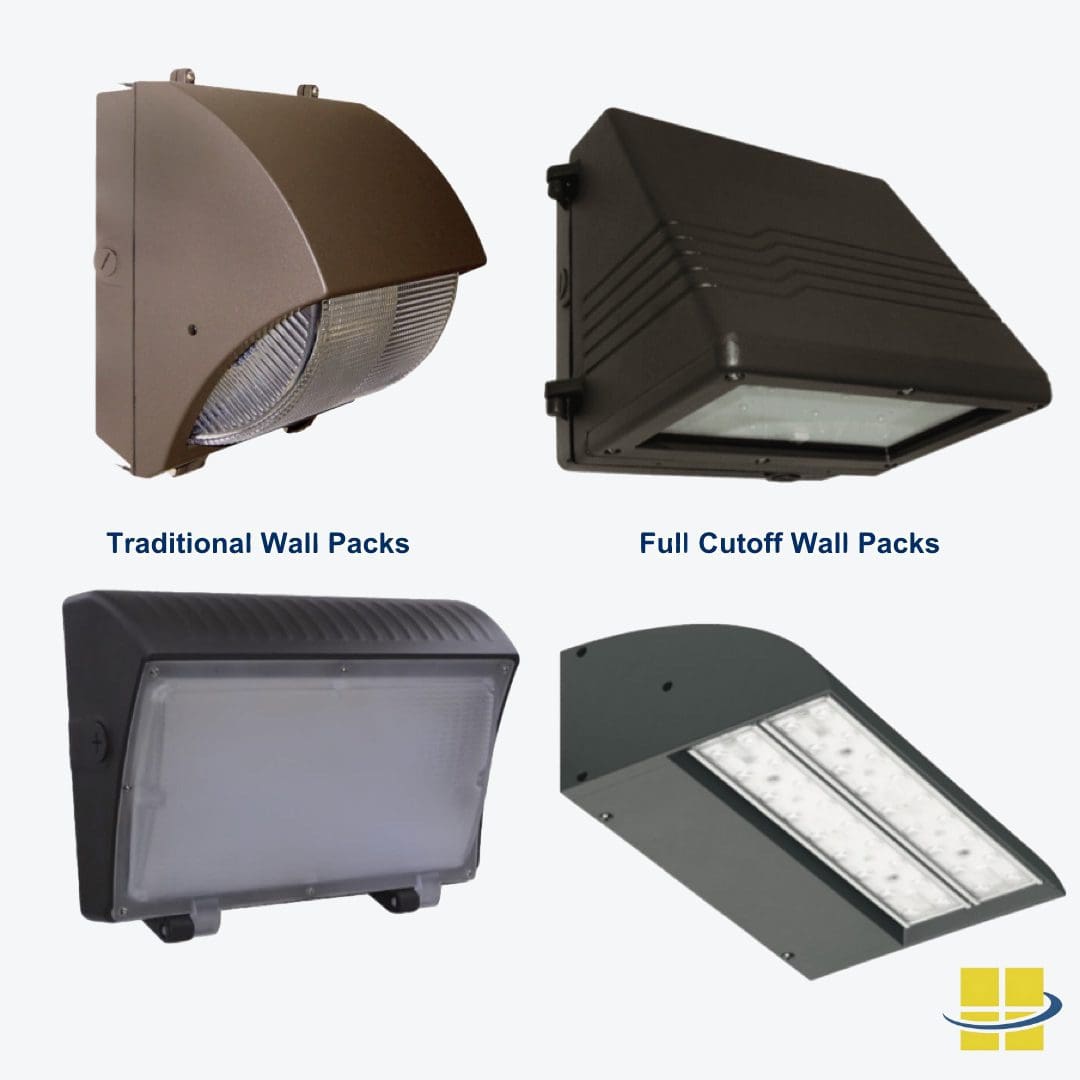
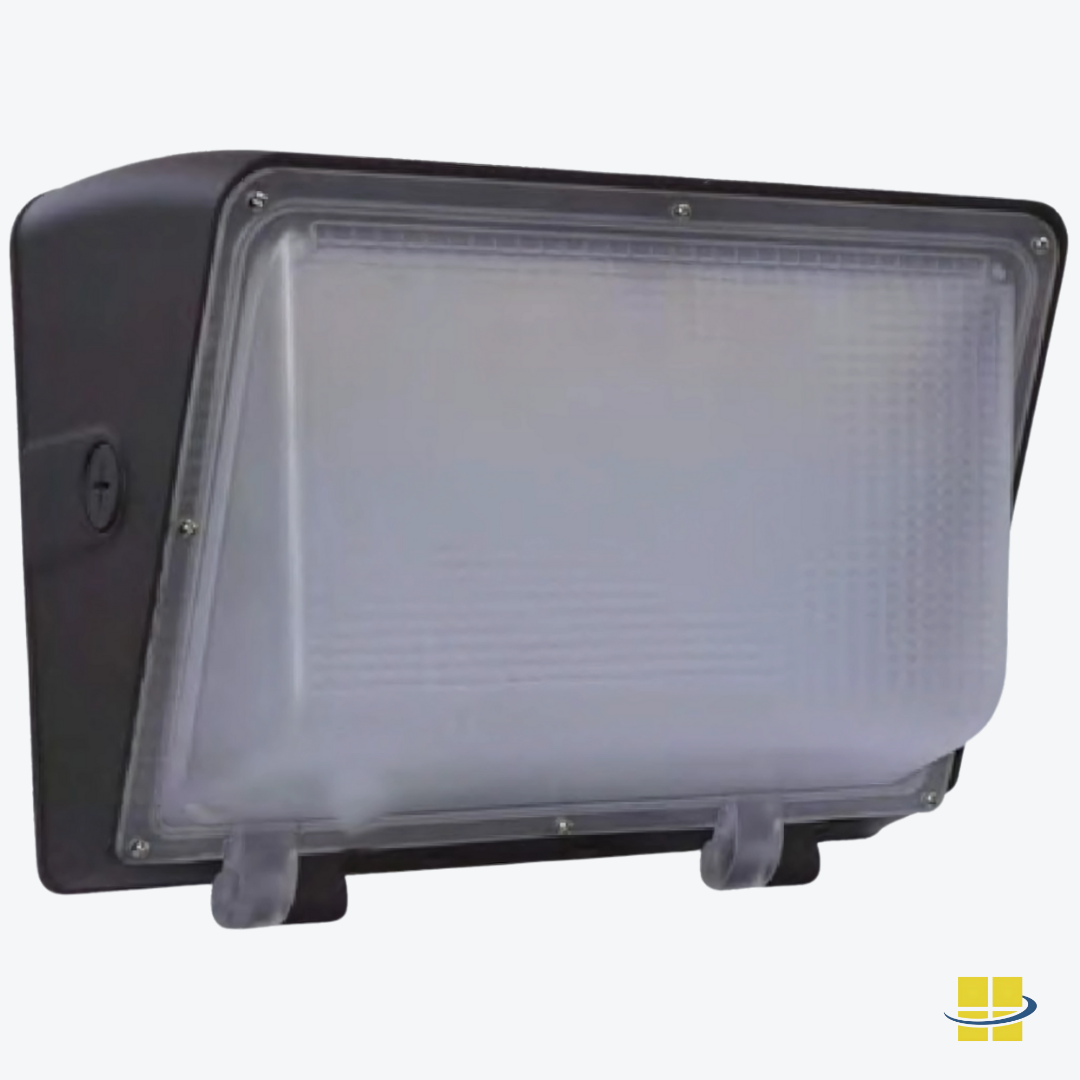
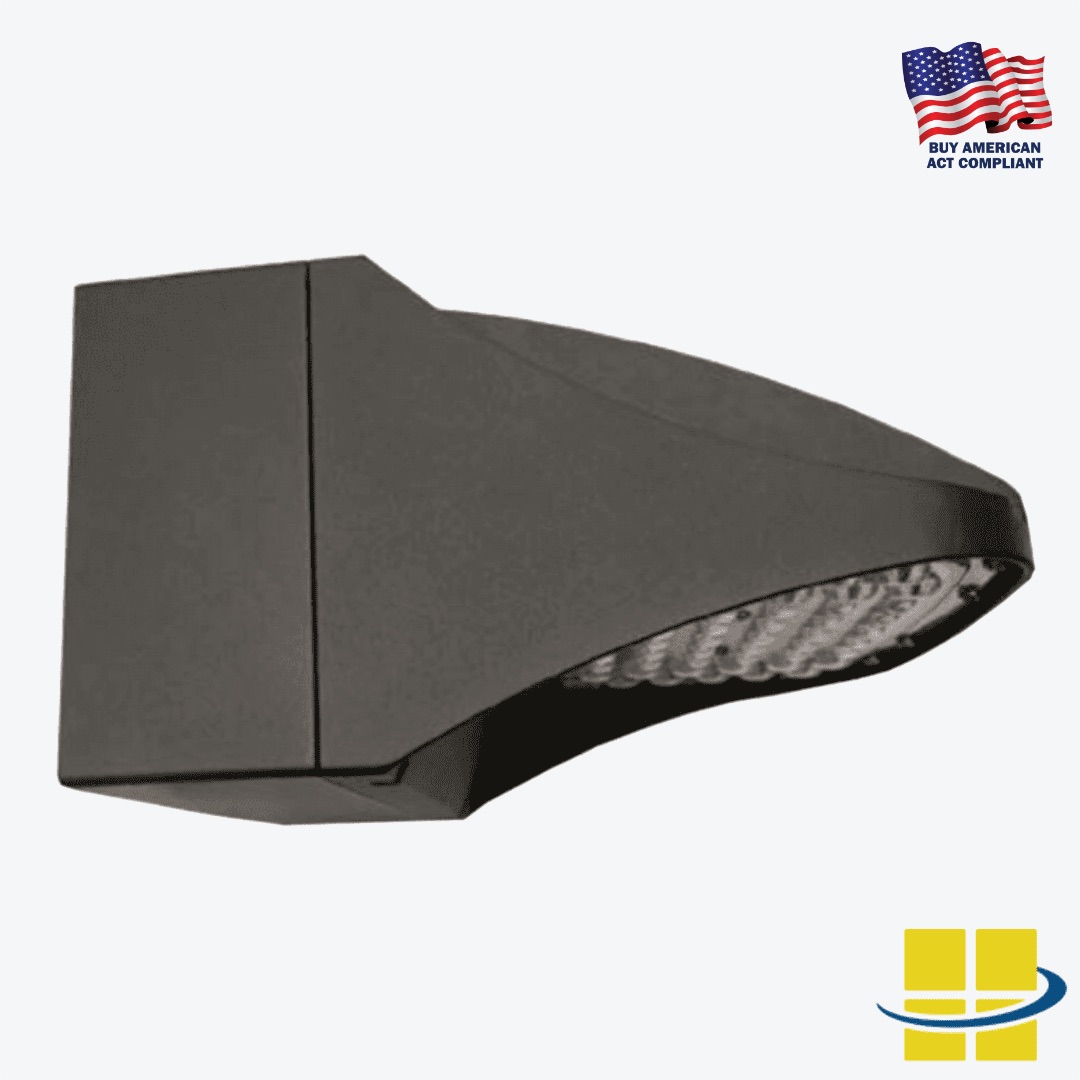
High-output LED wall packs dominate security applications where adequate illumination eliminates concealment zones and supports surveillance systems. Access Fixtures’ forward throw wall packs like the ZIBO series (available in 27W to 68W configurations) deliver substantial lumen output with controlled beam patterns that project light outward from building walls across parking areas and perimeters.
Essential features for security fixtures include:
- Motion sensors that activate lighting when movement is detected, enhancing both security response and energy efficiency
- Photocells that automatically switch fixtures on at dusk and off at dawn
- Emergency backup systems for critical locations requiring continuous operation during power outages
- Cutoff optics that prevent light trespass onto neighboring properties while maximizing useful illumination
These fixtures typically operate on 120-277V commercial power with IP65 or higher ratings for wet location exposure.
Architectural and Accent Lighting
Outdoor wall sconces and up-down lights serve aesthetic purposes, enhancing building architecture and establishing visual identity. Unlike security fixtures prioritizing raw output, decorative wall lights balance brightness with design appeal, typically 150-400 lumens with warm color temperatures around 2700-3000K.
Style options span traditional lantern designs, contemporary geometric forms, craftsman and mission aesthetics, rustic farmhouse looks, mid-century modern profiles, and transitional pieces that bridge classic and contemporary sensibilities. Materials include bronze, copper, brass, and painted metal finishes that complement various architectural styles.
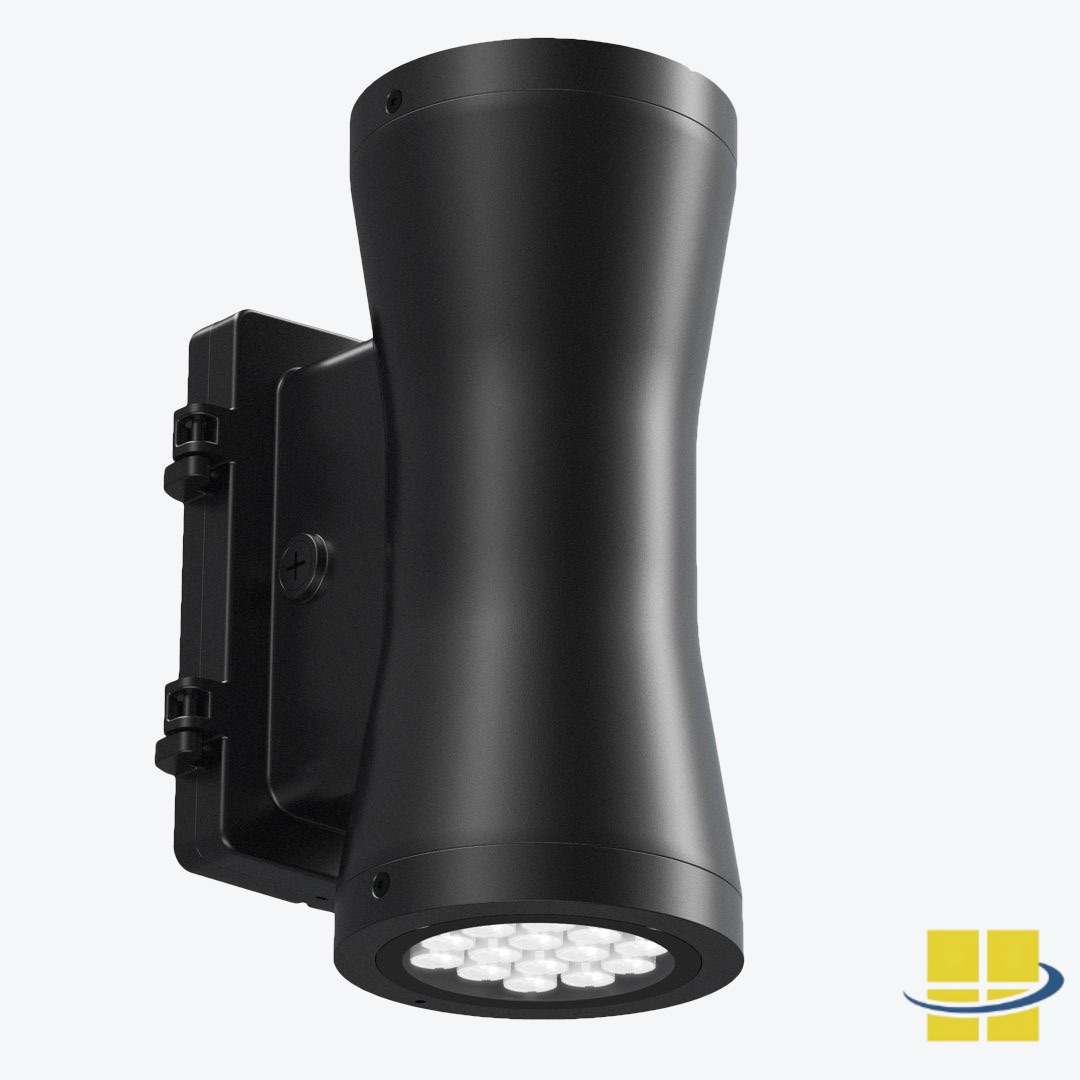
Access Fixtures’ HAMA series up-down wall sconces (21W and 40W options) provide architectural accent lighting with controlled vertical distribution, enhancing façades without creating glare. These fixtures suit retail entrances, hospitality properties, and residential applications where aesthetic impact matters as much as functional illumination.
Industrial and Commercial Applications
Warehouses, manufacturing facilities, and utility areas demand heavy-duty fixtures capable of withstanding harsh environments. Industrial wall lights feature:
- IP66/IP67 ratings for protection against high-pressure washdown and dust infiltration
- Tempered glass lenses are resistant to impact and thermal shock
- Operating temperature ranges accommodate extreme cold and heat
- High efficacy exceeding 140-150 lumens per watt for energy efficiency at scale
- Extended lifespans of 100,000+ hours (L70) minimizing maintenance intervention
Access Fixtures’ full cutoff wall packs, like the BAKU series, address these requirements with cast aluminum housings, chromate conversion coating, and durable powder coat finishes.
The connection between fixture category and application requirements leads directly to systematic selection and installation processes.

Selection Criteria and Installation Best Practices
Choosing appropriate exterior wall lights requires methodical site assessment and a clear understanding of performance requirements. Proper installation ensures fixtures deliver specified performance throughout their service life.
Site Assessment and Planning Process
Professional site evaluation prevents costly mistakes and ensures code compliance. The process follows these steps:
- Measure mounting surfaces and clearances: Evaluate wall flatness, obstruction positions, mounting height above walkways or grade, and clearances affecting light distribution or creating glare toward occupied spaces
- Assess electrical infrastructure: Document available voltage (120V, 208-277V), conduit routing, junction box locations, and control requirements (photocell, motion sensor, 0-10V dimming, or DALI integration)
- Evaluate environmental conditions: Identify exposure factors, including coastal salt air, industrial contaminants, temperature extremes, precipitation patterns, wind loads, and freeze-thaw cycles affecting fixture durability
- Determine light level requirements: Specify lumen output, beam pattern, and color temperature based on application type (security vs. aesthetic), local code requirements, dark sky compliance, and any wildlife protection mandates
This systematic approach ensures fixture specifications match actual site conditions.
Performance and Efficiency Comparison
Modern LED technology has transformed exterior lighting economics. Comparing LED fixtures against traditional alternatives reveals significant operational advantages:
| Criterion | LED Technology | Traditional (Incandescent/HID/HPS) |
| Initial Cost | Higher fixture price | Lower fixture cost, higher replacement expense |
| Operating Cost | Low: 100-150+ lm/W efficacy, minimal heat waste | High: lower efficacy, significant energy loss |
| Lifespan | 50,000-100,000+ hours (L70) | 2,000-20,000 hours, depending on lamp type |
| Maintenance | Minimal: integrated components, fewer service calls | Frequent: lamp replacements, ballast failures |
| Light Quality | Selectable CCT, CRI options ≥70-90, consistent output | Limited options, color shift over time |
| Environmental Rating | IP66/67/68 available, marine-grade finishes | Typically, lower durability ratings |
LED fixtures command a higher upfront investment but deliver substantially lower total cost of ownership through reduced energy consumption and maintenance requirements. For most commercial and industrial applications, LED wall packs pay back their premium within 2-3 years through operational savings.
These efficiency benefits connect directly to compliance considerations, as energy codes increasingly mandate high-efficacy lighting.
Common Challenges and Access Fixtures Solutions
Exterior wall lighting projects face predictable challenges that proper specification and quality products address effectively.
Weather Resistance and Corrosion Issues
Salt air, industrial atmospheres, and moisture exposure degrade standard fixtures rapidly. Access Fixtures’ marine-grade wall packs feature AAMA 2605-rated powder coatings over chromate conversion-treated aluminum housings, delivering approximately 4,000 hours of salt spray resistance. Stainless steel fasteners, silicone gaskets, and properly sealed lens assemblies prevent moisture intrusion that causes premature failure.
Energy Costs and Efficiency Concerns
High-output perimeter lighting consumes significant electricity when operating continuously. Access Fixtures LED wall packs, achieving 140-150 lumens per watt, reduce energy consumption by 50-70% compared to legacy HID fixtures while delivering equivalent or superior light output. Integrated photocells and motion sensors ensure fixtures operate only when needed, multiplying efficiency gains. Smart controls enable dimming after business hours to meet dark sky curfew requirements while further reducing operating costs.
Code Compliance and Safety Requirements
Municipal ordinances, building codes, and industry standards impose requirements that non-compliant fixtures cannot meet. Access Fixtures wall packs carry a UL listing for wet locations, satisfying NEC requirements and building inspection standards. Full-cutoff designs meet dark sky compliance with U-0 uplight ratings, while color temperature options at or below 3000K satisfy emerging municipal caps on blue light emission. Wildlife-friendly versions with specific wavelength ranges (590-610nm) address turtle lighting requirements in coastal zones.
Proper installation, following Access Fixtures’ technical guidance, including the mandatory application of weatherproof silicone sealant at all potential water-entry points, maintains warranty coverage and ensures long-term, reliable operation.
Conclusion and Next Steps
Selecting appropriate wall lights exterior requires matching fixture capabilities to specific application requirements. Security installations demand high-output forward-throw wall packs, while architectural applications call for decorative sconces with aesthetic appeal. Modern LED technology delivers superior energy efficiency, extended lifespan, and improved light quality compared to traditional alternatives, with quality marine-grade construction ensuring durability across challenging environmental conditions.
Immediate next steps:
- Conduct site assessment documenting mounting locations, electrical infrastructure, and environmental exposure factors
- Define performance requirements, including lumen output, beam pattern, color temperature, and control features
- Verify local code requirements for energy efficiency, dark sky compliance, and any wildlife protection mandates
- Contact Access Fixtures for specification assistance and product recommendations matching your project requirements
- Review installation guidance to ensure proper mounting, sealing, and electrical connection procedures
Related topics worth exploring include landscape lighting coordination for comprehensive outdoor illumination design and smart building integration for automated control and energy management across multiple exterior fixtures.
Additional Resources
- Access Fixtures technical specification sheets with photometric data for wall pack and wall sconce products - Case Study Example
- Access Fixtures installation guidance documents detailing proper mounting and sealing procedures - See Photometric Analysis Details
- Dark Sky International compliance resources for understanding municipal lighting ordinances - Access Fixtures Dark Sky Lighting Guide
- Access Fixtures offers lighting design consultation services for complex commercial and industrial projects - Speak to a Lighting Specialist
Wall Lights Exterior Frequently Asked Questions (FAQs)
- What are wall lights exterior used for?
Wall lights exterior are designed to provide illumination for safety, security, and aesthetic enhancement on the outside walls of homes or commercial buildings. - What materials are best for outdoor wall lights?
Durable materials such as powder-coated aluminum, marine-grade brass, copper, stainless steel, and weather-resistant composites are ideal for outdoor wall lights to withstand various weather conditions. - How high should outdoor wall lights be installed?
For entryways and front doors, outdoor wall lights should typically be mounted between 66 and 72 inches from the ground to provide optimal illumination and visual appeal. - What is the difference between wet and damp-rated outdoor wall lights?
Wet-rated fixtures are suitable for direct exposure to rain and weather, while damp-rated fixtures are designed for covered or protected outdoor areas like porches and balconies. - Can outdoor wall lights improve home security?
Yes, outdoor wall lights enhance security by illuminating dark areas around entrances and pathways, deterring potential intruders, and increasing visibility. - Are LED outdoor wall lights energy efficient?
Absolutely. LED outdoor wall lights consume significantly less energy than traditional bulbs, have longer lifespans, and often include features like motion sensors to save energy. - Can I install outdoor wall lights myself?
While some outdoor wall lights are designed for easy DIY installation, it is important to follow safety precautions, turn off power, and consult a professional electrician if unsure. - What styles of outdoor wall lights are available?
Outdoor wall lights come in a variety of styles, including traditional lanterns, modern geometric designs, industrial barn lights, rustic farmhouse, and transitional options to match any home's architecture. - How do I maintain outdoor wall lights?
Regularly clean fixtures to remove dirt and debris, check bulbs, and inspect wiring and connections annually to ensure optimal performance and safety. - Can outdoor wall lights be integrated with smart home systems?
Many modern outdoor wall lights feature smart controls, allowing scheduling, dimming, and remote operation through apps or voice assistants for added convenience and energy savings.