Solar LED Lighting · Pathway Guide
Best Solar Lights for Pathways: Choosing the Right Outdoor Lighting
The best solar lights for pathways help people move through parks, trails, campuses, and waterfronts after dark without running underground wiring to every fixture. Commercial pathways need more than a decorative glow: they need dependable light, durable construction, and a system sized for winter.
Not every solar fixture suits every property. Light output, battery capacity, weather resistance, and daily sun exposure all affect how well a system performs. A small garden stake light may mark a residential border but will not provide consistent illumination on a busy park path or campus route. For parks, campuses, hospitality properties, sports facilities, and public spaces, commercial solar lights need to provide appropriate visibility, withstand outdoor conditions, and stay dependable throughout the year. Choosing the right system starts with understanding the site, how the pathway is used, and the lighting performance required.
What Makes Solar Pathway Lights Worth Buying?
Solar pathway lighting illuminates outdoor routes without connecting each fixture to a building's electrical system. Each unit combines a photovoltaic panel, rechargeable battery, LED light source, and automatic controls. During daylight, the panel collects energy and stores it in the battery; after dusk, the fixture uses that stored energy to produce light. Because these units are powered entirely by collected solar energy, they don't require trenching, conduit, or a nearby electrical source, which makes them practical for park paths, remote walkways, and established landscapes where digging would be disruptive or expensive.
Where solar powered lights work best
The strongest applications are locations with good daylight exposure and defined illumination requirements:
- Parks and recreational grounds: open paths that need evening wayfinding without extending electrical service across the property.
- Campus and greenway routes: connecting paths between buildings, lots, and athletic fields where trenching would cross lawns and utilities.
- Waterfronts and coastal trails: routes near sea turtle nesting beaches or wildlife habitat, where 590nm amber light is required or preferred.
- Hospitality landscapes: resort and hotel paths that connect guest areas, pools, and gathering spaces.
- Remote or temporary installations: trailheads, construction detours, and seasonal paths where extending power is impractical.
The main advantage is installation simplicity: fixtures can be placed without cutting existing pavement or landscaping. The main constraint is energy availability. Shaded panels, short winter days, and prolonged cloudy weather reduce stored energy, so a commercial pathway system must be sized for those conditions rather than for summer.
Choosing Outdoor Solar Lights for Your Site
A successful installation starts with the physical layout. Pathway width, surrounding vegetation, surface conditions, and nightly traffic all affect fixture selection. A narrow nature trail has different requirements from a wide pedestrian route serving a campus or public recreation area.
Check sun exposure before choosing fixtures
Solar panels need sufficient daylight to recharge their batteries. An open location with direct sunlight supports longer operating times than one beneath trees or beside tall buildings. South-facing exposure is generally favorable in the Northern Hemisphere, although unobstructed east- or west-facing locations may also charge adequately. Watch for seasonal changes: trees that let sunlight through bare branches in winter shade a panel once leaves return, and buildings cast longer shadows when the sun sits lower. Access Fixtures lighting specialists size pathway systems for the site's shortest winter days.
Match fixture spacing to the pathway
Solar path lights work well when spacing matches the area they illuminate. Low-profile bollards define walkway edges without unnecessary glare, while wider routes need broader distribution or additional units to avoid dark gaps. Curves, intersections, steps, and grade changes need closer attention than straight runs. Rather than relying on a fixed distance, examine each product's actual light distribution, or let a photometric study set the spacing.
Choose materials that suit outdoor conditions
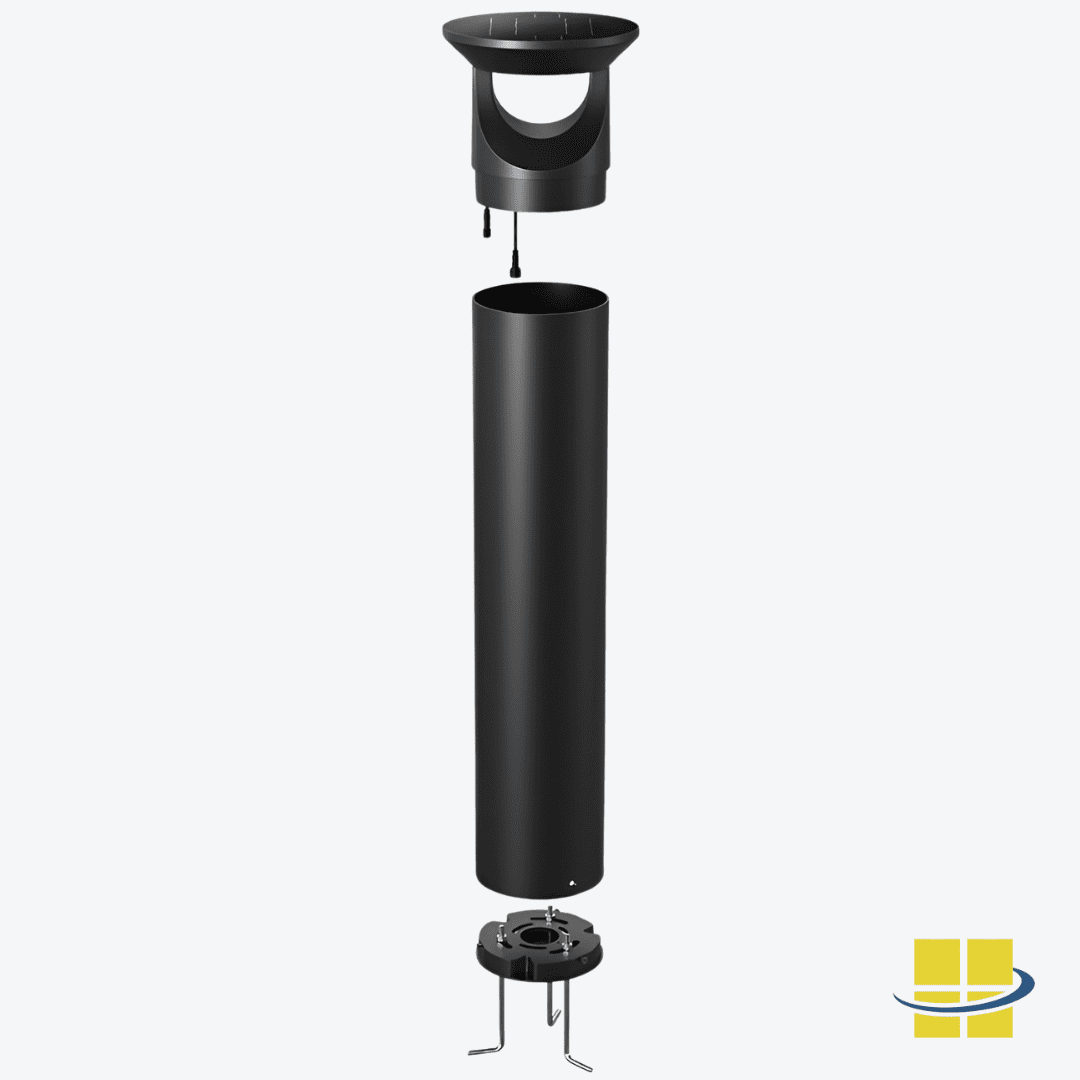
Durability matters around irrigation systems, coastal properties, and snow-prone areas. Housings should resist moisture intrusion and impact at their installation location. Plastic construction may suit a decorative residential border, but it can fade, crack, or deteriorate with repeated exposure. Commercial pathways call for die-cast or extruded aluminum, sealed optics, and components that can be maintained. ARCA solar bollards use a marine-grade finish, a UV-resistant monocrystalline panel, and a LiFePO4 battery, with IP66 and IK07 ratings.
Solar pathway lighting site checklist
| Site consideration | What to check | Why it matters |
|---|---|---|
| Sunlight exposure | Tree cover, buildings, seasonal shade, panel orientation | Determines charging energy, especially in winter |
| Pathway layout | Width, length, curves, intersections, steps | Sets fixture spacing and distribution |
| Nightly use | Traffic levels and required operating hours | Determines battery capacity and control settings |
| Environment | Coastal air, irrigation, snow, temperature swings | Drives housing, finish, and IP rating |
| Wildlife and sky | Turtle nesting zones, habitat, local lighting ordinances | May require 590nm amber or full cutoff optics |
| Maintenance access | Panel cleaning and battery service | Protects long-term performance |
A planned layout prevents uneven illumination and unnecessary fixture purchases.
How Bright Should Solar Path Lights Be?
Brightness is one of the most useful specifications to compare. Light output is measured in lumens, and higher output generally means more visible light, but the number alone doesn't describe how well that light reaches the walking surface. A decorative stake light may outline a garden border; the same product is inadequate on a park path where visitors need to recognize grade changes, edges, and obstacles.
Decorative lighting vs functional illumination
Decorative solar lights produce a soft glow around each fixture and improve orientation more than visibility. Functional pathway lighting needs a different approach. A frequently used route requires:
- Illumination across the walking surface rather than isolated bright spots
- Consistent coverage at entrances, intersections, stairs, and grade changes
- Controlled distribution that limits glare while preserving visibility
For commercial pathways, fixture position and uniformity deserve as much attention as brightness. Programmable controls help here: ARCA supports preset modes or remote programming of brightness levels and schedules, so output can match how the path is actually used.
Warm white, cool white, or amber?
Color temperature affects how a pathway looks. Warm white light gives a softer appearance that suits parks, gardens, and hospitality grounds, while neutral or cooler white may suit sites with specific visibility or design requirements. Near beaches and sensitive habitat, 590nm amber LEDs provide wildlife-friendly and turtle-friendly illumination. Warm color temperatures and full cutoff optics also keep pathway lighting dark sky friendly. A poorly positioned bright fixture produces glare without lighting the path, so on larger projects a planned layout is the better basis for choosing output and mounting.
A pathway light is judged at the walking surface, not at the fixture. Compare distribution and uniformity, not just lumens.
Solar Pathway Lighting Performance in Winter and Shade
Solar performance changes through the year. A unit that runs for hours after a sunny summer day may run noticeably shorter in winter, because short daylight hours, low sun angles, snow, and cloud cover all reduce charging energy. Cold temperatures can also reduce battery performance, which is why commercial fixtures use LiFePO4 batteries rated for deep discharge.
What happens when solar panels receive less sun?
A partially shaded panel still charges, but stored energy may be lower than expected. After several cloudy days, undersized lights dim early or shut off before the desired time, and on a long pathway that creates alternating bright and dark sections. The fix is design, not luck: confirm sun exposure for every fixture location and size panels and batteries with reserve for poor weather.
Can solar lights stay on all night?
Properly sized commercial solar fixtures can run dusk to dawn, but runtime depends on battery capacity, LED load, control settings, and available sunlight. For a route that needs all-night illumination, evaluate advertised runtime against the property's winter conditions, and use dimming schedules or motion response to stretch stored energy. Never assume all-night performance from summer results.
Maintaining Solar Pathway Fixtures
Regular maintenance preserves light output and reliability:
- Clean the panels periodically. Dirt and debris reduce the sunlight reaching the photovoltaic surface.
- Remove snow and check vegetation. Keep panels exposed and watch for seasonal plant growth that creates shade.
- Monitor runtime and battery condition. Shorter operating hours may signal an aging battery or a charging problem.
Fixtures with serviceable batteries and accessible components are easier to maintain than disposable decorative products. For commercial landscapes, budget maintenance from the start. Access Fixtures solar fixtures carry a 5-year warranty.
Solar vs Wired Path Lights: Installation, Price, and Reliability
Both solar and wired systems can light outdoor routes, but they differ in installation, performance, and ownership cost. Solar fixtures need no wiring at each location, which reduces disruption around established gardens and finished hardscapes. Wired landscape lighting needs a transformer, sized cable, weather-rated connections, and cable routing around utilities and irrigation, which raises installation cost but gives grid-backed operation.
Comparing upfront and long-term costs
Solar avoids most electrical installation work and removes ongoing electricity bills, but purchase price alone doesn't reflect total cost of ownership: battery replacement, cleaning, and durability matter too. Wired LED lighting adds trenching and electricity costs but doesn't depend on daily charging. The solar vs low-voltage landscape lighting calculator compares both for your pathway, including payback period.
When to combine solar and wired lighting
Many properties use both. Sunny, remote, or hard-to-trench paths suit solar, while heavily shaded routes or building approaches with existing power may suit wired fixtures. A sports complex might light its outer trail with solar bollards and its main entrance walk with grid-powered fixtures. The full comparison is in our guide to solar lighting vs traditional outdoor lighting.
Safety and installation considerations
Solar fixtures avoid line-voltage connections at each location, but proper installation still matters. Bollards need secure anchoring and should not create obstacles on the walking surface, and wired installations must follow applicable electrical codes. Choose the system that delivers the required lighting and fits the property's maintenance capabilities, not the one that looks easiest to install.
Retail Solar Pathway Lights vs Commercial LED Fixtures
Retail solar pathway lights, usually sold in multi-light stake kits, suit homeowners who want to mark a garden bed or front walk. For decorative use, that convenience may be enough. Commercial and public-facing pathways have different requirements: consistent output across a larger property and through changing seasons, durable construction, and serviceable components. For building approaches and sidewalks, see the best solar lights for walkways.
Purpose-built commercial fixtures let property managers and designers consider mounting, optics, finish, output, and maintenance as part of a complete installation. Access Fixtures supplies production and built-to-order solar LED lighting, including solar bollard lights and solar park lights, and its lighting specialists help match fixtures to photometric needs, mounting conditions, and available configurations.
ARCA Solar Bollards
White or 590nm amber, IP66, IK07, marine-grade finish, L70 at 271,000 hours.
Shop ARCAPhotometric Study
Set fixture spacing and confirm coverage before you order. The study cost is refunded with your fixture purchase.
Order a studySelecting a Dependable Pathway Lighting Solution
Choosing pathway lighting starts with deciding what the installation must accomplish. For commercial sites, weigh consistent illumination, winter performance, durability, and maintenance, and confirm adequate daylight exposure, weather protection, suitable output, and serviceable batteries. Access Fixtures provides production and built-to-order solar lighting for properties where decorative retail lights won't meet the project's needs.
Frequently Asked Questions
What are the best solar lights for commercial pathways?
Commercial pathways need solar bollards or low-mount fixtures with sealed aluminum housings, LiFePO4 batteries, and controlled distribution. ARCA solar bollards are rated IP66 and IK07 with L70 at 271,000 hours and come in white or 590nm amber.
Do solar pathway lights work in winter?
Yes, when sized for winter. Short days, low sun angles, snow, and cloud cover reduce charging, so commercial systems should be sized for the site's shortest winter days with battery reserve for poor weather.
What color light is best near beaches and wildlife habitat?
590nm amber LEDs provide turtle-friendly and wildlife-friendly illumination near nesting beaches and sensitive habitat. ARCA solar bollards are available with 590nm amber LEDs.
How far apart should solar pathway lights be?
Spacing depends on fixture height, distribution, output, and the path's layout, so there is no single distance. Curves, intersections, and steps need closer spacing. A photometric study sets spacing for the actual fixtures and site.
Light Your Pathway with Access Fixtures
Send your pathway layout, sun exposure, and operating hours, and an Access Fixtures lighting specialist will size a solar system for your site's winter conditions.
Sources: ARCA figures from Access Fixtures product pages, November 2026. Ingress protection per IEC 60529; impact protection per IEC 62262.