

Proper lighting is essential for any sports facility, and pickleball courts are no exception. A full cutoff solar outdoor pickleball lights provide a modern, eco-friendly solution that allows players optimal visibility while reducing energy costs. This is where we explore the benefits, technology, and best practices for using these lights on pickleball courts to achieve optimal illumination for recreational, club, and competition levels of play.
With the growing popularity of backyard pickleball courts, there is an increasing need for specialized lighting solutions tailored to residential courts. Proper lighting ensures homeowners and community members enjoy safe and high-quality gameplay experiences in their own outdoor spaces.
Key Takeaways
-
-
Enhanced Visibility and Safety: Full cutoff solar LED lights offer superior, glare-free illumination, improving player safety and performance by providing consistent light distribution.
-
Energy Efficiency and Cost Savings: These lights reduce electricity consumption by harnessing solar energy, leading to significant long-term savings on utility bills and maintenance costs.
-
Environmental Impact and Sustainability: By minimizing light pollution and using renewable energy, full cutoff solar LED lights support environmental conservation and sustainability goals
-
What Are The Benefits of Using Full Cutoff Solar LED Lights for Pickleball Court Lighting?
Optimal Visibility for Players
Full cutoff solar LED lights offer superior illumination, ensuring that pickleball players can see the ball clearly and react quickly. This type of pickleball lighting, utilizing both direct lighting and indirect lighting, is designed to minimize glare and shadows, creating consistent light distribution across the entire court. As a result, players enjoy a better playing experience, with fewer accidents and missed shots. For higher skill levels or competitive play, more light may be required to achieve optimal visibility and performance.
Energy Efficiency and Cost Savings
Solar LED lights harness energy from the sun, significantly reducing electricity consumption. When considering how much energy is used, solar LED lights typically consume 40-60% less than traditional HID lighting sources, resulting in greater efficiency and lower operational costs. Full cutoff fixtures focus light precisely where it’s needed, eliminating waste. Over time, the reduced energy usage translates to substantial cost savings on utility bills, making these lights an economical choice for both public and private courts.
Additionally, the lighting system operates efficiently with advanced controls like motion sensors and photocells, ensuring that lights are only on when needed, further contributing to energy savings and prolonged equipment lifespan.
Environmental Impact Reduction
By relying on renewable solar energy, full cutoff solar LED lights contribute to a lower carbon footprint. They also help decrease light pollution, preserving the night sky and benefiting local wildlife. This environmentally friendly approach aligns with broader sustainability goals, making solar LED lights a responsible choice for modern sports facilities.

What is Full Cutoff Lighting Design?
As lighting technology advances, the need for efficient and environmentally friendly solutions has become more pressing. Full cutoff lighting technology addresses these needs by offering a way to illuminate spaces without contributing to light pollution or wasting energy. Here’s a closer look at what full cutoff lighting entails and its numerous benefits. Full cutoff lighting technology should be a key consideration in any outdoor pickleball lighting project to ensure efficiency and compliance with modern standards.
Definition and Mechanism
Full cutoff lighting refers to fixtures designed to emit light only in specific directions, preventing upward light spill. This is achieved through special shielding and optical design that directs the light source downwards and sideways. The technology ensures that light is used efficiently, without causing glare or skyglow.
Advantages Over Traditional Lighting
Compared to traditional light sources such as metal halide lighting solutions, which are examples of traditional HID sources known for their lower energy efficiency compared to LED systems, full cutoff fixtures provide better control over light distribution. They reduce light trespass, improve nighttime visibility, and are often more aesthetically pleasing. Additionally, full cutoff lights are compatible with various energy sources, including solar power, enhancing their versatility and appeal.
Applications Beyond Sports
While this article focuses on outdoor pickleball court's lights LED, full cutoff lighting is used in various settings, from street lighting to commercial spaces. Its ability to provide focused, efficient illumination makes it ideal for any area where minimizing light pollution and maximizing energy efficiency are priorities.
How To Choose the Right Full Cutoff Solar LED Lights for Your Court?
Selecting the appropriate full cutoff solar LED lights for your pickleball court is crucial for ensuring optimal visibility, energy efficiency, and environmental sustainability. Here’s a comprehensive guide to help you make an informed decision.
Many suppliers now sell lights specifically designed for pickleball courts, making it easier for court owners to find the right lighting solutions.
Key Features to Consider
Brightness (Lumens): Adequate brightness is crucial for visibility. For competitive matches, achieving broadcast quality television lighting is essential to ensure optimal visibility and performance for televised events. Solar lights should achieve high lumens output per watt, maximizing energy utilization for optimal brightness while minimizing power consumption. This ensures the court is well-lit for safe and enjoyable play. How much light is needed depends on the skill level and type of play; following recommended guidelines for illumination levels ensures optimal court lighting and player satisfaction. Specific lighting illumination levels are essential for different types of play, with outdoor and indoor requirements varying in footcandles to ensure optimal performance and player satisfaction.
Color Temperature: Opt for a daylight-like color temperature to ensure optimal visibility. Different lighting needs can be met by adjusting the Kelvin range, from a warm 2200K for recreational play to a bright 5000K for competitive matches. Cooler light sources with higher Kelvin ratings, typically around 5000K, can enhance visibility and color perception, but color temperatures above 5000K may produce a bluish tint, which can affect clarity and color accuracy during play.
Battery Capacity: Ensure the battery capacity is sufficient to provide consistent lighting throughout the night, even on cloudy days. High-capacity batteries support extended operation, ensuring the lights remain functional regardless of weather conditions.
Weather Resistance: Solar lights must be durable and weather-resistant to withstand outdoor conditions. Look for lights that are IP66 and IK08 rated, ensuring reliable performance in harsh weather conditions such as heavy rain, snow, or storms.
Ease of Installation: Choose lights that are easy to install and require minimal maintenance. An all-in-one technical design integrates all necessary components, simplifying installation and operation for hassle-free off-grid lighting.
Installation Tips and Tricks
Proper installation is crucial for maximizing the performance of solar LED pickleball court lights. Here are some tips:
- Positioning: Ensure the lights are placed to avoid obstructions, allowing them to receive ample sunlight.
- Mounting: Use sturdy mounts and weatherproof fixtures to withstand outdoor conditions.
- Proper pole height: Select the proper pole height to ensure uniform light coverage and enhance player safety during gameplay.
- Maintenance: Regularly clean the solar panels and check battery connections to maintain optimal performance.
Access Fixtures Solar Area Lights for Pickleball Courts
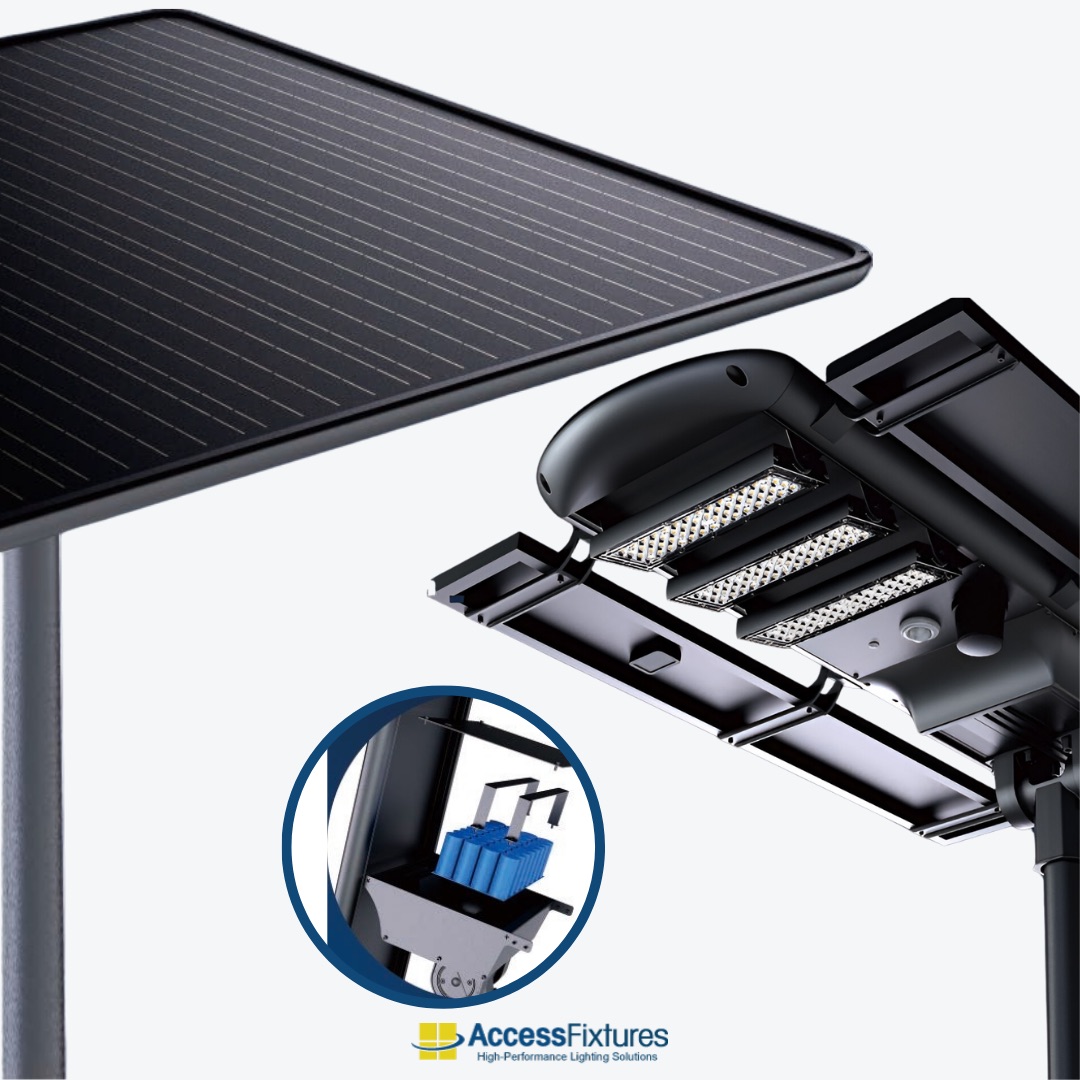
Area Lights are designed to illuminate wider spaces with softer, more diffuse light, ensuring even coverage across the court. For any pickleball facility, proper lighting is essential to provide optimal visibility and enhance the playing experience. They can be easily installed in any location with direct sunlight, eliminating the need for electrical wiring and making them a convenient and eco-friendly choice. Proper lighting from high pickleball light poles is crucial for ensuring balance and visibility during play, with various fixtures like Access Fixtures sports lights for mounting.
Features and Benefits
-
High Efficiency: Achieving an impressive 195 lumens per watt, maximizing energy utilization for optimal brightness while minimizing power consumption.
-
All-in-One Design: Simplifies installation and operation for hassle-free off-grid lighting.
-
Cost-Efficient Operation: Harnessing solar power eliminates electricity bills, resulting in significant long-term savings and reduced maintenance.
-
Enhanced Safety: Mitigates the risk of accidents related to power outages, providing a safer environment for players.
-
Light Required for Every Level: Delivers the light required for each level of play, meeting industry standards for pickleball court illumination to ensure proper visibility and quality.
-
Environmentally Friendly: Utilizing solar energy ensures a clean and sustainable power source, reducing carbon emissions.
-
Flexible Installation: Can be installed virtually anywhere, illuminating even the most remote locations.
-
Robust Protection: Built to withstand harsh environments, IP66-rated for water and dust resistance.
Versatile Lighting Options
The SUNA fixtures can achieve lighting requirements for various levels of play:
- Recreational Level: Suitable for casual play and practice sessions. Recommended Kelvin: 2200K to 3000K, providing a warm and comfortable lighting atmosphere.
- Club Level: Ideal for regular club matches and training. Recommended Kelvin: 3000K to 4000K, offering a balance of warmth and brightness for improved visibility and comfort.
- Competition Level: Required for competitive matches where clear visibility and accurate color rendering are essential. Recommended Kelvin: 4000K to 5000K, delivering bright, neutral lighting that enhances player performance and reduces eye strain.
Lighting recommendations may also vary depending on the minimum court sizes specified by official guidelines, as proper illumination should be matched to the dimensions and standards of each play level.
The SUNA fixtures offer beam angles of 60×100°, 70×135°, 75×150°, 80×150°, 110°, and 150°, ensuring optimal light distribution tailored to the specific requirements of each level of play.
Programming Options
- MPPT Controller: Adjusts the electrical flow from the panels to get the most power possible, optimizing panel performance.
- PWM Controller: Controls brightness by rapidly turning the lights on and off, adjusting the on-off cycle to control brightness levels.
Easy Installation and Maintenance
The SUNA solar area lights eliminate the necessity for trenching or cabling work, streamlining the installation process and reducing associated labor and material costs. Providing off-grid lighting eliminates the need for reliance on the electrical grid and ensures freedom from electric bills. Some advanced pickleball light poles can also be equipped with electrical outlets for added convenience.

How To Design a Solar Lighting System for Pickleball Court Lighting?
Layout Planning
Effective layout planning ensures the entire court is evenly lit without dark spots or excessive glare. Key considerations include:
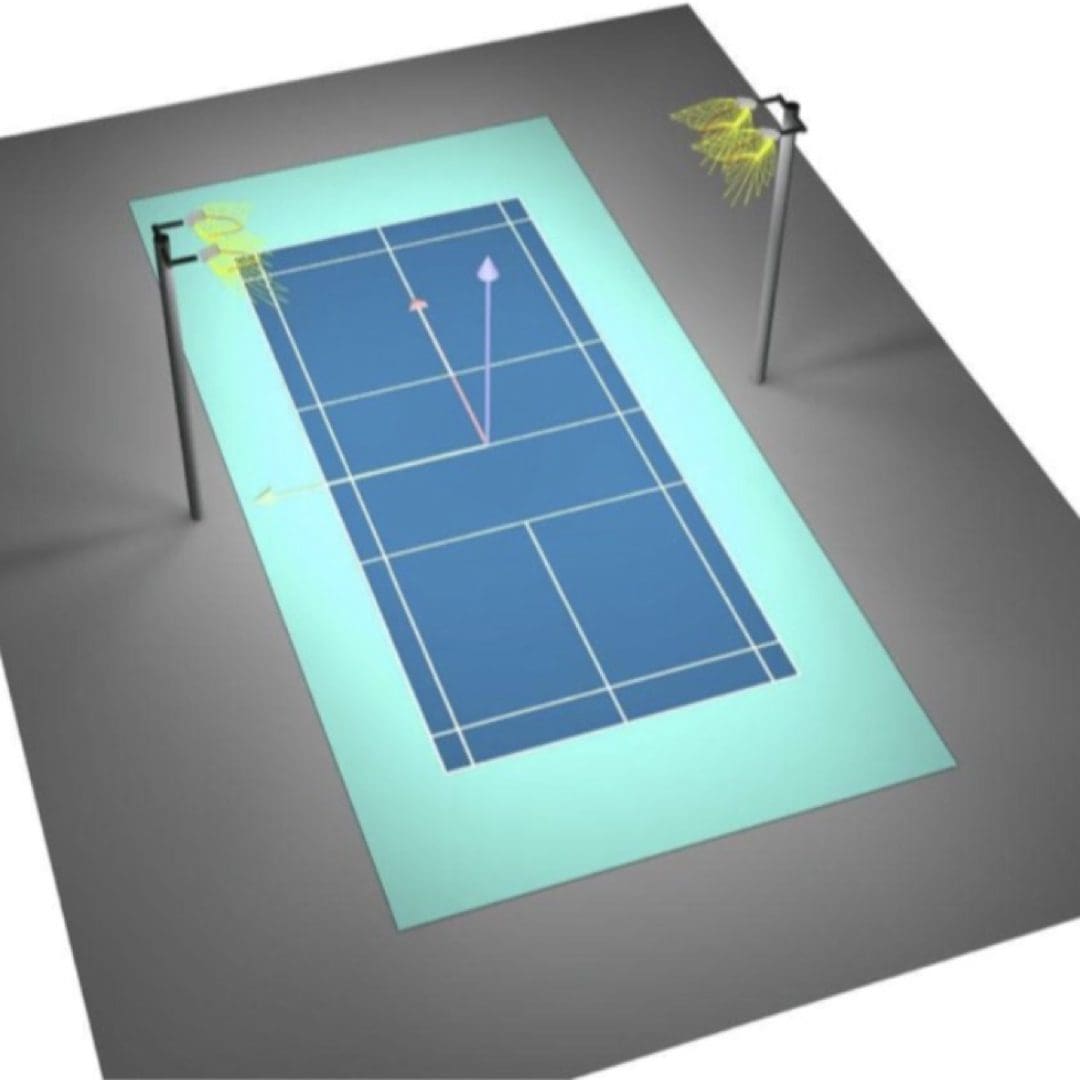
- Placement of Light Poles: Position poles around the perimeter to provide uniform lighting.
- Direction of Light Beams: Aim beams to cover the court evenly and avoid shadows.
When planning lighting for indoor courts, consider that indoor luminaires may require different layout planning compared to outdoor fixtures, due to their mounting options, types, and additional features.
For commercial or public installations, it is crucial to use cooler color temperatures of 5000K to 6500K to enhance visibility and reduce eye strain.
Light Placement
Strategically placing lights around the court’s perimeter and at key locations ensures uniform lighting coverage. Adhering to lighting design guidelines optimizes performance and enhances visibility. Adequate lighting for outdoor courts is crucial to minimize glare and shadows, with LED lighting systems offering tailored solutions for outdoor environments, including various mounting options, light distribution, and compliance with local regulations. Consulting with an official lighting partner can help ensure optimal light placement and compliance with industry standards.
Technical Considerations
Key technical aspects include:
- Solar Panel Orientation: Ensure panels are oriented to capture maximum sunlight.
- Battery Capacity: Choose batteries with sufficient capacity to store energy for continuous operation.
- Light Fixture Specifications: Select fixtures that meet the required brightness, distribution, and efficiency standards.
How To Measure Light Levels for Pickleball Courts?
Why Accurate Light Measurement Matters?
Ensuring the right light levels on pickleball courts is essential for player safety, visibility, and overall enjoyment of the game. Accurate measurement of light levels is the foundation of proper lighting, as it directly impacts how well players can see the ball, move confidently on the playing surface, and react to fast-paced action—especially during evening matches or in tournament venues requiring broadcast-quality television lighting.
For both outdoor courts and indoor courts, the American Sports Builders Association (ASBA) and USA Pickleball have established specific lighting illumination levels to guide facility owners and lighting professionals. These standards, detailed in the ASBA Pickleball Construction Manual, outline the minimum foot-candle (fc) requirements for different levels of play: recreational courts typically require 20-30 fc, club-level courts need 30-50 fc, and competition or broadcast-level courts demand 50-80 fc. Adhering to these guidelines ensures optimal illumination and a consistent playing experience across all pickleball facilities.
To achieve these standards, a light meter is used to measure the amount of light on the court’s playing surface. The goal is to create uniform illumination, avoiding both dark spots and areas of excessive brightness. Proper lighting design involves careful selection and placement of LED lights, which are known for their energy efficiency, consistent performance, and ability to deliver the specific lighting illumination levels required for pickleball courts. Outdoor LED systems, in particular, are engineered to withstand the elements and provide reliable, high-quality light distribution for outdoor pickleball applications.
Another critical factor is the luminaire correlated color temperature (CCT). For commercial or public installations, a cooler light source with a higher Kelvin temperature (such as 5000K) enhances visibility and is ideal for broadcast-quality television lighting. In contrast, residential installations may benefit from a lower Kelvin temperature (around 4000K) for a warmer, more inviting atmosphere. Selecting the right CCT helps minimize glare and eye strain, further enhancing visibility and player comfort.
Modern lighting systems often incorporate a typical control system that includes scheduling, photocells, and motion sensors. These features ensure that the lighting system operates only when needed, maximizing energy efficiency and extending the lifespan of the fixtures. By integrating advanced controls, facilities can save energy, reduce operational costs, and maintain optimal illumination for every match.
Measuring and maintaining proper light levels is not just about meeting standards; it’s about creating an ideal pickleball court design that supports safe, competitive, and enjoyable play. Whether you’re lighting a backyard pickleball court or a multi-court tournament venue, accurate light measurement, thoughtful fixture selection, and smart control systems make all the difference in delivering a world-class pickleball experience.
Importance of Proper Lighting for Pickleball Courts
Ensuring Player Safety
Proper lighting is critical for player safety, especially during evening games. Full cutoff solar LED lights provide consistent illumination, reducing the risk of accidents caused by poor visibility. This safety aspect is particularly important in community courts, where players of all ages and skill levels participate. Pickleball uses a small, fast-moving ball, and without proper illumination, players' hand-eye coordination can suffer, leading to increased chances of mishits and collisions.
Enhancing Game Performance
Good lighting enhances game performance by allowing players to see the ball and court lines clearly. Full cutoff lights reduce distractions from glare and shadows, enabling players to focus on their game. The small size and rapid speed of the pickleball make it essential to have high-quality lighting; otherwise, tracking the ball becomes difficult, negatively impacting hand-eye coordination and overall game performance. Improved visibility leads to more competitive and enjoyable matches. Specialized pickleball light solutions, including commercial-grade LED fixtures, are crucial for enhancing visibility during play.
Compliance with Regulations
Sports facilities, including pickleball courts, must comply with lighting regulations to ensure safe and fair play. Full cutoff solar LED lights help meet these standards by providing the required illumination levels and minimizing light pollution. This makes them a compliant and practical choice for maintaining the quality and integrity of the sport while protecting the environment.

Pickleball Court Illuminated by Access Fixtures with 4 ASTA 300w LED Fixtures
Installation and Maintenance of Solar LED Lights
Step-by-Step Installation Guide
- Site Assessment: Determine the optimal locations for the lights, considering factors like sunlight exposure and court layout.
- Foundation Preparation: Secure the mounting poles with concrete bases to ensure stability.
- Mounting the Lights: Attach the solar LED lights to the poles, ensuring they are properly aligned and angled.
- Connecting the System: Connect the PV panels, batteries, and LED fixtures according to the manufacturer's instructions.
- Testing and Adjustment: Test the lights to ensure they are functioning correctly and make any necessary adjustments.
Routine Maintenance Practices
Regular maintenance is essential to keep the solar LED lights in top condition. This includes cleaning the PV panels to remove dust and debris, checking battery connections, and inspecting the fixtures for damage. Periodic maintenance ensures consistent performance and extends the lifespan of the lights. Additionally, maintaining fixtures can ensure optimal reflected light for visual comfort.
Troubleshooting Common Issues
Common issues with solar LED lights include insufficient lighting, battery failure, and fixture damage. Address these problems by:
- Checking for Obstructions: Ensure the PV panels receive direct sunlight.
- Testing Battery Voltage: Replace or recharge batteries if they are not holding a charge.
- Inspecting Fixtures: Repair or replace damaged components to restore proper function.
Cost Analysis: Solar LED vs. Traditional Lighting
Initial Investment Comparison
While the initial cost of solar LED lights may be higher than traditional lighting, the long-term savings make them a worthwhile investment. Traditional lights incur ongoing electricity and maintenance costs, whereas solar LED lights significantly reduce these expenses.
Long-Term Savings
Solar LED lights offer substantial long-term savings due to their low operating costs. The absence of electricity bills and minimal maintenance requirements contribute to these savings. Over several years, the cost benefits of solar LED lights far outweigh the initial investment.
Return on Investment
The return on investment (ROI) for solar LED lights is realized through energy savings and reduced maintenance costs. Additionally, the environmental benefits and compliance with lighting regulations add intangible value, making them an excellent choice for pickleball courts.
The Unique Advantages of Full Cutoff Lighting Design
Horizontal Mounting and Environmental Protection
Many pickleball court lighting designs project the light by aiming or tilting the light fixtures. However, with full cutoff pickleball court lighting, the light fixtures are mounted horizontally to the court surface. This horizontal mounting limits or eliminates uplight, thus protecting the dark sky and the environment. The optics in advanced LED light fixtures direct the light output so that tilting and aiming are not required. The result is effective pickleball court lighting without disrupting views of the heavens and without disrupting nature.
No Tilting or Aiming Required
Full cutoff solar LED lights incorporate advanced optics that ensure precise light distribution for pickleball court lighting. Unlike traditional lights that need to be aimed or tilted, these fixtures provide even illumination while being mounted flat. This design prevents light spill and glare, making the court safer and more comfortable for pickleball players.
Preserving Natural Views and Wildlife
By eliminating uplight, full cutoff fixtures help preserve natural nightscapes, allowing stargazers to enjoy clear views of the night sky. Additionally, minimizing artificial light at night reduces disruptions to local wildlife, fostering a healthier ecosystem around the sports facility.
Additional Pickleball Court LED Lighting Resources
Conclusion
Full cutoff solar LED lights provide an innovative, eco-friendly solution for illuminating pickleball courts. Their benefits include enhanced visibility, energy efficiency, and reduced environmental impact. By understanding the technology and best practices for installation and maintenance, court owners can ensure a safe, enjoyable playing environment while supporting sustainability.
Full Cutoff Solar LED Lights for Pickleball Court Lighting Frequently Asked Questions (FAQs)
You have Pickleball Court Lighting questions. We have answers. If you have a question that isn’t answered below, contact an Access Fixtures lighting specialist at (800) 468-9925 or click here to visit our customer service page.
What are full cutoff solar LED lights?
Full cutoff solar LED lights are fixtures designed to emit light only in specific directions, preventing upward light spill. They use solar energy to operate, making them an eco-friendly and energy-efficient lighting solution.
Why is full cutoff lighting important for pickleball courts?
Full cutoff lighting is crucial for pickleball courts as it provides consistent, glare-free illumination, enhancing player safety and performance. It also minimizes light pollution, preserving the night sky and benefiting local wildlife.
How do full cutoff solar LED lights improve visibility and safety?
These lights offer superior, even illumination across the pickleball court, reducing glare and shadows. This improves players' ability to see the ball clearly, reducing the risk of accidents that are cause by poor hand-eye coordination and enhancing game performance.
What are the energy efficiency benefits of using full cutoff solar LED lights?
By harnessing solar energy, these lights significantly reduce electricity consumption. They focus light precisely where needed, eliminating waste and leading to substantial long-term savings on utility bills and maintenance costs.
How do full cutoff solar LED lights contribute to environmental sustainability?
These lights reduce carbon footprints by relying on renewable solar energy. They also decrease light pollution, preserving natural nightscapes and benefiting local wildlife, aligning with broader sustainability goals.
What key features should I consider when choosing full cutoff solar LED lights for a pickleball court?
Consider brightness (lumens), color temperature, battery capacity, weather resistance, and ease of installation. High-capacity batteries and IP66 and IK08 ratings for durability are essential for reliable outdoor performance.
How should full cutoff solar LED lights be installed on a pickleball court?
Proper installation involves positioning lights to avoid obstructions, using sturdy mounts, and ensuring weatherproof fixtures. Regular maintenance, such as cleaning solar panels and checking battery connections, is also important for optimal performance.
What are the cost benefits of using full cutoff solar LED lights compared to traditional lighting?
While the initial investment for solar LED lights may be higher, they offer significant long-term savings by eliminating electricity bills and reducing maintenance costs. Over time, the cost benefits far outweigh the initial expenses.
Can full cutoff solar LED lights be used for other applications beyond sports facilities?
Yes, full cutoff lighting is versatile and can be used in various settings, including street lighting and commercial spaces. Its ability to provide focused, efficient illumination makes it ideal for minimizing light pollution and maximizing energy efficiency.
How do full cutoff solar LED lights help in preserving natural views and wildlife?
By eliminating uplight, these lights prevent light pollution, allowing clear views of the night sky and reducing disruptions to local wildlife. This fosters a healthier ecosystem around the sports facility and supports environmental conservation.