
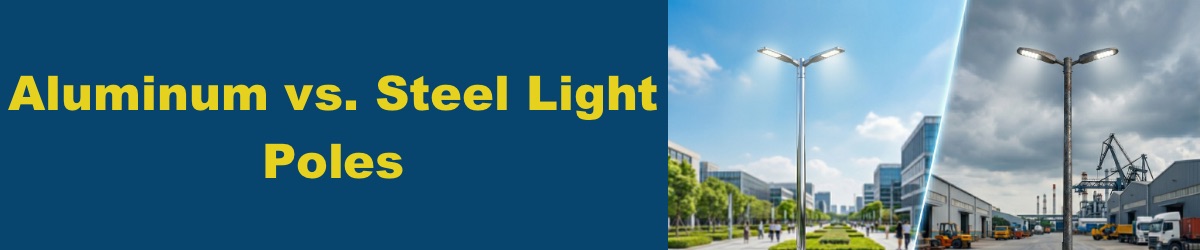
Aluminum vs Steel Light Pole: Complete Material Comparison Guide
Introduction
Choosing between aluminum vs steel light pole options determines the long-term success of outdoor lighting projects across municipal, commercial, and industrial applications. This guide delivers a comprehensive material comparison covering structural properties, performance differences, cost factors, and installation considerations for facility managers and lighting professionals evaluating pole material options for their next project, including when high-load applications may require high mast light pole solutions.
This content focuses on standard carbon steel (typically galvanized) versus common aluminum alloys used in extruded or cast light poles. Specialty materials like composite, fiberglass, or stainless steel fall outside this comparison’s scope. The target audience includes facility managers, contractors, municipal planners, and lighting professionals who must make informed decisions about new light poles for parking lots, street lights, industrial sites, and commercial properties.
Direct Answer: Steel poles offer superior strength and lower upfront costs, making them ideal for heavy loads and larger and heavier loadings, while aluminum light poles provide natural corrosion resistance and easier installation with significantly lower long-term maintenance costs, often lasting 50+ years with minimal maintenance.
Key Takeaways
-
- Clear understanding of material properties, including tensile strength, weight, and corrosion resistance
- Complete cost-benefit analysis comparing initial investment against total lifecycle costs
- Environmental suitability guidelines for coastal areas, harsh weather conditions, and industrial sites
- Installation requirements and equipment specifications for both materials
- Realistic maintenance expectations and average lifespan projections
Understanding Light Pole Materials
Light pole materials form the structural foundation of outdoor lighting infrastructure, directly affecting safety, durability, and project economics. The pole material you select influences everything from installation logistics to maintenance schedules over decades of service.
Material choice connects directly to project success because outdoor lighting structures face continuous exposure to wind, moisture, temperature fluctuations, and environmental pollutants. Understanding the fundamental characteristics of steel and aluminum poles enables informed decisions that balance performance requirements against budget constraints.
Steel Light Pole Characteristics
Steel light poles use carbon steel construction, typically hot-dip galvanized to provide corrosion protection. The galvanizing process applies a zinc coating that creates both a physical barrier and sacrificial protection against rust. The zinc corrodes preferentially, protecting the underlying steel structure.
Steel poles deliver exceptional strength properties with tensile strength sufficient to support heavy fixtures, banners, solar panels, and multiple fixtures simultaneously. A36 structural steel provides yield strength around 250 MPa and an ultimate tensile strength of 400-550 MPa, with a Young’s modulus of approximately 200 GPa, ensuring minimal deflection under load. This stiffness makes steel the right choice when fixtures must maintain precise optical alignment despite strong winds or when supporting brackets, signage, and accessories beyond standard lighting needs, aligning well with steel light poles for LED lighting used in many commercial and industrial projects.
These strength characteristics directly affect lighting project durability by enabling steel poles to carry substantial loads without structural compromise, making them essential for applications requiring heavy machinery integration or high wind zone compliance.
Aluminum Light Pole Properties
Aluminum light poles use extruded or cast aluminum alloy construction, most commonly from the 6000-series (Al-Mg-Si) or higher-strength 7000-series alloys. These alloys balance strength, ease of fabrication, and inherent corrosion resistance without requiring protective coatings for structural integrity.
The lightweight characteristics of aluminum stand out immediately. Aluminum density measures approximately 2.70 g/cm³ compared to steel’s 7.85 g/cm³, making aluminum roughly one-third the weight, a critical factor when reviewing light pole weight specifications and considerations for your project. A 6-meter aluminum pole typically weighs around 20 kg, while an equivalent steel pole weighs approximately three times more. Beyond weight advantages, aluminum’s natural oxide layer provides inherent natural corrosion resistance that regenerates when scratched, delivering long life without the maintenance burden associated with galvanized steel.
Aluminum poles offer aesthetic flexibility through easier fabrication into decorative shapes, clean finishes, and consistent appearance over decades, making aluminum light poles for LED lighting particularly attractive for urban, campus, and retail environments. While aluminum’s modulus of elasticity (approximately 70 GPa) creates greater deflection under equivalent loads compared to steel, this property suits standard lighting applications where fixture alignment tolerances permit some movement.
Understanding these material fundamentals prepares you to evaluate how each performs under real-world conditions and informs selection based on your specific project environment, especially when comparing different poles for outdoor LED lighting across materials and configurations.
Material Performance Analysis
Building on the fundamental material characteristics, this section examines how steel and aluminum poles perform across critical metrics that affect long-term project success and total cost of ownership.
Strength and Load Capacity
Steel poles deliver superior load-bearing capacity essential for supporting heavy loads, including large luminaires, traffic signals, banners, and multiple fixtures on a single pole. The higher effective projected area possible with steel construction enables designs that withstand larger and heavier loadings without structural concerns. In high wind zones, steel’s greater stiffness (approximately three times that of aluminum) minimizes deflection and vibration, maintaining optical alignment and structural stability.
Aluminum poles provide adequate strength for standard lighting fixtures but require careful engineering when supporting accessories beyond typical luminaire weights. For 12-foot residential or commercial poles, aluminum versions weighing 32-41 pounds can match the wind rating of steel poles weighing 78-112 pounds, though with reduced load margin for additional fixtures or accessories. Specifying aluminum for heavy loads or multiple fixtures requires thicker walls, reinforced sections, or cast construction, adding cost that may reduce the weight advantage.
This strength differential directly impacts fixture compatibility: steel remains the default for street lights carrying traffic equipment, military bases requiring robust infrastructure, or industrial sites mounting surveillance systems alongside lighting, where engineers must account for how wind, weight, and EPA affect light pole selection. Aluminum suits parking lots, parks, and commercial applications with standard fixture requirements.
Corrosion Resistance and Maintenance
Galvanized steel poles resist corrosion through their zinc coating, but steel eventually rusts once that protective layer deteriorates. In moderate inland environments, galvanized steel poles last 25-50 years before significant corrosion develops. However, in coastal areas, road salt exposure, or industrial sites with chemical pollutants, zinc loss accelerates to 2-4 micrometers annually, potentially requiring maintenance or replacement within 15-25 years without enhanced protection like powder coating.
Aluminum poles leverage their natural oxide layer for inherent protection that requires no supplementary coatings for structural durability. This natural resistance means aluminum poles commonly exceed 50 years of service with minimal maintenance, primarily occasional cleaning for appearance. The oxide layer self-regenerates when scratched, unlike galvanizing, which cannot repair mechanical damage without recoating.
Maintenance implications compound over time. Steel poles demand periodic inspection (every 3-5 years), touch-up coating, and potentially complete recoating every 10-15 years in demanding environments. These higher maintenance costs accumulate significantly over a 25-year lifecycle. Aluminum’s less maintenance requirement, essentially limited to aesthetic cleaning, reduces both direct costs and operational disruption from maintenance activities.
Installation and Handling Requirements
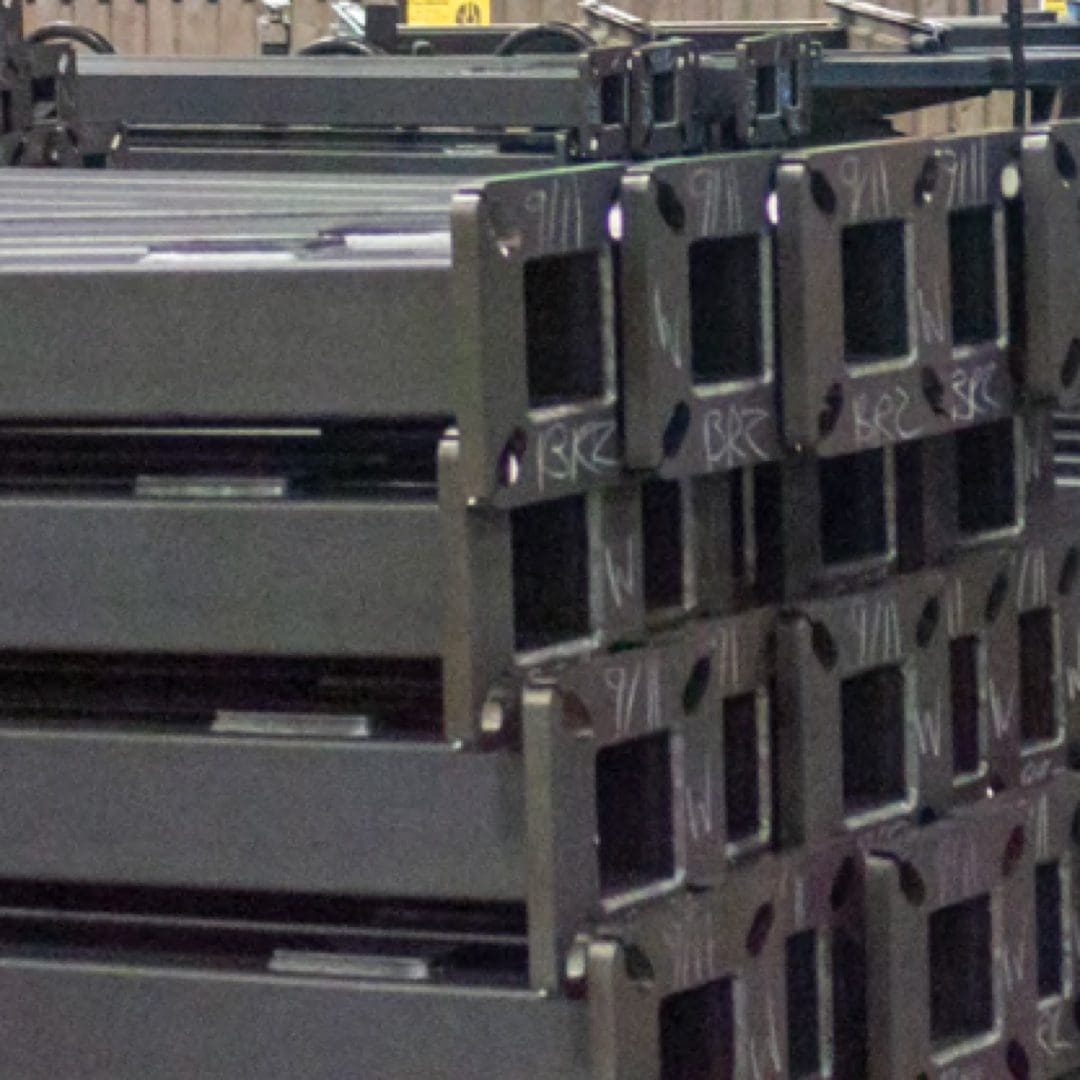
Steel pole weight creates substantial installation challenges requiring heavy equipment cranes, specialized rigging, and larger crews. A standard steel pole at a job site weighs three times more than its aluminum equivalent, demanding deeper foundations to resist overturning moment from the combined weight and wind load. Typical steel installations require embedment depths of 36-42 inches or more, depending on height and local weather conditions.
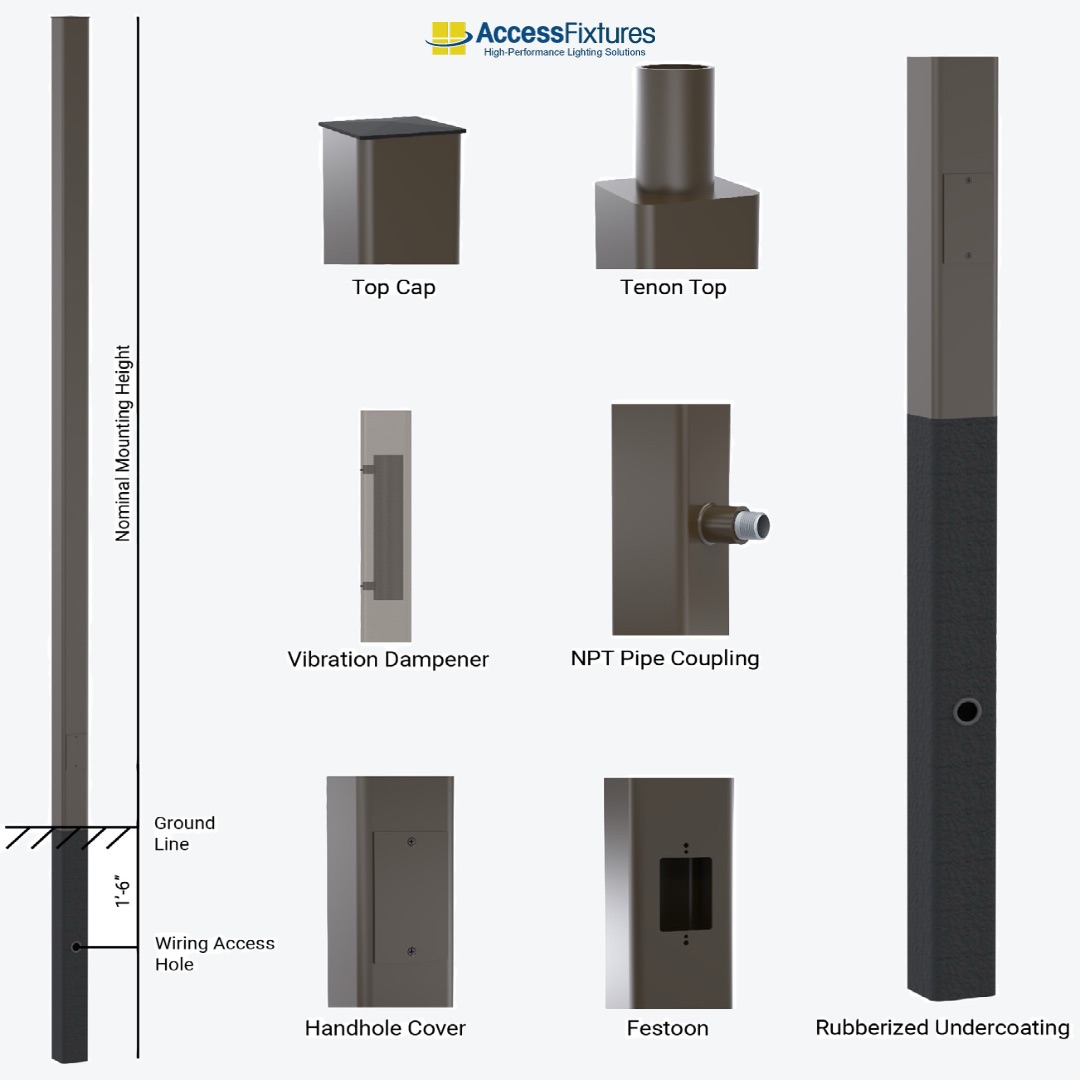
Aluminum’s lower weight transforms installation logistics. The lighter material permits handling with standard equipment, smaller crews, and faster completion times. One documented case from Asheville, NC, demonstrated six aluminum path lights installed in a single day on uneven terrain, an installation that would have required significantly deeper, precisely leveled concrete footings with steel. Aluminum poles may qualify for direct burial or shallower base plate embedment when overall overturning moment permits, so it is important to understand bolt-down vs. direct burial pole installation when planning foundations.
These weight differences translate directly to labor costs, equipment rental expenses, and project timeline, often saving $400-$800 per assembly according to industry analysis. For projects with limited crane access or challenging terrain, aluminum poles may be the only practical option without major site modification.
Performance differences across strength, corrosion, and installation inform the selection criteria and cost analysis needed to choose the right poles for specific applications.
Selection Criteria and Cost Analysis
Moving from performance characteristics to practical decision-making, this section provides frameworks for evaluating steel and aluminum poles against your project requirements and budget constraints.
Decision-Making Process
Selecting between steel and aluminum poles requires a systematic evaluation of multiple important factors:
- Assess environmental conditions and corrosion exposure: Evaluate proximity to coastal areas, industrial pollutants, road salt exposure, and local weather patterns. Harsh weather conditions and corrosive environments favor aluminum or premium-coated steel.
- Calculate fixture weight and wind load requirements: Determine luminaire specifications, any LED light mounts, brackets, and poles, and wind zone classification. Heavy loads and strong winds favor steel construction.
- Evaluate installation logistics and equipment availability: Consider job site access, available equipment, terrain conditions, and whether poles must fit existing anchorage with specific bolt circles, following established bolt-down pole installation guidelines. Limited access favors lightweight aluminum.
- Compare total lifecycle costs, including maintenance: Calculate not just initial purchase price but installation, periodic maintenance, and expected replacement timing over your planning horizon.
Material Comparison Analysis
This direct comparison summarizes key differences to support selection decisions:
| Criterion | Steel Poles | Aluminum Poles |
| Initial Cost | Lower upfront ($1,000-$2,000 typical) | Higher upfront ($2,000-$4,000 typical) |
| Strength | Superior load capacity, stiffness | Standard lighting loads, greater deflection |
| Corrosion | Galvanizing protects against eventual rust risk | Natural oxide layer; corrosion resistant |
| Maintenance | Periodic inspection, recoating required | Minimal maintenance, occasional cleaning |
| Average Lifespan | 15-30 years (coastal); 25-50 years (inland) | 50+ years typical |
| Installation | Heavy equipment, larger foundations | Standard equipment, reduced labor costs |
| Weight | Heavier (3× aluminum equivalent) | Lightweight, easily modified |
| Recyclability | Recyclable | Highly recycled, strong circular economy |
| Interpreting this data for your project: When initial budget constraints dominate, and environmental exposure remains moderate, steel delivers good value. When the total cost of ownership matters most particularly in corrosive environments, aluminum’s longer-lasting finish and minimal maintenance often prove more cost-effective despite a higher purchase price. |
Projects requiring multiple fixtures, heavy accessories, or installation in high wind zones generally warrant steel’s strength advantages, such as those provided by steel lighting poles for pole-mounted LED fixtures. Standard lighting needs in coastal areas, parking lots with road salt exposure, or locations where aesthetically important considerations apply often favor aluminum.
Common Challenges and Solutions
Material selection and installation present predictable challenges that practical solutions address effectively.
Coastal Environment Corrosion
Solution: Choose aluminum light poles for coastal installations where salt air accelerates steel corrosion dramatically. If steel poles are required for load capacity, specify enhanced galvanizing (minimum 85 micrometers zinc thickness) combined with powder coating in a duplex system that extends service life by 1.5-2.5 times compared to galvanizing alone. Plan for increased inspection frequency regardless of coating quality.
Heavy Fixture Support Requirements
Solution: Select steel light poles when fixtures exceed standard weight limits or when installations require multiple fixtures, banners, and signage. For aluminum in higher-load applications, specify engineering verification of wall thickness, reinforcement requirements, and connection details. Cast aluminum sections or bolted joints may accommodate loads that standard extruded aluminum cannot support.
Budget Constraints with Long-term Value
Solution: Calculate the total cost of ownership rather than focusing solely on the initial purchase price. Factor in maintenance costs over your expected service period, typically 25-30 years minimum for infrastructure decisions. Include inspection intervals, recoating costs, potential early replacement, and operational disruption. This analysis frequently reveals aluminum as more durable and cost-effective despite higher initial investment, particularly where environmental demands would shorten steel’s serviceable life.
Installation Equipment Limitations
Solution: When crane access is limited or heavy machinery cannot reach the job site, choose aluminum poles that standard equipment handles safely. For projects where steel strength remains essential, specify sectional steel poles with bolted or slip-fit connections to enable the installation of lighter individual components. Verify that pole segments fit existing anchorage and bolt circles when replacing failed poles in constrained locations.
These solutions prepare you to address the most common obstacles encountered during pole specification and installation, supporting successful project completion.
Conclusion and Next Steps
Material selection for light poles requires balancing strength requirements, environmental conditions, and total lifecycle costs against project-specific constraints. Steel poles excel where load capacity, stiffness, and lower initial cost drive decisions supporting heavy industry applications, military bases, and high wind installations. Aluminum poles prove the right choice where corrosion resistance, reduced maintenance, and installation simplicity matter most, delivering exceptional value in coastal areas, parking lots, and applications demanding long life with minimal intervention.
Immediate actionable steps:
- Assess your project’s environmental conditions, including exposure to salt air, road salt, industrial pollutants, and local weather patterns
- Calculate fixture load requirements, including luminaires, brackets, and any accessories
- Obtain quotes for both materials, including installation, specifying identical fixture compatibility and wind ratings
- Contact Access Fixtures for expert guidance on optimal pole selection, matching your lighting needs to the right poles for your environment and budget
Related topics worth exploring include fixture compatibility requirements, foundation specifications for different soil conditions, and comprehensive lighting design considerations that ensure your pole material selection supports complete project planning success.
Aluminum vs Steel Light Pole Frequently Asked Questions (FAQs)
- What are the main differences between aluminum and steel light poles?
Aluminum poles are lighter, corrosion-resistant, and require less maintenance, making them ideal for coastal and urban environments. Steel poles offer superior strength, support heavier loads, and are more cost-effective upfront, suitable for industrial and high wind areas. - Which light pole material is better for coastal areas?
Aluminum light poles are the better choice for coastal areas due to their natural oxide layer that resists saltwater corrosion, ensuring a longer life with minimal maintenance. - Do steel light poles rust?
Yes, steel poles can rust over time if their galvanized coating is damaged or wears off, especially in wet or salty environments, leading to higher maintenance costs. - How long do aluminum and steel light poles typically last?
Aluminum poles can last 50 years or more with minimal maintenance, while steel poles generally last between 15 and 30 years, depending on environmental conditions and maintenance. - Are aluminum and steel light poles recyclable?
Yes, both materials are recyclable. Aluminum requires less energy to recycle than steel, making it a more environmentally friendly option at the end of its lifecycle. - Which poles are easier and cheaper to install?
Aluminum poles are lighter and easier to handle, reducing labor costs and installation time. Steel poles are heavier and often require heavy machinery, increasing installation complexity and costs. - Can steel poles support heavier fixtures than aluminum poles?
Yes, steel poles have higher tensile strength and can support larger and heavier fixtures, making them suitable for industrial applications and locations with strong winds. - Do aluminum poles require any protective coatings?
Aluminum poles naturally form a protective oxide layer that prevents corrosion, so they typically do not require additional coatings for structural durability. - What maintenance is required for steel and aluminum light poles?
Steel poles need periodic inspection, touch-up coatings, and occasional recoating to prevent rust. Aluminum poles require minimal maintenance, mostly aesthetic cleaning. - Can aluminum light poles be customized for aesthetic purposes?
Yes, aluminum poles offer greater design flexibility, allowing for various shapes, colors, and finishes, making them popular for urban and residential areas where aesthetics are important.